
















Home Cyber Risk Services Blog About Contact Client Portal
Security & IT Leadership for Your Business

A security leader in your corner.
Without the full-time hire.

Your IT team manages the tools. But who owns the full picture, security controls, compliance, vendor oversight, insurance readiness, and AI governance across every site? That's the job of a CISO. Most growing businesses can't justify the hire, but they can't afford the gap. We make it affordable.

43%
of cyberattacks target small businesses.

Most don't have a security leader reviewing their systems, compliance, or response plan.

Source: Verizon Data Breach Investigations Report

200+
security settings live inside Microsoft 365.

The average business has configured fewer than 30. We close the gap, across every site, every system.

Source: Microsoft Secure Score data

194 days
is how long the average breach goes undetected.

Your IT team manages the tools. But who's watching the full picture, compliance, risk, and proof it's working?

Source: IBM Cost of a Data Breach Report

Ready when you are

See where your business stands.

Schedule your discovery call below. 20 minutes, no prep, no pressure.

Less risk. More proof. No drama.

The problem

Most businesses don't know what they don't know.

You have an IT provider, you have tools, and you might even have cyber insurance. But do you have full visibility into your security posture across every system, every site, and every compliance requirement your business is responsible for?

Who's reviewing your access controls, validating your backups, tracking your vendor SLAs, and documenting proof for your insurer?

The Four-Leaf Security System

Four goals. One outcome: less risk, more proof.

We organize every engagement around four simple goals. Start with Clarity. Layer the rest without overwhelm.

Clarity

We audit your cloud, email, and endpoints, then tell you exactly what's exposed.

Learn more →

Shield

MFA, password vaults, email filtering, and endpoint hardening: the controls insurers check first.

Learn more →

Guardrails

Adopt AI safely with data checks and governance controls.

Learn more →

Assurance

Steady monitoring, quarterly reviews, and incident response, month after month.

Learn more →
How it works

Three clear steps. Less confusion. Better control.

1

Assess

We review your cloud, identity, endpoints, AI tools, MSP contracts, and insurance posture. About an hour of your time.

2

Standardize

We turn findings into action: policies, configurations, MSP alignment, and tool validation. One consistent standard.

3

Lead & Monitor

Your named vCISO runs ongoing oversight. Monthly reports, quarterly reviews, incident coordination, and proof artifacts.

AI Practical Governance

Your team is already using AI. The question is whether it’s safe.

We don’t block AI. We help you adopt it with policies, controls, and oversight that protect your data and keep you compliant. Our 3-P Framework gives you a clear checklist.

People

Train the team on the 5 rules
Name an owner for AI access approvals
Set a monthly review date for AI connections and permissions
Create an incident response contact list
Document AI tool inventory

Permissions

Use a dedicated "AI Service" user account
Remove admin roles from the AI account
Limit access to one shared folder, not the whole drive
Limit mailbox scope to one mailbox, not all mail
Use Conditional Access where available
Require MFA, block legacy auth

Privacy

Create an "AI Work Zone" folder
Move only approved docs into that folder
Do not store client regulated data unless approved and encrypted
Review folder contents quarterly
Document what data is AI-accessible
"

The assessment didn’t just help us understand and secure our Microsoft 365 environment. It gave us documented evidence we could show our cyber insurer. We finally know where we stand.

- Principal, Regional Insurance Brokerage

Ready to see where you stand?

Start with a 20-minute discovery call. No prep, no pressure, no pitch.

Cyber Risk Assessment

Find the gaps before someone else does.

A 7-day assessment of your Microsoft 365, Google Workspace, and AI environment. You get a scored report, a 14-point insurance readiness review, and a prioritized roadmap.

Takes about 20 minutes to start · no prep required

What you get back

Nine deliverables. One clear picture.

State of IT reportWhat’s in place, what’s not, where you’re exposed
Cybersecurity gap reportSpecific findings mapped to the Four-Leaf System
14-point Insurance Readiness ScorecardScored against what carriers actually check
MSP / IT provider contract summaryWhat your providers commit to, and where the gaps are
Asset inventoryEndpoints, networking, applications, cloud services
Dark web credential scan resultsCompromised accounts tied to your domain
AI tool exposure mapWhat AI tools your team uses and how they connect to your data
Risk registerTop risks prioritized by impact and likelihood
90-day hardening roadmapWhat to fix first, and who does it
See it before you buy it

What the report actually looks like.

A real leadership summary, built from your assessment data. Scored, prioritized, and ready to hand to your insurer, your board, or your IT provider.

Sample report · illustrative data only
Black Clover Cybersecurity
BLACK CLOVERCYBER SECURITY
Prepared for Sample Business Group Leadership Team

Cyber Readiness — Leadership Summary

Across 12 assessed sites, 3 low-risk, 3 medium-risk, and 6 high-risk. 2 of 14 sites not started yet.

↓ Download PDF 🔗 Public view 📄 vCISO plan
Executive summary / overview

Where things stand: we assessed 12 of 14 sites. Group readiness averages 68 out of 100, with 3 low-risk, 3 medium-risk, and 6 high-risk. The same gaps show up at more than one site, most often tested backups and multi-factor login. Fixing these once, as a group, helps more than fixing each site on its own. Recommendation: close the urgent items at each site now, then handle the repeating gaps as a group, with shared oversight, so every site improves the same way.

Group readiness
68
Medium risk
Strengths & deficiencies by area
Accounts & Access56% · Partial
Devices & Email68% · Partial
Data & Recovery33% · Needs work
Response & Oversight27% · Needs work
68
Avg score*
10
Completed
2
Partial
2
Not started
3
Low risk
3
Medium risk
6
High risk
Priority insights — top group findings
  • Immediate attention: tested backups flagged at most assessed sites.
  • Immediate attention: multi-factor login (MFA) flagged at multiple sites.
  • Immediate attention: device protection (EDR) flagged at multiple sites.
  • Incident response plan flagged at every assessed site.
  • Activity monitoring and logging flagged at every assessed site.

Sample layout shown for illustration. Your report reflects your own environment and findings.

14-Point Insurance Readiness Checklist

What carriers actually check at renewal.

We score you against all 14 during the assessment, not after months of services.

MFA coverage
Endpoint protection (EDR)
Email security
Backup & disaster recovery
Patch management
Vulnerability management
Identity & access controls
Admin account controls
Incident response plan
Security awareness training
Network segmentation
Encryption (rest + transit)
Vendor / third-party risk
Logging & monitoring
After the assessment

Two paths. Your call.

You handle it.

Take the report and roadmap to your IT provider. Use the 14-point scorecard at your next insurance renewal. Done.

We lead it.

Black Clover executes the hardening plan, standardizes your tools and MSP contracts, and transitions to ongoing vCISO / vCIO leadership.

Assessment

$2,000 – $3,750
per site · multi-site scoping available. Talk to an advisor

Monthly Retainer (vCISO/vCIO)

$4,500 – $8,750
per month · $350–$450/hr based on hours and sites in scope

Start with a Cyber Readiness Review.

20 minutes. No prep. We'll walk through your setup and tell you exactly where you stand.

Services

What your vCISO actually does.

We don’t replace your IT provider. We make them better. We don’t sell tools. We make sure the right ones are in place and working.

Clarity

Clarity: Find the gaps.

Assessment, risk visibility, and scoring.

  • Cloud tenant configuration review (M365 / Google Workspace)
  • Dark web compromised-credential scanning
  • AI tool usage and exposure mapping
  • Asset, vendor, and application inventory
  • MSP / IT provider contract review
  • 14-point Insurance Readiness Scorecard
Shield

Shield: Make sure protection is in place.

Advising, validating, and managing the protections your MSP should be running.

  • Review and standardize endpoint, email, and backup tools across sites
  • MFA enforcement validation across all accounts
  • MSP contract review and SLA negotiation
  • Quarterly MSP performance monitoring
  • Backup verification and disaster recovery testing
Guardrails

Guardrails: Use AI and cloud safely.

Policies, controls, and governance for AI and cloud tool adoption.

  • AI Safe Use policy development (People, Permissions, Privacy)
  • Acceptable use policy creation and rollout
  • Data loss prevention configuration
  • Shadow IT and unapproved app detection
  • M365 / Google Workspace configuration hardening
Assurance

Assurance: Stay covered. Month after month.

Ongoing vCISO / vCIO leadership, monitoring oversight, and incident response coordination.

  • Named Virtual CISO / CIO as your senior point of contact
  • Monthly reporting and quarterly security reviews
  • MSP performance review and SLA enforcement
  • Incident response coordination
  • Cyber insurance alignment and renewal support
  • Risk register maintenance and annual budget review

Your virtual CISO: what they do, and what they don’t.

What your vCISO does

  • Owns your security posture across all sites and tools
  • Manages and holds IT providers accountable
  • Leads incident response coordination
  • Produces proof for insurance, audits, and questionnaires
  • Reviews AI adoption and new tool risk
  • Runs quarterly security reviews with leadership
  • Advises on IT budgets and vendor selection

What your vCISO doesn’t do

  • Operate a help desk
  • Sell you endpoint software
  • Run a SOC or monitoring platform
  • Replace your IT provider

Your MSP runs the day-to-day.
Your vCISO runs the program.

Who it’s built for

Businesses that need a leader, not a product.

Multi-site Medical Organizations

Standardize security across locations. HIPAA compliance, patient data protection, one standard.

CPA & accounting firms

Client data obligations, insurance audits, AI tool adoption.

Law firms

Confidentiality, bar compliance, document security, AI policy.

Insurance agencies

Carrier requirements, proving you practice what you sell.

What our clients say

Trusted by businesses like yours.

"Black Clover Cyber gave us insight into our cloud environment that we simply didn't have. Their assessment made it clear what was at risk, what needed attention, and what steps we had to take to protect our clients' financial data. It was eye-opening, practical, and exactly what we needed."

Managing Partner
Local CPA Firm

"Their assessment revealed configuration issues and licensing inefficiencies in our Microsoft 365 environment, simultaneously improving our security posture while reducing unnecessary costs. We didn't even know we had the problem."

Principal
Independent Insurance Brokerage

Ready to see where you stand?

Start with a 20-minute discovery call. We'll review your setup, identify your biggest risks, and map the path forward.

About Black Clover

Security simple enough to run. Strong enough to matter. Documented enough to prove.

Our mission

We give businesses the visibility, protection, and guidance they need to identify risk, manage their security posture, and execute a smarter approach to cybersecurity and AI, so they can focus on running their business.

The team

The people behind the program.

JL

Jeff Lennon

Go-to-Market, Revenue & Sales Advisor
  • Channel and GTM operator, 20+ years in cybersecurity and GRC
  • Builds repeatable partner programs and go-to-market execution
  • Makes security practical and accessible for SMBs
EH

Erik Hanson

Virtual CISO Advisor
  • 16+ years in information security across regulated environments
  • CISSP, PCI-ISA certified
  • Leads client engagements as the named security and IT leader
  • Specialties: GRC, risk management, incident response, NIST CSF

Let's start the conversation.

Whether you need an assessment, a security advisor, or just a second opinion on your setup, we're here.

Get in touch

Let’s talk about where you stand.

Start with a 20-minute discovery call. No prep, no pressure, no pitch.

Drop us a line.

Message received.

Thanks for reaching out. We'll get back to you within one business day.

Or reach out directly.

LocationPhiladelphia, Pennsylvania
Serving businesses nationwide

The golden lining:

Most places offer a silver lining. We offer a golden one: clear answers, documented proof, and a leader who's got your back.

The Clover Chronicles

Behind the Shield

Practical security insights for small business leaders. Published every other week, organized around our Four-Leaf Security System.

Friday Roundup: The 127-Bug Update and "Sorry" Ransomware TrapShield
May 15, 2026

Friday Roundup: The 127-Bug Update and "Sorry" Ransomware Trap

It is Friday, May 15, 2026, and we are heading into a nice spring weekend. Before you head out to enjoy the weather, it is a good idea to take a quick...

Read more →
AI for Your Small Business: 5 Big Wins and the Guardrails to KeepGuardrails
May 8, 2026

AI for Your Small Business: 5 Big Wins and the Guardrails to Keep

You have probably heard a lot about AI lately. It is everywhere. Some people say it will take over the world, and others say it is just a fancy search...

Read more →
The "Zero-Click" Thief and Why Your AI Might Be Over-SharingGuardrails
May 1, 2026

The "Zero-Click" Thief and Why Your AI Might Be Over-Sharing

It is Friday, May 1, 2026, and we are heading into the weekend. At Black Clover Cyber Security, we like to spend our Fridays looking back at the week to...

Read more →
The AI 'Shadow Office': Are Your New Digital Employees Safe?Guardrails
Apr 3, 2026

The AI 'Shadow Office': Are Your New Digital Employees Safe?

Imagine you just walked into your office and found ten new interns sitting at their desks. They are working fast, they never take a lunch break, and they...

Read more →
Essential Cybersecurity Practices for Small BusinessesClarity
Mar 27, 2026

Essential Cybersecurity Practices for Small Businesses

Small businesses today face a rapidly evolving cybersecurity landscape that demands proactive strategies to safeguard critical assets. In a world where...

Read more →
Growth & Guardrails: The 3-Step Framework for Safe AI AdoptionGuardrails
Mar 13, 2026

Growth & Guardrails: The 3-Step Framework for Safe AI Adoption

It is Friday, March 13, 2026, and by now, you have probably realized that AI isn't just a trend anymore. It is sitting in your browser tabs, your email...

Read more →
CMMC & The Framework Collision is it breaking your Security StackAssurance
Mar 6, 2026

CMMC & The Framework Collision is it breaking your Security Stack

For a long time, the Cybersecurity Maturity Model Certification (CMMC) felt like something that was always just over the horizon. It was a topic for...

Read more →
Closing the Insurance Proof Gap: Is Your Cyber Insurance at Risk?Assurance
Feb 27, 2026

Closing the Insurance Proof Gap: Is Your Cyber Insurance at Risk?

Closing the Insurance Proof Gap: Why Your Cyber Insurance Might Be at Risk... Getting cyber insurance for your small business used to be a simple task....

Read more →
Turning Your Security Assessment into a 90-Day Hardening Plan!Clarity
Feb 20, 2026

Turning Your Security Assessment into a 90-Day Hardening Plan!

You just finished your security assessment. The report landed in your inbox. Now what? Most SMBs hit pause right here. They read the findings, maybe...

Read more →
Cyber Insurance - Turning Security Into Your Greatest Sales AssetAssurance
Feb 13, 2026

Cyber Insurance - Turning Security Into Your Greatest Sales Asset

This is Part 3 of our Cyber Insurance Series. If you missed them: Part 1 covered why the honor system is dead, and Part 2 gave you the audit readiness...

Read more →
Cyber Insurance Checklist: What SMB's Need to Prove for Coverage!Assurance
Feb 6, 2026

Cyber Insurance Checklist: What SMB's Need to Prove for Coverage!

In Part 1, we talked about how cyber insurance shifted from trust to proof. Insurers aren't just taking your word anymore, they want evidence. Real,...

Read more →
Cyber Insurance is Changing: "The Shift from Trust to Truth!"Assurance
Jan 30, 2026

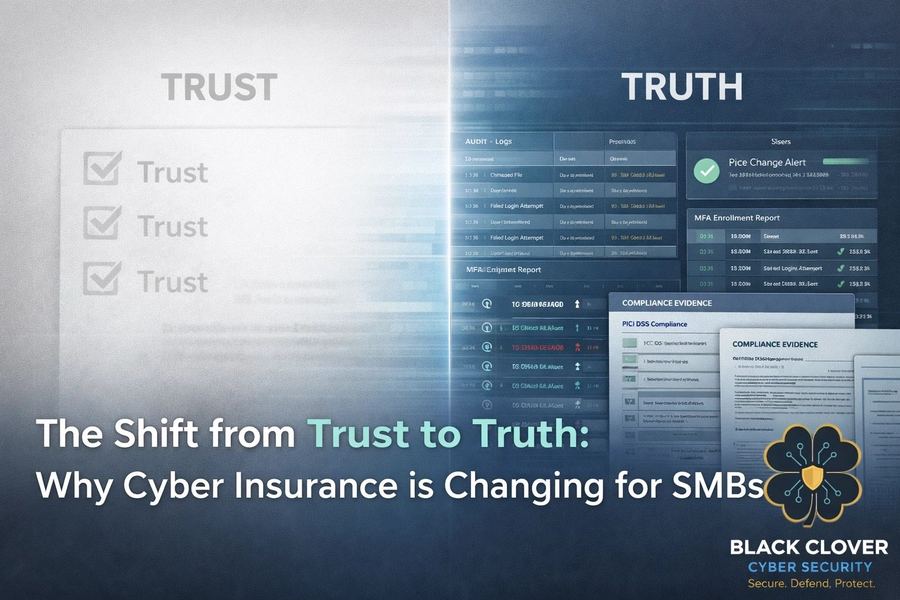
Cyber Insurance is Changing: "The Shift from Trust to Truth!"

Remember when getting cyber insurance meant filling out a questionnaire, checking a few boxes, and calling it a day? Those days are over. For years, cyber...

Read more →
The Digital Survival Kit to Guard the SharePoint CastleShield
Jan 23, 2026

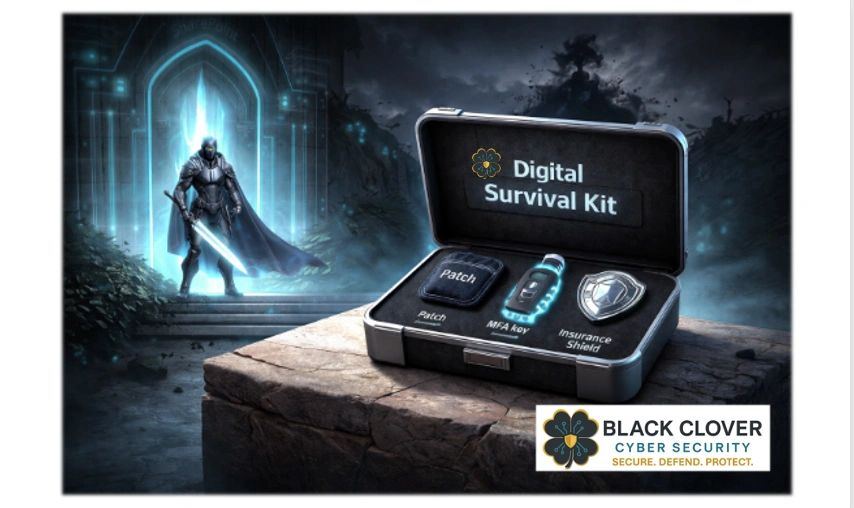
The Digital Survival Kit to Guard the SharePoint Castle

Happy Friday! This week's cybersecurity news is packed with action items for small and mid-sized businesses. From a massive Microsoft patch release to...

Read more →
Top Cyber Dangers in Microsoft 365 & Google/ChromeClarity
Jan 16, 2026

Top Cyber Dangers in Microsoft 365 & Google/Chrome

January brought some big cyber threats. If your business uses Microsoft 365 or Google Chrome, you need to know about these dangers. We looked at all the...

Read more →
SMB Cybersecurity Pulse: What Matters and How To Prepare in 2026Clarity
Jan 9, 2026

SMB Cybersecurity Pulse: What Matters and How To Prepare in 2026

Good morning! If you're running a small or medium business, you probably don't have time to dig through dozens of cybersecurity alerts every day. That's...

Read more →
SMB-Focused Cybersecurity in 2026: Top 3 Incidents and TrendsClarity
Jan 2, 2026

SMB-Focused Cybersecurity in 2026: Top 3 Incidents and Trends

As we move into 2026, small and medium businesses face a cybersecurity landscape that's more dangerous than ever before. While you were focused on closing...

Read more →
Why DMARC Policy Enforcement is Critical for Microsoft 365 UsersShield
Dec 19, 2025

Why DMARC Policy Enforcement is Critical for Microsoft 365 Users

If you're running a small or medium business and sending emails through Microsoft 365, 2025 was probably a wake-up call you didn't see coming. What...

Read more →
What Microsoft 365 Doesn't Tell You About Cloud Security...Clarity
Dec 12, 2025

What Microsoft 365 Doesn't Tell You About Cloud Security...

You moved to Microsoft 365 thinking your business was automatically more secure. That's what the marketing materials suggested, right? The reality is a...

Read more →
Microsoft 365 vs Hackers: Why Your Built-In Security Isn't EnoughShield
Dec 5, 2025

Microsoft 365 vs Hackers: Why Your Built-In Security Isn't Enough

Microsoft 365 vs. Hackers: Why Your Built-In Security Isn't Enough and What SMBs Really Need... Ok, so you've made the smart move to Microsoft 365 for...

Read more →
Are You Making These Common Vulnerability Management Mistakes?Shield
Nov 28, 2025

Are You Making These Common Vulnerability Management Mistakes?

Your Microsoft 365 environment just became your biggest security challenge. Most small and medium businesses think they've got cloud security handled...

Read more →
Everyone Is Talking About AI-Powered Phishing & SMB's Should Too!Guardrails
Nov 20, 2025

Everyone Is Talking About AI-Powered Phishing & SMB's Should Too!

You've probably heard the term "AI-powered phishing" thrown around in cybersecurity circles lately. There's a good reason everyone's talking about it:...

Read more →
SMB's Need a Password Vault: Keeper Makes Security SimpleShield
Nov 14, 2025

SMB's Need a Password Vault: Keeper Makes Security Simple

We're excited to announce that Black Clover Cyber Security has partnered with Keeper Security to bring world-class password management to small and...

Read more →
Why Cloud Security Matters for Small BusinessesClarity
Nov 7, 2025

Why Cloud Security Matters for Small Businesses

And how to protect your team, your data, and your future If you run a small business, chances are you use the cloud every day. It helps you: · Work faster...

Read more →
What Microsoft 365 Really Protects and Why SMBs Need an MSSP!Assurance
Nov 1, 2025

What Microsoft 365 Really Protects and Why SMBs Need an MSSP!

Most small and mid-sized businesses (SMBs) use Microsoft 365 every day—for email, file sharing, Teams calls, and productivity. It’s a powerful suite that...

Read more →
Don’t Get Hooked: Phishing & Social Engineering Are Targeting SMBShield
Oct 24, 2025

Don’t Get Hooked: Phishing & Social Engineering Are Targeting SMB

Whether you're running a local healthcare practice, an accounting firm, or a franchise, cybercriminals are targeting businesses like yours every day—not...

Read more →
From Risk to Resilience: Why SMB's Need Both IT & Cyber InsuranceAssurance
Oct 17, 2025

From Risk to Resilience: Why SMB's Need Both IT & Cyber Insurance

Cyber threats don’t care how big your business is and for small and mid-sized businesses (SMBs), that’s a growing problem. In fact, according to the 2024...

Read more →
An Ultimate Guide to Cybersecurity Best Practices for SMB'sClarity
Oct 10, 2025

An Ultimate Guide to Cybersecurity Best Practices for SMB's

October is Cybersecurity Awareness Month — a perfect reminder that in the digital era, cybersecurity is no longer optional; it’s a necessity. As...

Read more →
Why Small Businesses Can’t Afford to Ignore CybersecurityClarity
Oct 3, 2025

Why Small Businesses Can’t Afford to Ignore Cybersecurity

I recently read an article in CSO titled “Smaller Organizations Nearing Cybersecurity Breaking Point.” It didn’t surprise me, but it hit home. For years,...

Read more →
📣 Announcing Our Blog: The Clover Chronicles – Behind the ShieldClarity
Oct 1, 2025

📣 Announcing Our Blog: The Clover Chronicles – Behind the Shield

At Black Clover Cybersecurity, we started this company with a clear purpose: To give small businesses the protection, insight, and peace of mind that big...

Read more →
Shield · May 22, 2026

Friday Roundup: The Gentleman Hacker & 277% Surge Sneaky Attacks

Friday Roundup: The Gentleman Hacker & 277% Surge Sneaky Attacks

It is Friday, May 22, 2026, and we are heading into the weekend. While you are probably thinking about your Saturday plans, a few digital shifts happened this week that are worth a quick look. Most of these situations are just minor hurdles that can be cleared with a few clicks. If you feel like your security hasn't been perfect lately, it is just because you haven't found the right rhythm yet. We are here to help you get there.

This week’s roundup covers some new tricks hackers are using in Microsoft 365, a necessary update for your browser, and why some "gentlemen" aren't actually being very nice to small businesses.

Microsoft 365 has some new update needs

Microsoft 365 is the heart of most small businesses. Because so many of us use it, hackers spend a lot of time trying to find ways inside. This week, we saw a few new methods that just require a bit of extra attention.

The Kali365 "Digital Key" trick

There is a new service out there called Kali365. It doesn't actually try to guess your password. Instead, it tries to steal your "OAuth token." Think of this token like a digital keycard. Once you scan your badge to get into the office, you don't have to keep scanning it at every single internal door.

Kali365 sends out fake emails that look just like a real Microsoft login page. If someone accidentally follows the steps, the hacker "just" grabs that digital keycard. Since the key is already validated, the hacker can walk right past your Multi-Factor Authentication (MFA). It is a sneaky move, but it is solvable. You can learn more about how these attacks work in our guide on why built-in security isn't always enough.

A quick fix for Outlook (CVE-2026-45803)

A new bug was found in Outlook this week, labeled CVE-2026-45803. It has a high "danger score" of 9.8 out of 10. This sounds big, but it is just a matter of running your updates. The bug could allow someone to run code on your computer just by sending a specifically crafted email. Microsoft has already released the fix, so you just need to make sure your team hits the "Update" button before they log off for the weekend.

Copilot and your data

AI tools like Copilot are making work much faster, but they can sometimes be a little too helpful. If your settings aren't just right, Copilot might accidentally show a sensitive file to someone in your company who shouldn't see it. It is just a configuration issue, and we can help you set up safe AI growth guardrails to keep your private data private.

Google Chrome requires a quick restart

If you use Google Chrome or Google Workspace, there are a couple of things to handle. Google released some emergency patches this week to fix "Remote Code Execution" bugs. This is just a fancy way of saying a website could try to take control of your browser.

There is also a new trend where "Background Botnets" are being found. Some malicious websites are using a trick to stay active in the background of your browser even after you close the tab. It is just a stealthy way for them to stay connected to your computer. Restarting your browser and keeping it updated usually clears these right up. At Black Clover, we keep 365 days of forensic logs, so if one of these sneaky background bots ever does pop up, we can see exactly when it arrived and what it tried to do.

Hackers are using your own tools against you

One of the biggest trends this month is a massive 277% surge in hackers using Remote Monitoring and Management (RMM) tools. These are the actual tools that IT teams use to help you fix your computer remotely.

Hackers love these tools because they are "legitimate." Most security software won't flag them because they look like they belong there. The hackers just trick a user into downloading a tool like AnyDesk or ScreenConnect, and then they have a permanent backdoor into your business.

The "Gentleman" Hacker

We also saw the rise of a new group calling themselves "Gentleman Ransomware." They target small businesses specifically. They don't use big, loud attacks. Instead, they use very polite phishing emails and sneaky tactics to slowly move through your network. They are trying to be quiet so they don't get caught.

The good news is that these "gentlemen" still leave digital footprints. We look for the identity signals they leave behind. By validating who is actually using your RMM tools, we catch the abuse that standard tools usually ignore. This is a core part of the essential cybersecurity practices we recommend for every SMB.

Keeping your cloud safe is part of the routine

Managing all these risks might feel like a lot, but it is just about having the right system in place. If your small business cloud is like a modern smart home, Black Clover Cyber Security is the team that monitors the sensors.

Microsoft and Google provide the walls and the doors, but we install the 24/7 monitoring systems. We watch over 50 different risk points in Microsoft 365 and 30+ points in Google Workspace.

  • If a "digital keycard" is stolen, we see it.
  • If a "gentleman" hacker tries to log in from a weird location, we lock the door.
  • If your AI starts sharing files it shouldn't, we get an alert.

We don't just tell you there is a problem; we help you fix it. Most of our clients start with a simple assessment to see where they stand. It is a great way to get a prioritized 90-day hardening plan so you know exactly what to do next.

The Friday To-Do List

To make sure your weekend is as relaxing as possible, here is a quick list of three things you can do right now. They are just small steps that make a big difference:

  1. Update your apps: Open Outlook and Chrome, go to settings, and make sure you are running the latest version. This fixes that 9.8 score bug and the browser backdoors.
  2. Ask about your RMM: Ask your IT person or team which tools they use to access your computers remotely. If there are tools on your computers that you don't recognize, it might be time for a quick cleanup.
  3. Check your tokens: You can book a discovery call with us to see if your company's "digital keys" are being leaked on the dark web. It is a fast way to get peace of mind.

You've got this

Cybersecurity can feel complicated, but you don't have to handle it alone. Most of the risks we see are just opportunities to make your business a little stronger and more efficient. By staying aware and taking these small steps, you are already ahead of most other businesses.

Have a great, secure weekend. We’ll be here watching the monitors so you don't have to.

Ready to see if your digital office is secure? Book a Discovery Call today, or take our Cyber Security maturity Check or AI Readiness Quiz to get a head start on your safety plan. We are here to help you secure, defend, and protect your business.

If you’re unsure where to start, we are happy to walk through a quick assessment or answer any questions. DM us directly if you’d like help...

Let’s Make Sure Your M365 or Google Workspace Is Safe

✅ No pressure. Just a friendly checkup.

👉 Book your free consultation / assessment today at: info@blackclover-cyber.com

Shield · May 15, 2026

Friday Roundup: The 127-Bug Update and "Sorry" Ransomware Trap

Friday Roundup: The 127-Bug Update and "Sorry" Ransomware Trap

It is Friday, May 15, 2026, and we are heading into a nice spring weekend. Before you head out to enjoy the weather, it is a good idea to take a quick look at what happened in the digital world this week. There were a few big updates and some new trends that small business owners should know about.

Security can sometimes feel like a lot to handle, but it is usually just a matter of keeping things updated and staying aware of the common tricks people use. You do not need to be a computer genius to keep your business safe. You just need to stay consistent with the basics. This week, most of the news is about things you can fix with just a few clicks or a quick phone call to your service providers.

Some new security items in Microsoft 365

Microsoft 365 is the backbone of most small businesses. Because so many people use it, it is often a target for new discoveries. This week, researchers found a few things that you should be aware of.

One of the items is called CVE-2026-41089. This is what experts call a "wormable" risk. That sounds a bit scary, but it just means that if one computer on a network gets this specific bug, it can spread to other computers automatically without any person doing anything. It is like a digital cold that spreads through the office. It mostly affects domain controllers, which are the main computers that manage all the user accounts in a business. If you use a managed service provider, they are likely already looking at this, but it is a good thing to mention to them.

Another item to look at is CVE-2026-40364. This one is found in Microsoft Word. Usually, we think we are safe as long as we do not open a strange file. However, this bug can let a hacker in just by you looking at a file in the "Preview Pane." You do not even have to double-click it. It is just a small hole in the digital fence that Microsoft is currently patching.

We are also seeing some news about Copilot AI. Many businesses are using AI to help write emails or summarize meetings. A recent report (CVE-2026-26129) showed that AI can accidentally share sensitive information if it is not set up correctly. For example, if an employee asks the AI about company finances, the AI might share details they are not supposed to see.

At Black Clover Cyber Security, we focus on providing the monitoring and forensic logs you need. This helps make sure your AI tools are being helpful without becoming a liability for your business. If you want to learn more about how to use AI safely, you can read about it in our guide on growth guardrails for safe AI adoption.

The recent Chrome update contains many fixes

If you use Google Chrome, you might have seen a little "Update" button in the corner of your browser lately. You should probably click that if you haven't yet. Google just released Chrome 148, and it is a very big update.

This update includes 127 different fixes. That sounds like a big number, but it is just Google being very thorough. Out of those 127 fixes, 14 of them are considered critical. These are the "front doors" that hackers try to use to steal data. Some of these bugs involve WebRTC, which is the technology that helps with video calls, and others involve script injection.

When hackers find these gaps, they try to use them to look at your personal information or peek at what you are doing online. The good news is that updating your browser closes these gaps immediately.

Keeping track of every single update can be a chore for a busy business owner. That is why we offer Continuous Vulnerability Management. We find these gaps before the hackers do, so you can focus on running your business. It is just one way we help you stay ahead. You might find it useful to check out our thoughts on why built-in security sometimes isn't enough.

Current trends affecting small businesses

Every week, we look at the themes that are affecting small and mid-sized businesses (SMBs). This helps us understand what to watch for.

One of the biggest themes right now is identity abuse. A new report says that 9 out of 10 small businesses have at least one compromised user account. This does not always mean your bank account is empty. It often just means a hacker has a password to an old email account or a low-level login. They use these small wins to try and get into bigger systems later.

Another trend is a new type of ransomware nicknamed the "Sorry" ransomware. This one is targeting web hosting panels like cPanel. Hackers are using a critical bypass to get into the control panel of your website. Once they are in, they lock everything up and leave a note that says "Sorry." It is a polite name for a very frustrating problem.

We are also seeing something called "Zero-Click NTLM Theft." This is a way for hackers to steal your login credentials without you ever clicking a link or downloading a file. They use sneaky tricks in the background of websites or emails to grab your "digital fingerprint" while you are just browsing.

These things sound complex, but they are solvable. Using a dark web credential defense and 24/7 monitoring is essential for survival in 2026. If you have a plan in place, these threats are just things we handle in the background for you. You can see more about how this works in our post on SMB-focused cybersecurity in 2026.

It is just a matter of checking the right things

When you hear about 127 bugs or "wormable" risks, it can feel overwhelming. But remember, most of these problems exist because of a missed update or a setting that wasn't quite right. You haven't had a problem yet because you are taking the time to read about this and stay informed.

Staying safe is just about moving from "trusting" that everything is fine to "knowing" that everything is fine. This is especially true for things like your website hosting and your email settings. For example, ensuring your email is properly verified is a simple step that keeps your name from being used by scammers. You can read more about that in our article on DMARC policy enforcement.

Cybersecurity is not a one-time project. It is a habit. Just like locking the office door at night, you just need to make sure your digital doors are locked too. If you are not sure where to start, you can always look at your "Secure Score" in Microsoft 365. It is a simple way to see how you are doing.

Steps you can take this afternoon

To make sure your weekend is as peaceful as possible, here are three things you can do right now. They only take a few minutes.

  1. Update Chrome and Office. Open your Google Chrome browser, go to settings, and click "About Chrome." It will check for the update and install it automatically. Then, open Word or Excel, go to "File," then "Account," and click "Update Options" to make sure you have the latest Microsoft patches.
  2. Contact your web host. Send a quick email to the person who manages your website or your web hosting company. Ask them if they have patched cPanel for CVE-2026-41940. This is the fix for that "Sorry" ransomware we mentioned. It is a quick check that can save you a lot of trouble later.
  3. Check your Secure Score. If you use Microsoft 365, you can look at your security dashboard to see your current score. It is just a number that tells you how many of the basic safety features you have turned on.

If you find that your score is lower than you would like, or if you just want someone to help manage these updates for you, we are here to help. You can book an assessment with us to see where you stand. We can help you turn that assessment into a 90-day plan to harden your security.

Cybersecurity is just part of doing business in 2026. It is a minor thing to keep up with once you have the right partners and the right habits. Have a great weekend, and stay safe out there.

Ready to see if your digital office is secure? Book a Discovery Call today, or take our Cyber Security maturity Check or AI Readiness Quiz to get a head start on your safety plan. We are here to help you secure, defend, and protect your business.

If you’re unsure where to start, we are happy to walk through a quick assessment or answer any questions. DM us directly if you’d like help...

Let’s Make Sure Your M365 or Google Workspace Is Safe

✅ No pressure. Just a friendly checkup.

👉 Book your free consultation / assessment today at: info@blackclover-cyber.com

Guardrails · May 8, 2026

AI for Your Small Business: 5 Big Wins and the Guardrails to Keep

AI for Your Small Business: 5 Big Wins and the Guardrails to Keep

You have probably heard a lot about AI lately. It is everywhere. Some people say it will take over the world, and others say it is just a fancy search engine. The truth is somewhere in the middle. For a small business owner like you, AI is just a tool. It is like a very fast, very smart intern who never sleeps.

You might not have figured out exactly how to use it yet, and that is okay. You are busy running a business. You don't have time to play with every new gadget that comes along. But if you want to save time and get your weekends back, there are five areas where AI can help you right now.

At Black Clover Cyber Security, we want you to use these tools to grow. But we also want to make sure you don't accidentally leave the digital front door unlocked. Here is how you can win with AI while keeping your data safe.

AI helps you talk to new leads before they go away

When someone sends you a message through your website, they are usually looking for an answer right now. If you wait until the next morning to reply, they might have already called your competitor. This is where most sales are lost. You haven't lost the sale because your price was too high; you just haven't replied yet.

AI can act as your first responder. You can set up a simple system that reads an incoming lead and sends a friendly, helpful reply in under two minutes. It isn't replacing you; it is just holding the door open until you can get there. It can answer basic questions or let the customer know you received their message and will call them at a specific time. This keeps the lead "warm" and shows them that you are professional and fast.

AI keeps your sales quotes from getting cold

We have all been there. You spend an hour writing up a great estimate or a quote. You send it off, and then... nothing. You get busy with the next job, and you forget to check in. Before you know it, two weeks have passed, and that lead has forgotten why they wanted to work with you.

AI can handle the "pestering" for you, but in a polite way. You can set up a tool that watches your sent quotes. If the customer hasn't opened the file or replied in two days, the AI can send a soft reminder. It might say, "Hey, just checking in to see if you had any questions about the estimate I sent over." It takes the weight off your shoulders and keeps your sales moving without you having to stay glued to your inbox.

📷

AI tells your customers what is happening so they don't have to ask

One of the biggest time-wasters for small businesses is the "status update" phone call. Customers call to ask, "Is it done yet?" or "When are you coming over?" They aren't trying to be annoying; they just want to stay informed.

You can use AI to send automatic "job updates" based on your workflow. If you move a project from "In Progress" to "Quality Check" in your system, the AI can send a quick text or email to the customer. It makes the customer feel like they are getting VIP treatment, and it keeps your phone from ringing every ten minutes. It is a simple way to improve your customer service without adding more work to your day.

AI turns your messy emails into a clean to-do list

Does your inbox feel like a giant pile of chores? Most of us get emails that have three different tasks hidden inside them. It is easy to miss a deadline or forget a small detail when you are reading through long threads.

AI is great at summarizing. You can point it at a long email chain and ask it to "Give me the three things I need to do." It can also help with scheduling. If a client says, "I'm free next Tuesday afternoon," AI can see that, check your calendar, and draft a reply for you. It even helps stop no-shows by sending out smart reminders that actually get people to show up. It just helps you stay organized so you can focus on the work that actually makes money.

AI makes sure you get paid on time

Cash flow is the lifeblood of your business. But nobody likes being the "bill collector." It is awkward to call a client and ask why they haven't paid their invoice yet.

AI can take the emotion out of billing. You can set up your accounting software to use AI-driven reminders. These tools can look at who usually pays late and send them a gentle nudge a few days before the bill is due. If they miss the date, the AI sends a polite follow-up. Since it's coming from "the system," it doesn't feel like you are being the "bad guy." It helps you get paid faster and keeps your bank account happy.

Keeping your business safe with the 3P Guardrails

Using AI is exciting, but you can't just turn it on and walk away. You wouldn't hire a new employee and give them the keys to your house on the first day, right? You need to set some rules. We call these the "3P Guardrails."

  1. People: Keep a human in the loop

The Golden Rule of AI is this: AI is like a smart intern, and it needs a boss.

AI can draft emails, write reports, and suggest schedules. But it can also make mistakes. It might get a date wrong or use a tone that doesn't sound like you. You should always have a person check what the AI produces before it goes to a customer. AI drafts the work, but humans approve the work. This keeps your brand sounding real and prevents embarrassing mistakes.

  1. Permissions: Don't give AI the "master key"

When you start using AI tools, you might be tempted to let them see everything in your company. That is a mistake. You want to follow the rule of "Least Privilege." This means you only give the AI the "keys" it needs to do its job.

If an AI tool is helping you with marketing, it doesn't need to see your payroll files. If it is helping with scheduling, it doesn't need access to your secret client list. By limiting what the AI can see, you reduce the risk if something goes wrong. You wouldn't let a stranger wander through your whole house; don't let a new AI tool wander through your whole file system.

For more on how to set these limits, check out our guide on essential cybersecurity practices for small businesses.

  1. Privacy: Keep your secrets secret

This is the most important rule. Never, ever put private information into a public AI prompt. This includes things like passwords, Social Security numbers, or private health info.

When you use a free, public AI tool, anything you type into it could potentially be used to train the system. That means your private business data could end up in someone else's answer. To stay safe, keep your business data inside your own "walled garden." This usually means using the AI tools built into Microsoft 365 or Google Workspace, where your data stays private to your company.

If you want to know more about how to keep your cloud office safe, take a look at our article on the digital survival kit for the SharePoint castle.

AI is a journey, not a destination

You don't have to change your entire business overnight. You can start small. Maybe you just start with lead capture. Once that is working well, you can try automated invoicing. The goal is to make your life easier, not more complicated.

Remember, AI is meant to support you, not replace you. It handles the boring, repetitive stuff so you can do the high-level work that only you can do. You just haven't found the perfect rhythm yet, but you will.

We know that setting up AI can feel a little overwhelming. You want to make sure you are doing it the right way so you don't run into security problems later. That is what we are here for. We help small businesses like yours navigate the world of tech without the headaches.

If you are curious about where AI can help your business: and where you might need some extra protection: we would love to chat. We offer an AI Exposure Check to see where your data might be at risk, or we can just have a friendly Discovery Call to talk about your goals.

AI is a big win for small businesses. With the right guardrails in place, you can grow faster and sleep better. Let's make sure your "smart intern" is working for you, not against you.

If you’re not sure where to start, we’re here to help.

We offer a focused 20-minute AI + Security readiness conversation to identify where you can improve efficiency, strengthen protection, and unlock growth.

✅ No pressure. Just clear insight and next steps.

👉 Send us a DM or reach out at info@blackclover-cyber.com

Guardrails · May 1, 2026

The "Zero-Click" Thief and Why Your AI Might Be Over-Sharing

The "Zero-Click" Thief and Why Your AI Might Be Over-Sharing

It is Friday, May 1, 2026, and we are heading into the weekend. At Black Clover Cyber Security, we like to spend our Fridays looking back at the week to see what changed in the digital world. This week had a few busy moments for IT managers and business owners. Some new bugs showed up, and your AI might have been a little too curious.

These things happen in tech, and they are just part of running a modern business. You haven't seen every threat yet, but that is why we keep an eye on things for you. Most of these issues are easy to handle with just a few clicks or a quick update. Let’s look at what you need to know to keep your business running smoothly.

A Windows bug allows access without clicking

The big news this week is about a new vulnerability called CVE-2026-32202. It is being called the "Zero-Click" thief. Usually, hackers need you to do something, like click a link in a fake email or download a weird file. This bug is different because it can work without you doing anything at all.

It targets a specific part of how Windows handles information. If a hacker sends a certain kind of data to your computer, they might be able to look at your files or steal your login info. It sounds like a lot, but it is just a software error that needs a patch. Windows is already working on the fix, and most systems will update themselves if you let them.

The important thing to remember is that these "zero-click" issues are why we always talk about keeping your software current. You don't have to be a tech expert to stay safe. You just have to make sure your team isn't skipping those "Update and Restart" messages. If you want to learn more about keeping your team safe, you can check out some essential cybersecurity practices for small businesses.

Someone might be pretending to be your coworkers

Another issue popped up this week involving SharePoint. This one is tracked as CVE-2026-32201. Hackers found a way to "spoof" or fake an identity inside SharePoint. This means they could send a message or share a document that looks like it came from your manager or a trusted coworker.

SharePoint is a great tool for sharing work, but it relies on everyone being who they say they are. When someone can fake an identity, they might try to get you to share a password or a secret project file. It is just a clever trick that hackers use to get around your security.

If you use SharePoint, especially if you run your own server for it, you should look for an update today. Keeping your internal tools safe is just as important as locking your front door. We have a guide on how to guard the SharePoint castle that might help you understand how to keep these spoofers away.

The AI assistant is reading confidential emails

AI tools like Microsoft Copilot are supposed to make work faster. They can summarize meetings and help you write emails. However, this week a bug was found where the AI was reading "confidential" or "restricted" emails that it was not supposed to see.

If an employee asked the AI a question about company finances, the AI might have pulled information from a private email between the CEO and the CFO. The AI isn't trying to be nosy; it just didn't have the right boundaries in place. This is a common issue as we all learn how to use these new tools.

You haven't set up the perfect AI rules yet, but you can start today. It is just a matter of checking your permission settings in Microsoft 365. You want to make sure that the AI only sees what the human user is allowed to see. If you are worried about your new digital helpers, we have some tips on safe AI adoption that can clear things up.

Chrome needs a quick restart for thirty fixes

Google released a very large update for the Chrome browser this week. It includes 30 different security fixes. Since Microsoft Edge uses the same technology as Chrome, it needs an update too. These fixes cover everything from small bugs to bigger security holes.

Most of the time, your browser will download the update in the background. But it doesn't actually start working until you close the browser and open it again. You might see a small "Update" button in the corner of your screen. It is just a small task that takes about thirty seconds.

Doing this today ensures that your team is protected while they browse the web. It is one of those simple habits that keeps a small business safe without costing any money. You can read more about why built-in security isn't always enough to see why these manual restarts matter.

How Black Clover handles the heavy lifting

You have a business to run, and you probably don't want to spend your whole Friday reading about "CVEs" and "spoofing." That is where we come in. At Black Clover Cyber Security, we use tools to find these unpatched servers before the hackers do.

Our Vulnerability Management service is like a security guard who walks around your digital building every night to make sure all the windows are locked. If we see an unpatched SharePoint server or a risky cPanel setup, we let you know so it can be fixed before it becomes a problem. Many businesses make common vulnerability management mistakes, but we help you avoid those.

We also provide 24/7 Monitoring. If a hacker does manage to get in using a "zero-click" bug or an RMM tool like SimpleHelp, they usually try to move around your network to find more data. This is called "lateral movement." Our team watches for that kind of suspicious behavior all day and all night. If something looks wrong, we can stop it just as it starts.

Your simple weekend action plan

You don't need to do everything at once to be safe. Just taking a few small steps today can make your Monday much better. Here is what we suggest for your weekend checklist:

  1. Restart your browser. Tell your team to close Chrome or Edge and reopen it. This gets those 30 new security fixes working right away.
  2. Check your servers. If you use on-prem SharePoint or cPanel, check for updates. These are the main targets for the bugs found this week.
  3. Review your tools. Take a quick look at who has access to your RMM tools (like SimpleHelp). These tools are very powerful, and only the people who really need them should have access.
  4. Think about your AI permissions. Take a moment to see if your AI has access to folders it shouldn't. It is just a quick check that protects your confidential data.

Staying ahead of the changes

The world of cybersecurity is always changing, but it doesn't have to be overwhelming. Most of the threats we saw this week have simple solutions. You haven't built a perfect digital fortress yet, and that is okay. It is a process that we work on together.

By staying informed and taking small actions, you are already doing more than most. If you want to see how we can help you stay protected without the stress, you can look at our list of services and products. We focus on making security simple for SMBs so you can focus on growing your business.

We hope you have a great, safe weekend. We will be here monitoring things while you enjoy your time off. It is just what we do.

Ready to see if your digital office is secure? Book a Discovery Call today, or take our Cyber Security maturity Check or AI Readiness Quiz to get a head start on your safety plan. We are here to help you secure, defend, and protect your business.

If you’re unsure where to start, we are happy to walk through a quick assessment or answer any questions. DM us directly if you’d like help...

Let’s Make Sure Your M365 or Google Workspace Is Safe

✅ No pressure. Just a friendly checkup.

👉 Book your free consultation / assessment today at: info@blackclover-cyber.com

Guardrails · Apr 3, 2026

The AI 'Shadow Office': Are Your New Digital Employees Safe?

The AI 'Shadow Office': Are Your New Digital Employees Safe?

Imagine you just walked into your office and found ten new interns sitting at their desks. They are working fast, they never take a lunch break, and they are already moving your files around. The weird part? You never hired them. You do not even know their names.

This is exactly what is happening in the world of business right now, but these interns are not made of flesh and bone. They are "AI agents." According to a recent report from Microsoft, about 80% of big companies are already building these digital helpers. But here is the scary part: only 47% of those companies actually have any security rules in place to keep them under control.

At Black Clover Cyber Security, we call this the "Shadow Office." It is just a bunch of AI tools running around your business systems without a supervisor. If you feel like you are behind on this, do not worry. You just haven't set up your safety plan yet, and we are here to help you do it.

What is an AI agent anyway?

Think of an AI agent as a digital intern. A regular AI, like the one you might use to write an email, just waits for you to tell it what to do. You ask a question, and it gives an answer. An AI agent is a bit different. It is an automated helper that can actually do tasks for you.

For example, an AI agent could watch your email inbox in Microsoft 365. When a customer asks for a meeting, the agent checks your calendar, picks a time, sends an invite, and saves the customer's info into your database. It does all of this without you even touching a button.

These tools are great because they save you a ton of time. They help small businesses act like big corporations. But because they are so easy to make using "low-code" or "no-code" tools, your employees might be building them without telling you.

The risk of the 'Shadow Office'

When an employee connects a new AI tool to your company’s Google Workspace or Microsoft 365, they are opening a door. If that AI tool is not secure, a hacker could walk right through that door and look at your private files.

This is what people call "Shadow AI." It is just like the old problem of "Shadow IT," where people would use unapproved software. But AI is different because it learns from your data. If your intern-AI "learns" a secret about your business and then tells that secret to a public AI model, you cannot just take it back. It is out there forever.

Most employees are just trying to be helpful and fast. They want to get their work done so they can go home. They are not trying to cause a security leak. They just do not realize that connecting a "fun new AI tool" to the company’s main server is a big deal.

Putting up the guardrails

At Black Clover, we like to talk about "Guardrails." Think of your business like a bowling alley. You want your employees to throw the ball and hit the pins. The AI agents are like the bowling ball: they move fast and they have a lot of power.

Without guardrails, that ball can end up in the gutter, or worse, it could fly into the next lane and cause a mess. Guardrails are the safety bumpers that keep the AI on the right track. They make sure the AI can do its job without accidentally deleting your files or sharing your bank info.

If you are using Microsoft 365, you already have some of these tools available. You just need to know how to turn them on. Our M365 assessment is a great way to see if your "digital interns" are following the rules.

Your 3-step 'Safe AI Checklist'

You do not need to be a computer genius to keep your business safe. You just need a simple plan. Here is a 3-step checklist that every business owner can use to manage their new digital employees.

  1. Clarity: Know your tools

You cannot protect what you do not know exists. The first step is just to ask your team what they are using. Are they using ChatGPT to write reports? Are they using a special tool to summarize meetings in Google Workspace?

Make a list of every AI tool being used in your office. This gives you clarity. Once you know what is there, you can decide if those tools are safe or if they need to go. We often help businesses with this by doing a security maturity check to find any hidden apps.

  1. Guardrails: Set the rules

Now that you know what tools are in the building, you need to tell them where they can and cannot go. This is where you set your "Guardrails."

For example, you might say, "You can use AI to help write blog posts, but you cannot upload our customer list to any AI website." Or you can use specific security settings in your cloud environment to block certain types of data from leaving. Setting these rules is just a natural part of growing a modern business.

  1. Assurance: Watch the logs

The final step is to keep an eye on things. In the tech world, we call this "logging." It is basically just a digital diary of everything the AI does.

If an AI agent suddenly starts trying to download thousands of files at 3:00 AM, you want to know about it. By watching the logs, you get the "Assurance" that everything is running the way it should. It’s like having a security camera in your digital office.

Why SMBs are at risk

Many small and mid-sized businesses think they are too small for hackers to care about. But hackers love small businesses because they often have fewer "Guardrails" than the big guys.

When you use AI agents to connect all your business systems together, you make your work easier, but you also make it easier for a virus to spread if something goes wrong. This is why cloud and AI security is so important right now. It is not about stopping the AI: it is about making sure the AI works for you, not against you.

It is okay to start small

If all of this sounds like a lot, don't worry. You haven't done anything wrong. The world of AI is moving very fast, and it is totally normal to feel a bit overwhelmed. You don't have to fix everything today. You just have to take the first step.

The "Shadow Office" doesn't have to be a scary place. With the right help, it can be the most productive part of your business. You can have all the benefits of those "digital interns" without the risk of a data breach.

Let's get your AI under control

At Black Clover Cyber Security, we specialize in helping businesses like yours navigate these new technologies safely. We know you want to innovate and grow, and we are here to make sure you can do that without losing sleep over your data.

If you are curious about what AI agents might be running in your Microsoft 365 or Google environment, we should chat. It’s just a simple conversation to see where you stand.

Ready to see if your digital office is secure? Book a Discovery Call today, or take our Cyber Security maturity Check or AI Readiness Quiz to get a head start on your safety plan. We are here to help you secure, defend, and protect your business.

Disclaimer: This article provides general information about cybersecurity, Artificial Intelligence (AI) practices and cyber insurance considerations. It is not legal advice, insurance advice, or a guarantee of insurance coverage or premium reductions. Consult with your insurance broker, legal counsel, and cybersecurity professionals for guidance specific to your business.

If you’re unsure where to start, we are happy to walk through a quick assessment or answer any questions. DM us directly if you’d like help...

Let’s Make Sure Your M365 or Google Workspace Is Safe

✅ No pressure. Just a friendly checkup.

👉 Book your free consultation / assessment today at: info@blackclover-cyber.com

Clarity · Mar 27, 2026

Essential Cybersecurity Practices for Small Businesses

Essential Cybersecurity Practices for Small Businesses

Navigating the Cybersecurity Maze

Small businesses today face a rapidly evolving cybersecurity landscape that demands proactive strategies to safeguard critical assets. In a world where cyber threats are increasingly sophisticated, the risks extend far beyond mere data breaches—disruptions can directly impact operations and customer trust. This guide sets the stage for understanding the unique challenges that small enterprises encounter and why taking early, decisive action is essential.

As you explore this guide, you’ll discover actionable tips designed to simplify complex cybersecurity concepts. You will learn how to:

  • Identify emerging vulnerabilities in network infrastructures
  • Implement cost-effective security measures without overwhelming your budget
  • Leverage encryption, firewalls, and multi-factor authentication to enhance data protection

Drawing on practical experiences in local areas such as Pennsylvania and beyond, this content emphasizes clear explanations and step-by-step instructions aimed at empowering small business owners and their teams. Whether you’re just beginning your cybersecurity journey or looking to refine your defenses, the insights provided here will equip you with the essential tools needed to navigate today’s digital threats confidently.

Unmasking Dangerous Digital Attacks

In today’s digital landscape, small businesses face a myriad of evolving cyber threats that require a vigilant and proactive approach. Cyber attacks such as phishing, ransomware, and insider threats pose significant risks to your operations and sensitive information. Understanding these risks is crucial in implementing effective safeguards.

Phishing attacks remain one of the most common tactics used by cybercriminals. Fraudulent emails and deceptive websites lure employees into divulging sensitive data or clicking malicious links. Ransomware is another growing concern, where attackers encrypt critical data and demand payment for its release, often crippling smooth business operations. Insider threats, whether intentional or accidental, can also jeopardize proprietary data and expose vulnerabilities.

To mitigate these risks, consider the following steps:

  • Regular cybersecurity awareness training for employees.
  • Multi-factor authentication to limit unauthorized access.
  • Frequent backups and data recovery plans to counter ransomware.

By staying informed about these common cyber threats and adopting practical, proactive measures, your business can strengthen its cybersecurity defenses, ensuring operational continuity in both local and national markets.

Kickstart Your Cybersecurity Plan

Begin your journey toward a robust cybersecurity framework by identifying essential systems and sensitive data. A comprehensive plan helps prevent disruptions from cyber threats while ensuring operational continuity.

Follow these steps to create a sound cybersecurity plan:

  1. Assess Your Assets: Identify critical hardware, software, and data repositories. Map out network structures to pinpoint vulnerabilities.
  2. Evaluate Risks: Conduct a thorough risk analysis, considering both internal and external threats. Prioritize risks based on potential impact and probability.
  3. Establish Clear Policies: Develop strict guidelines on password protocols, software updates, and data management practices. Set measurable expectations to maintain security standards.
  4. Implement Regular Training: Equip your team with the necessary skills to identify phishing schemes and practice safe browsing habits. Regular drills help reinforce these practices.
  5. Prepare an Incident Response: Create a detailed response plan that includes backup protocols and periodic audits to address potential breaches swiftly.

This actionable guide simplifies cybersecurity planning, making it accessible for operations in areas like Levittown, Pennsylvania and beyond. By breaking down complex measures into manageable steps, you fortify your defenses and build a resilient digital environment.

7 Must-Have Cybersecurity Tools for Small Businesses

Small businesses can greatly benefit from harnessing the right cybersecurity tools to protect their assets and operations. Here are seven essential technologies every organization should consider:

  1. Advanced Firewalls & IDS/IPS: These systems form the first line of defense by monitoring and filtering incoming and outgoing network traffic, effectively blocking malicious activity before it infiltrates your systems.
  2. Antivirus & Endpoint Security: A robust antivirus solution safeguards endpoints against malware and ransomware. Regular updates and automated scans ensure your systems remain fortified against evolving threats.
  3. Encryption Tools: Encrypt sensitive data both in transit and at rest to prevent unauthorized access. This is crucial for businesses handling customer information and financial data.
  4. Multi-Factor Authentication (MFA): Adding an extra layer of verification significantly reduces the risk of account breaches. MFA is especially valuable for remote access scenarios.
  5. Backup & Disaster Recovery Solutions: Regular, automated backups minimize downtime and data loss in case of a cyber incident.
  6. Vulnerability Assessment Software: Routine scans and audits help identify weak points and allow proactive remediation.
  7. Security Information & Event Management (SIEM): SIEM systems collect and analyze log data to detect suspicious patterns, keeping your network secure in real time.

What essential cybersecurity measures should small businesses implement?

Q: What essential cybersecurity measures should small businesses implement? A: Crucial practices include robust password protocols, regular software updates, and enforcing multi-factor authentication. Employing continuous employee training and network monitoring helps detect suspicious activity early—especially important for businesses in Levittown, Pennsylvania.

How can companies guard against phishing and malware attacks?

Q: How can companies guard against phishing and malware attacks? A: Small businesses can reduce risks by instituting regular phishing simulations, maintaining updated antivirus programs, and ensuring email filters are active. Educating staff on recognizing phishing attempts is key.

What role does employee training play in maintaining cybersecurity?

Q: What role does employee training play in maintaining cybersecurity? A: Employee training is vital. It equips teams with the skills to identify threats, use secure practices, and promptly report anomalies, thereby strengthening overall security posture.

How can a business assess its cybersecurity vulnerabilities?

Q: How can a business assess its cybersecurity vulnerabilities? A: Regular security assessments and vulnerability scans help uncover weak points. Simulated breach exercises can pinpoint areas needing improvement for better risk management.

What steps should be taken following a suspected breach?

Q: What steps should be taken following a suspected breach? A: Activate your incident response plan immediately: isolate affected systems, notify stakeholders, and conduct a thorough investigation to mitigate further risks.

Wrapping Up: Embrace a Resilient Cyber Future

As you reflect on the insights covered, it’s clear that establishing robust cybersecurity measures is not an option but a necessity. Reinforcing your digital defenses becomes even more critical in today’s landscape, where threats are constantly evolving. By integrating clear, actionable strategies, you can protect valuable data and ensure the longevity of your digital infrastructure.

Key takeaways include:

  • Understanding the importance of layered security controls
  • Implementing regular risk assessments and monitoring
  • Staying updated with emerging cybersecurity trends
  • Educating your team to recognize and mitigate potential breaches

Consider these next steps to strengthen your defenses:

  1. Review and update your cybersecurity protocols routinely.
  2. Conduct employee training sessions on current threat awareness.
  3. Evaluate your local requirements, particularly if you are based in regions like Levittown or surrounding Pennsylvania areas.

By taking these proactive measures, you position yourself to not only counter existing threats but also adapt seamlessly to future challenges. Your commitment to secure operations today can pave the way for a safe and thriving digital tomorrow.

Disclaimer: This article provides general information about cybersecurity practices and cyber insurance considerations. It is not legal advice, insurance advice, or a guarantee of insurance coverage or premium reductions. Consult with your insurance broker, legal counsel, and cybersecurity professionals for guidance specific to your business.

If you’re unsure where to start, we are happy to walk through a quick assessment or answer any questions. DM us directly if you’d like help...

Let’s Make Sure Your M365 or Google Workspace Is Safe

✅ No pressure. Just a friendly checkup.

👉 Book your free consultation / assessment today at: info@blackclover-cyber.com

Guardrails · Mar 13, 2026

Growth & Guardrails: The 3-Step Framework for Safe AI Adoption

Growth & Guardrails: The 3-Step Framework for Safe AI Adoption

It is Friday, March 13, 2026, and by now, you have probably realized that AI isn't just a trend anymore. It is sitting in your browser tabs, your email drafts, and quite likely, your team's daily workflow. Tools like ChatGPT, Copilot, and Gemini are helping small businesses move faster than ever, which is exactly what we want.

However, moving fast sometimes means we leave the door unlocked behind us. You might feel a bit of "AI anxiety" lately, wondering if your data is staying where it belongs or if your team is accidentally sharing the company’s secret sauce with a public chatbot.

The good news is that you haven't found the right balance between speed and security just yet. This is the first post in our new series, Growth & Guardrails, where we look at how you can keep that competitive edge without turning your cloud environment into a free-for-all.

At Black Clover Cyber Security, we believe AI should be a tool for growth, not a silent risk. Here is our simple three-step framework to get your business on the right track.

Step 1: Identifying the tools your team is actually using

Most business owners we talk to think they only use one or two AI tools. In reality, once we take a look under the hood, we usually find a dozen different "Shadow AI" apps running in the background. Shadow AI is just a fancy way of saying "tools your employees downloaded to make their lives easier without telling IT."

It is not that your team is trying to be sneaky; they are just trying to be productive. But when tools are unsanctioned, you lose visibility. Today's news reports that 87% of AI-generated code contains vulnerabilities. If your team is using AI to help build a quick website fix or an internal tool, they might be introducing bugs that hackers can easily exploit.

The first step is simply seeing what is happening. You can't protect what you don't know exists.

By taking an inventory of these tools, you can decide which ones are safe (Sanctioned AI) and which ones should be replaced with more secure versions. It’s just about turning the lights on so you can see where everyone is working. This is a core part of understanding your cloud security risks.

Step 2: Protecting your sensitive data in M365 and Google Workspace

Once you know which tools are in use, the next step is making sure they can’t wander off with your data. Most small businesses live in Microsoft 365 or Google Workspace. These systems are where your contracts, customer lists, and financial spreadsheets live.

As of March 13, 2026, data shows that 83% of cloud breaches start with identity issues. This means hackers aren't "breaking in" by cracking a code; they are just logging in using stolen or poorly managed credentials. When you connect an AI tool to your M365 account, you are often giving it a set of keys to your front door.

If you don't have proper identity and access management, an AI agent could accidentally index sensitive files and make them searchable to people who shouldn't see them. We focus heavily on this at Black Clover because identity is the #1 risk factor for SMBs.

We help you manage these permissions so that only the right people (and the right AI tools) have access to the right data. We monitor over 50 different M365 signals to catch weird behavior the moment it starts. It’s just an extra layer of protection to make sure your "Growth" doesn't come at the cost of your privacy. You might find it helpful to look at what Microsoft 365 doesn't tell you about cloud security to see where the gaps usually are.

Step 3: Creating practical guardrails for everyday use

Security shouldn't be a wall that stops your team from working; it should be the guardrails on a highway that keep them from driving off the road.

Practical guardrails include things like:

  • Clear Policies: Simple rules about what kind of data can be put into public AI tools.
  • Active Monitoring: Checking for rogue AI agents. We are seeing a rise in AI agents that can actually bypass traditional anti-virus software by behaving more like a human user.
  • Forensic Readiness: Having a record of what happened. While standard M365 setups might only keep logs for 30 or 90 days, we provide 365-day forensic retention. If something does go wrong, you have the full story.

Having these logs is a bit like having a dashcam for your business. You hope you never need to look at the footage, but you’re very glad it’s there if a "fender bender" happens. This kind of proactive threat detection is what keeps a small problem from becoming a business-ending disaster.

Why this matters right now

The world of AI is moving incredibly fast. You might feel like you’re falling behind on the security side, but it is just a matter of putting a few simple systems in place. You don't need a million-dollar budget or a massive IT department to stay safe. You just need to be intentional about how your data is handled.

Identity and Access management isn't just a technical chore: it's the foundation of your modern business. When you get this right, you can lean into AI with total confidence. You can use those tools to automate your marketing, speed up your coding, and analyze your spreadsheets, knowing that the "guardrails" are there to catch any slips.

If you are feeling unsure about where your data is currently sitting, a great place to start is with a Security Risk Audit & Assessment. It’s a low-pressure way to see exactly where your business stands today and what small steps you can take to be more secure tomorrow.

Moving forward with confidence

Adopting AI is one of the best things you can do for your business's growth in 2026. The risks are real, but they are also solvable. By identifying your tools, protecting your identity, and setting up simple monitoring, you are already ahead of the curve.

You haven't perfected your AI strategy yet, and that’s okay. Most businesses are still figuring it out. The key is to start with the basics. If you want to dive deeper into how to protect your specific cloud setup, you can check out our guide on guarding the SharePoint castle.

At Black Clover Cyber Security, we are here to help you navigate these changes. We believe in making IT security for business approachable, friendly, and: most importantly: effective. AI should be your greatest asset, and with the right guardrails, it will be.

Stay safe out there, and let's keep growing.

Disclaimer: This article provides general information about cybersecurity practices and cyber insurance considerations. It is not legal advice, insurance advice, or a guarantee of insurance coverage or premium reductions. Consult with your insurance broker, legal counsel, and cybersecurity professionals for guidance specific to your business.

If you’re unsure where to start, we are happy to walk through a quick assessment or answer any questions. DM us directly if you’d like help...

Let’s Make Sure Your M365 or Google Workspace Is Safe

✅ No pressure. Just a friendly checkup.

👉 Book your free consultation / assessment today at: info@blackclover-cyber.com

Assurance · Mar 6, 2026

CMMC & The Framework Collision is it breaking your Security Stack

CMMC & The Framework Collision is it breaking your Security Stack

For a long time, the Cybersecurity Maturity Model Certification (CMMC) felt like something that was always just over the horizon. It was a topic for "someday" or a requirement that might get pushed back again. But as we move through early 2026, that period of waiting has officially ended. Since November 2025, CMMC requirements have been showing up in new Department of Defense (DoD) contracts and renewals. It is no longer a "maybe" situation; it is the gatekeeper for the defense economy.

If you are a small manufacturer, an engineering firm, or a specialty supplier in the defense industrial base, you are likely feeling the weight of this change. The challenge isn't just about passing a single audit. It is about how you keep your business running while the rules of the game are changing around you.

CMMC is the new reality for defense contracts

The shift we are seeing is straightforward. If you handle Controlled Unclassified Information (CUI), you need to demonstrate cybersecurity maturity to remain eligible for work. It is becoming a simple business binary: you are either certified and eligible, or you aren't. For many small and mid-sized businesses (SMBs), this creates a significant amount of pressure.

Without this certification, contracts won't be awarded, and suppliers can be removed from existing supply chains. It is just a matter of ensuring you have the right pieces in place so you don't lose access to the markets you have spent years building.

The problem most companies face right now is that they are looking at CMMC in a vacuum. They see it as one more giant mountain to climb, but the reality is actually more complex. We are entering an era of "Framework Collision."

Why managing multiple security frameworks feels like a collision

It would be one thing if you only had to worry about CMMC. However, the modern cybersecurity landscape is shifting toward continuous, verifiable compliance across several different frameworks at the same time. While you are working on CMMC Level 2, you are also likely hearing about Zero Trust mandates like OMB M-22-09 or DoD Zero Trust 2.0. If you do work in Europe, you are looking at NIS2. If you handle operational technology (OT), you are dealing with IEC 62443.

Most organizations try to address each of these frameworks independently. You might buy a tool for one requirement and a different service for another. This is what we call "Framework Collision." It is the moment where your IT systems, your operational technology, your shared users, and your various regulatory requirements all crash into each other.

When you try to solve these problems one by one, you end up with a business environment that is difficult to manage. Most architectures were never designed to handle this many overlapping sets of rules simultaneously. It just leads to confusion about which policy takes precedence and which tool is actually doing the work.

Adding more tools usually makes compliance harder

The natural reaction to a new regulation is often to buy a new tool. If you need data protection, you buy a DLP (Data Loss Prevention) solution. If you need better visibility, you buy an EDR (Endpoint Detection & Response) tool. Pretty soon, you have a security stack that looks like a leaning tower of software. You have antivirus, encryption, VPNs, device controls, and identity management tools all layered on top of each other.

This leads to what we call "Tool Sprawl." While it might feel like you are doing more to stay secure, you are actually creating operational fragility. These tools often don't talk to each other very well. They require different configurations, they have different licensing costs, and they all need constant updates.

For an SMB with a limited budget and a small team, this complexity is the enemy. It makes your compliance program brittle. When the next regulation arrives or when an auditor asks for proof of a specific control, it takes forever to find the data because it is spread across ten different dashboards. You can find more about how this impacts your overall strategy in our guide on why small businesses can’t afford to ignore cybersecurity.

The architecture is the enforcement layer you need

Instead of trying to solve compliance with a dozen different products, we advocate for an "Architecture-First" approach. The goal is to reduce the variability in your systems. If every computer in your office is set up differently, every single one is a separate problem for an auditor to look at.

The solution is to standardize the endpoint. When you make the endpoint: the actual laptop or workstation your employees use: the enforcement layer, everything gets simpler. You aren't just adding tools; you are enforcing policy at the operating system level.

By standardizing your configurations, you create a repeatable architecture. This makes it much easier to satisfy CMMC, Zero Trust, and other frameworks all at once because you are working from a single "source of truth." You are essentially building a foundation that is strong enough to hold whatever regulatory weight you need to put on it. This is a big part of what matters for SMB cybersecurity in 2026.

How to simplify your approach to cybersecurity

You haven't found the perfect balance yet, and that is okay. Most businesses are still figuring this out. To move from a state of "tool chaos" to "architectural clarity," there are just a few practical steps you can take.

  1. Start with scope clarity

Before you spend a dollar on new software, you need to know exactly what you are protecting. Do you know where your CUI is? Do you know who has access to it? Often, companies over-apply security controls to their entire network when they could just isolate the sensitive data. This alone can dramatically reduce the cost and complexity of your CMMC journey.

  1. Standardize the endpoint

Your endpoints should be your compliance anchors. This means having a baseline configuration that includes encryption, patch management, and identity controls. When every device looks the same, your audit scope shrinks. You can see how we approach this in our visual guide to device health verification.

  1. Create an evidence-first model

Compliance isn't just about doing the work; it’s about proving you did the work. Instead of scrambling to find logs during an audit, you should have a continuous repository of evidence. This includes your System Security Plan (SSP) and your Plan of Action and Milestones (POA&M). Making compliance provable on a daily basis is much easier than trying to assemble it once a year. You might find our cyber insurance checklist helpful here, as the requirements often overlap.

  1. Adopt multi-framework thinking

Stop trying to solve for CMMC today and Zero Trust tomorrow. Architect your identity and access controls so they meet the highest common denominator. If you design for the most stringent requirement first, you'll find that you are already 90% of the way there for everything else.

Where Black Clover Cyber Security fits into your plan

At Black Clover Cyber Security, we know that a small or mid-sized business doesn't need the same giant compliance program that a Tier 1 defense prime uses. You need clarity and a practical way to keep winning contracts without drowning in paperwork.

We focus on helping you simplify. We aren't here to sell you a box of twenty different security products. We are here to help you design an architecture that works for your business. Our role is to provide the guidance and the roadmap so you can focus on growing your company.

We offer Cyber Readiness Assessments for CMMC Level 1 and Level 2, as well as Zero Trust readiness. We help you with Security Architecture Advisory to design those endpoint baselines and identity controls that make compliance feel like a natural part of your workflow. We also assist with Evidence and Audit Readiness, ensuring your SSP and documentation are ready when the assessors arrive.

You can check out our 90-Day Hardening Roadmap to see how we turn an assessment into actual business progress.

Securing your future in the defense economy

The shift toward stricter regulations like CMMC doesn't have to be a threat to your business. It is just a new set of requirements that, when handled correctly, can actually make your company more resilient and more competitive.

By moving away from "tool sprawl" and toward a standardized, architecture-first approach, you aren't just checking a box for a contract. You are building a high-performance business that is ready for whatever the digital economy throws at it next.

If you're feeling like your current security stack is a bit too complex or you aren't sure where you stand with the new CMMC enforcements, let's have a conversation. It is often just a matter of getting a little clarity on your scope and simplifying your architecture to get things back on track.

You've built a great business. Let’s make sure the "Framework Collision" doesn't slow you down. We're here to help you navigate the guardrails so you can keep running fast. For more tips on keeping your cloud environment safe, take a look at our ultimate guide to cybersecurity best practices.

Start With Clarity, Not More Tools

Many organizations respond to new regulations by adding more security tools. But compliance success usually comes from better architecture and stronger identity controls, not bigger security stacks.

Black Clover Cyber helps organizations evaluate their environments through focused readiness assessments for:

• Microsoft 365 security posture • Google Workspace identity and sharing controls • Endpoint and device configuration baselines • AI usage and governance exposure • CMMC readiness alignment

The goal is to help businesses reduce risk, simplify compliance, and prepare for the next wave of cybersecurity mandates.

If you want to understand where your organization stands, start with a readiness assessment.

Disclaimer: This article is provided for general informational and educational purposes only. It is not legal advice, regulatory advice, certification advice, or a guarantee of CMMC compliance or assessment readiness. CMMC requirements depend on your contract obligations, environment, scope, and the type of information your organization handles, including FCI and CUI.

Organizations should consult with qualified legal counsel, contract advisors, insurance professionals, and cybersecurity or compliance specialists for guidance specific to their business, systems, and regulatory obligations.

If you’re unsure where to start, we are happy to walk through a quick assessment or answer any questions. DM us directly if you’d like help...

✅ No pressure. Just a friendly checkup.

👉 Book your free consultation / assessment today at: info@blackclover-cyber.com

Assurance · Feb 27, 2026

Closing the Insurance Proof Gap: Is Your Cyber Insurance at Risk?

Closing the Insurance Proof Gap: Is Your Cyber Insurance at Risk?

Closing the Insurance Proof Gap: Why Your Cyber Insurance Might Be at Risk...

Getting cyber insurance for your small business used to be a simple task. You filled out a short form, paid a fee, and felt safe knowing you had a backup plan. Today, the world of digital safety is changing. It is no longer enough to just say you are secure. Insurance companies now want you to prove it. This shift has created what experts call the insurance proof gap. It is a situation where you might think you are covered, but if a hacker gets into your system, you find out your insurance won't pay because you lack the right evidence.

The situation with digital insurance today

In the past, insurance was built on trust. You told the company you had a password on your computers, and they believed you. Now, insurance is moving toward a model based on truth. When a problem happens, the insurance company will look at your digital records. They want to see exactly how the hacker got in and what you did to stop them. If those records are missing or if you didn't follow the rules you agreed to in your policy, the insurance company might just deny your claim.

This is especially important for small businesses using Microsoft 365. While these tools are great for working, they often have hidden settings or new bugs that hackers like to use. If you haven't found the right way to track these issues yet, your business is at risk of falling into that proof gap.

A simple way to understand the proof gap

To make this easy to understand, think about your business like a house. You buy insurance to protect the things inside your house. The insurance company tells you that you must keep your front door locked. One day, a thief gets in and steals your television.

You call the insurance company to ask for help. They ask for proof that the door was locked. If you can't show them a broken lock or a video of the thief picking the lock, they might say you left the door open on purpose. If they think the door was open, they won't pay for the new television.

In the digital world, your "lock" is your security software and your settings. The "video" is your system log. A log is just a list of every time someone tries to enter your digital house. If a hacker uses a secret back door in a program like Microsoft Word, the insurance company wants to see the log that shows it happened. If your logs are turned off or get deleted too quickly, you have no proof. Without proof, you are stuck paying for the damage yourself.

Recent hurdles in the Microsoft 365 world

Microsoft 365 is the most popular tool for small businesses, which makes it a big target for hackers. Recently, there have been a few specific problems that make the proof gap even more dangerous.

First, there was a discovery involving Microsoft Word. It was called a "Zero-Day," which is just a fancy way of saying hackers found a secret entrance before the creators of the software could fix it. If a person in your office opened a normal-looking document, the hacker could take control of the computer.

Second, there have been concerns about Copilot, the new AI helper. Sometimes, if the settings aren't just right, Copilot might show private or confidential emails to people who aren't supposed to see them. This is a type of data exposure that can lead to a big mess.

Finally, there is something called the "device code flow" issue. This is a trick where a hacker asks you to enter a code on a real Microsoft website. It looks official, so many people do it. But instead of logging you in, it gives the hacker a key to your entire account. Because this looks like a normal login, it can be very hard to prove to an insurance company that it was actually a hack unless you have very detailed records.

Why the speed of a hack matters for your claim

Hackers are getting much faster at what they do. In many cases, it takes a hacker only 29 minutes to take over a business once they get inside. In less than half an hour, they can steal your files, lock your computers, and leave.

Because things happen so fast, humans usually can't keep up. You need automated tools that record every second of the attack. If you don't have these records, the insurance company will ask questions you can't answer. They might ask, "Did the hacker see private customer data?" If you can't prove the answer is "no," they might treat it like a massive data breach prevention failure.

Closing the proof gap is just about making sure your digital "video cameras" are always running. You can learn more about how to do this by looking at a cyber insurance checklist to see what your business needs to stay safe.

The proof gap is just the problem, and the 90-Day Hardening Plan is the structured fix

You do not close the insurance proof gap by flipping one switch. You close it by following a simple plan that turns missing evidence into real, repeatable proof.

At Black Clover Cyber Security, that is exactly what the process is designed to do:

  • Step 1: Discovery Call (quick conversation, no pressure)
  • Step 2: 7–10 Day Assessment (we find the gaps)
  • Step 3: The 90-Day Hardening Plan (you fix the gaps and build the proof for renewal)

If the Insurance Proof Gap is the problem, the 90-Day Hardening Plan is how you go from “we think we are covered” to “we can prove it.”

Where the proof gap gets fixed in the 90 days

A lot of the proof work lands in Month 2: Big Changes.

Month 1 is usually about visibility. Month 2 is where you make the updates that change what your logs, settings, and security history actually show. That is the part that helps you answer insurer questions with evidence, not guesses.

The 2026 insurance trend: 365-day logs are becoming a real requirement

Here is a big shift we are seeing in 2026. Insurers are not just asking, “Do you have logging?”

They are asking, “Can you show us 365 days of forensic log retention?”

That matters because many native cloud logs do not last a full year by default. So even if you did the right things, you might not be able to prove it later.

Black Clover Cyber Security includes 365-day forensic retention as part of our cloud monitoring approach, so you can keep the receipts for what happened and when.

Five steps to keep your coverage safe

You haven't built a perfect defense yet, and that is okay. Security is a journey, not a single task. Here are five simple things you can do to make sure you have the proof you need if something goes wrong.

  1. Turn on your digital records

Microsoft 365 has a feature that writes down everything that happens in your account. Sometimes these records are turned off to save space. You should make sure your "audit logs" are turned on and that they stay saved for at least one year.

This is also lining up with what many insurers are asking for in 2026: 365-day forensic log retention. They want to know you can look back far enough to prove what happened, not just what happened last month. This is the primary piece of evidence an insurance company will ask for. It is just like having a backup of your most important conversations.

  1. Double-check your login requests

If you ever see a message asking you to "Enter a device code" and you weren't trying to log in at that exact moment, just ignore it. Hackers use this flow to bypass your passwords. Training your team to spot these small tricks is one of the best ways to avoid a problem.

This is also a great example of the gap vs. the plan:

  • The assessment helps you spot where you are vulnerable.
  • The 90-Day Hardening Plan (Step 3) is how you turn that finding into settings, alerts, and audit history you can show an insurer at your next renewal.

If you want to see how your team is doing, a security assessment can help find these weak spots.

  1. Keep your software fresh

When your computer or your phone asks to update Microsoft Word or your email app, do it right away. Those updates are usually just the software company closing those "back doors" that hackers found. It is an easy way to stay one step ahead of the people trying to get in.

  1. Know where your data lives

Tools like Copilot are very smart, but they can sometimes find files you forgot about. It is a good idea to tidy up your digital folders. If a file is sensitive or private, make sure it is stored in a place where only a few people can see it. This limits the "blast radius" if a hacker ever does get in. You can read about guarding the SharePoint castle to learn more about keeping your files in the right place.

  1. Get a professional check-up

It is hard to know if you are doing everything right when you are busy running a business. Using professional cybersecurity services can give you peace of mind. A professional can look at your Microsoft 365 settings and tell you if you are missing any of the proof that insurance companies require. It is a simple step that can save you a lot of money and stress later on.

Moving toward a safer future

The gap between having insurance and having "proof" for insurance is something many small businesses are just now discovering. It might feel like a lot to think about, but it is just a new part of doing business in the modern world. By taking small steps today, like turning on your logs and updating your software, you are making your business a much harder target.

If you ever feel unsure about your security settings, remember that you don't have to do it alone. There are many ways to get help, from simple guides to full managed services. You can start by reading about the shift from trust to truth to better understand what insurers are looking for today.

Taking care of these details now means that if a "Zero-Day" or a sneaky code ever comes your way, you will be ready to show the world that you did your part. You will have the proof you need, and your insurance will be there to help you just like it was meant to.

Security isn't about being perfect. It's about being prepared. You have already taken the first step by learning about the proof gap. The next step is just following a structured plan to fix it. That is what the 90-Day Hardening Plan (Step 3) is for. It is how you move from identifying the gap to having the proof ready for your next renewal. If you want to learn more about how to protect your cloud environment, check out our guide on Microsoft 365 vs hackers to see why standard settings might not be enough.

Disclaimer: This article provides general information about cybersecurity practices and cyber insurance considerations. It is not legal advice, insurance advice, or a guarantee of insurance coverage or premium reductions. Consult with your insurance broker, legal counsel, and cybersecurity professionals for guidance specific to your business.

If you’re unsure where to start, we are happy to walk through a quick assessment or answer any questions. DM us directly if you’d like help...

Let’s Make Sure Your M365 or Google Workspace Is Safe

✅ No pressure. Just a friendly checkup.

👉 Book your free consultation / assessment today at: info@blackclover-cyber.com

Clarity · Feb 20, 2026

Turning Your Security Assessment into a 90-Day Hardening Plan!

Turning Your Security Assessment into a 90-Day Hardening Plan!

Some simple steps to employ a 90-Day cloud hardening plan from a "Security Assessment"!

You just finished your security assessment. The report landed in your inbox. Now what?

Most SMBs hit pause right here. They read the findings, maybe forward them to their IT person, and then... nothing happens. The assessment sits in a folder somewhere while the vulnerabilities it uncovered stay wide open.

That's where the 90-Day Cloud Hardening Plan comes in. It's Step 3 in the Black Clover process: right after Discovery and your 7-10 Day Assessment: and it's designed to turn those assessment findings into actual security improvements you can see and measure.

What "Hardening" Actually Means for Your Business

When security people talk about "hardening," they're just talking about locking things down. Think of it like securing your house: you're not building a fortress, you're just making sure the doors lock, the windows close properly, and you're not leaving the spare key under the mat.

For an SMB running Microsoft 365 or Google Workspace, hardening looks like:

  • Enforcing MFA on every account (not just some of them)
  • Cleaning up file sharing so your sensitive docs aren't accidentally public
  • Removing old user accounts from ex-employees
  • Turning off features you're not using that create security holes
  • Making sure your backups actually work

Nothing fancy. Just closing the gaps that attackers look for first.

Why 90 Days?

Three months gives you enough time to make meaningful changes without dragging it out so long that nothing gets done. It's also a realistic timeline for most SMBs who don't have a dedicated security team.

The plan breaks down into three distinct phases, each with clear goals:

Month 1: Get Your Bearings

The first 30 days are about understanding what you're working with. Your assessment already told you what the problems are. Now you need to figure out where everything lives and who's responsible for fixing it.

This phase includes:

  • Mapping out all your cloud resources (who has access to what)
  • Identifying your highest-risk exposures (the stuff that could cause a breach tomorrow)
  • Prioritizing which fixes matter most (not everything is equally urgent)
  • Setting up your baseline metrics so you can measure progress

You're not fixing much yet. You're just getting organized so you know what to fix first.

Month 2: Make the Big Changes

Days 31-60 are where the actual hardening happens. This is when you implement the security controls your assessment recommended, starting with the highest-priority items.

For most SMBs, this includes:

  • Identity and access cleanup: Enforce MFA everywhere, remove inactive accounts, review admin privileges, and make sure people only have access to what they actually need for their jobs
  • Configuration fixes: Lock down file sharing settings, disable risky features like external forwarding, and apply security baselines to your M365 or Google Workspace tenant
  • Patching and updates: Get everything up to date, especially the things your assessment flagged as running outdated software
  • Data protection: Make sure sensitive files are labeled and protected, and that your backup system is working (and tested

This phase feels like work because it is. But it's also where you see risk drop fast.

Month 3: Turn It Into a System

The final 30 days (days 61-90) are about making sure this doesn't just become another one-time project. You're building the systems that keep your environment secure going forward.

This phase includes:

  • Automated monitoring: Set up alerts for risky changes, like new admin accounts or unusual login locations
  • Regular reviews: Schedule monthly checks on user access, file sharing, and configuration drift
  • Incident response prep: Document what to do if something goes wrong, so you're not figuring it out during an emergency
  • Vulnerability management: Establish a process for reviewing and patching new vulnerabilities as they're discovered

By day 90, you're not just more secure: you have a system in place that keeps you secure.

What This Looks Like in Practice

Let's say your assessment found that 40% of your employees haven't enabled MFA, you have 12 inactive user accounts from former employees, and three shared folders containing financial data are accessible to "anyone with the link."

Month 1: You inventory all active accounts, document who owns which shared folders, and prioritize MFA enforcement as your top risk.

Month 2: You enforce MFA organization-wide, remove the 12 inactive accounts, lock down the three exposed folders, and audit the rest of your sharing settings.

Month 3: You set up automated alerts for any new shared links created, schedule quarterly access reviews, and document the process for offboarding employees so their accounts get disabled the same day they leave.

That's hardening. It's not complicated: it just has to actually happen.

The Benefits You'll See

After 90 days, you'll have:

Clear visibility: You'll know exactly what's in your environment, who has access to it, and where your sensitive data lives. No more guessing.

Lower risk: The vulnerabilities that made you an easy target are closed. Attackers will move on to easier prey.

Better insurance alignment: Insurers want to see documented security controls and monitoring. You'll have both, which means better rates and fewer claim denials.

Confidence: You'll know your environment is actually being watched, not just set up once and forgotten.

How This Fits Into the Bigger Picture

The 90-Day Hardening Plan is Step 3 in the Black Clover process for a reason. Steps 1 and 2 (Discovery and Assessment) tell you where you're vulnerable. Step 3 is where you actually do something about it.

Most SMBs skip this step. They get the assessment, read the findings, and then nothing changes. That's like going to the doctor, getting test results that say you need to change your diet, and then continuing to eat the same way.

The plan exists to bridge that gap between knowing what's wrong and actually fixing it.

You Don't Have to Do It Alone

If you're thinking "this sounds like a lot of work," you're right. It is. But it's also the difference between being secure and just having a report that says you're not.

The good news? You don't have to figure it all out yourself. The Security Risk Audit & Assessment Black Clover offers includes the 90-Day Hardening Plan as part of the process. We help you prioritize, implement, and maintain the changes so you're not left staring at a to-do list wondering where to start.

What Happens After Day 90?

The plan doesn't end at 90 days. By then, you've built the foundation for proactive threat detection and ongoing vulnerability management. You're monitoring for issues instead of discovering them months later during a breach.

Think of the 90-Day Hardening Plan as the transition from reactive to proactive security. Before it, you're responding to problems after they happen. After it, you're catching them before they become problems.

Your assessment showed you the gaps. The next 90 days are about closing them. After that, you just keep them closed.

Ready to turn your assessment into action? The plan is already laid out. You just have to start.

Disclaimer: This article provides general information about cybersecurity practices and cyber insurance considerations. It is not legal advice, insurance advice, or a guarantee of insurance coverage or premium reductions. Consult with your insurance broker, legal counsel, and cybersecurity professionals for guidance specific to your business.

If you’re unsure where to start, we are happy to walk through a quick assessment or answer any questions. DM us directly if you’d like help...

Let’s Make Sure Your M365 or Google Workspace Is Safe

✅ No pressure. Just a friendly checkup.

👉 Book your free consultation / assessment today at: info@blackclover-cyber.com

Assurance · Feb 13, 2026

Cyber Insurance - Turning Security Into Your Greatest Sales Asset

Cyber Insurance - Turning Security Into Your Greatest Sales Asset

The Cyber Insurance Action Plan: Turning Security Into Your Greatest Sales Asset (Part 3 of 3)

This is Part 3 of our Cyber Insurance Series. If you missed them: Part 1 covered why the honor system is dead, and Part 2 gave you the audit readiness checklist your insurer actually wants to see.

You've Done the Hard Part

You know the honor system doesn't work anymore. You've got the checklist: MFA everywhere, logging turned on, backups tested, incident response plan drafted. You understand what insurers are looking for.

Here's what most businesses miss: security isn't just about getting past the insurance gatekeeper. It's not just a cost center or a compliance hurdle.

When you can prove your security posture, you've got something your competitors probably don't have. You've got tangible evidence that you take client data seriously. That you've done the work. That you're not just another small business hoping nothing bad happens.

That's a sales asset.

The Mindset Shift Nobody Talks About

Your customers care about security. They just don't always ask about it directly.

When you're bidding on a contract and the client asks about your data protection practices, most small businesses fumble through a vague answer about "taking security seriously" or "following best practices."

You could instead show them your 90-day security roadmap. Your MFA coverage report. Your dark web monitoring results. Your forensic logging retention policy.

Not because you're trying to overwhelm them with technical details, but because you've actually done the work. You have receipts.

That changes the conversation. It changes how clients perceive your business. It changes whether they trust you with their data.

And as a bonus, it makes your cyber insurance application process dramatically simpler.

The Three-Step Action Plan

Here's how businesses actually get from "we should probably do something about this" to "we have documented proof of our security posture."

Step 1: Discovery Call – Understanding Your Specific Environment

This isn't a sales pitch. It's a conversation about what you actually have.

Are you running Microsoft 365 or Google Workspace? How many users? Do you have any compliance requirements: HIPAA, PCI, state privacy laws? What does your current insurance application look like? What questions are they asking that you can't answer yet?

The goal is simple: understand your specific concerns and what gaps exist between your current state and what insurers expect.

Most small businesses discover they're closer than they think. They've just never documented it properly.

Step 2: 7–10 Day Assessment – The Deep Dive

This is where you get actual visibility into your cloud environment. Not guesses. Not assumptions. Real data.

The assessment looks at:

Your M365 or Google Workspace configuration: Are admin accounts properly protected? Is MFA actually enforced or just "available"? Are legacy protocols still enabled? What does your Secure Score look like?

Your identity and access posture: Who has access to what? Are there dormant accounts sitting around? Former employees who still have access? Service accounts with passwords that never change?

Dark web and credential exposure: Have your business credentials shown up in data breaches? Are your employees reusing passwords across sites?

Forensic readiness: Is logging actually turned on? Are you retaining logs long enough to investigate an incident? Could you produce evidence if you needed to?

Backup and recovery verification: Not just "do you have backups": can you actually restore from them? When was the last time you tested?

What you get at the end is a report. Not a pile of jargon, but a clear picture of where you stand and what needs attention.

Step 3: 90-Day Hardening Plan – Your Roadmap

This is the part that turns an assessment into action.

You get a prioritized roadmap. Not a list of 500 things to fix with no guidance on where to start. A practical, sequenced plan that addresses the highest-risk gaps first.

Week 1-2: Lock down admin accounts and enforce MFA across the board.

Week 3-4: Enable comprehensive logging and configure retention.

Week 5-6: Remediate exposed credentials and implement dark web monitoring.

And so on.

The plan is built around your insurance timeline. If you're renewing in 60 days, the roadmap focuses on what needs to be done before then. If you've got more time, it includes longer-term improvements.

At the end of 90 days, you have documented evidence of your security posture. Not promises. Not intentions. Proof.

What This Actually Gets You

Faster insurance approval: When you can answer every question on the application with specific data and documentation, the underwriting process moves faster. No back-and-forth. No "we'll get back to you on that."

Potential premium reductions: Some insurers offer lower premiums for businesses that can demonstrate strong security controls. Not all of them, but enough that it's worth having the documentation.

Tangible proof of due care: If something does happen: a phishing attack, a breach attempt, an employee falling for a scam: you have evidence that you took reasonable precautions. That matters for claims. It matters for customer trust. It matters for your own peace of mind.

A competitive advantage: When you're competing for business against other small companies, being able to demonstrate your security posture sets you apart. Most businesses can't do that.

Your Security Posture Is Just a Starting Point Right Now

You haven't completed the assessment yet. You haven't built the roadmap. You haven't turned security into a sales conversation.

That's fine. Most businesses are in the same spot.

The difference is what you do next.

You could keep treating security as something you'll "get to eventually" and hope your insurance renewal goes smoothly. A lot of businesses do that.

Or you could start with the assessment and actually know where you stand.

If you're ready to stop guessing and start documenting, schedule a discovery call. We'll walk through your environment, identify the gaps, and build a plan that works for your timeline and budget.

No pressure. No obligation. Just a clear picture of what needs to happen and what it'll take to get there.

Disclaimer: This article provides general information about cybersecurity practices and cyber insurance considerations. It is not legal advice, insurance advice, or a guarantee of insurance coverage or premium reductions. Consult with your insurance broker, legal counsel, and cybersecurity professionals for guidance specific to your business.

If you’re unsure where to start, we are happy to walk through a quick assessment or answer any questions. DM us directly if you’d like help...

Let’s Make Sure Your M365 or Google Workspace Is Safe

✅ No pressure. Just a friendly checkup.

👉 Book your free consultation / assessment today at: info@blackclover-cyber.com

Assurance · Feb 6, 2026

Cyber Insurance Checklist: What SMB's Need to Prove for Coverage!

Cyber Insurance Checklist: What SMB's Need to Prove for Coverage!

The Cyber Insurance Checklist: What SMBs Actually Need to Prove to Get Covered (Part 2 of 3)

In Part 1, we talked about how cyber insurance shifted from trust to proof. Insurers aren't just taking your word anymore, they want evidence. Real, timestamped, auditable evidence that your security controls actually work.

So what exactly are they looking for? And more importantly, what happens if you check "Yes, we have MFA" on your application when you've only got it enabled for some accounts?

Let's break down the 10 domains insurers scrutinize and the proof you'll need to back up your claims.

The 10 Insurable Domains (And What "Proof" Really Means)

Think of these as the foundation of your cyber insurance eligibility. Insurers assess each one individually, and weakness in any area can mean higher premiums, or outright denial.

1. MFA and Identity Protection

This one's non-negotiable now. Multi-factor authentication isn't optional anymore, it's the baseline. But here's where SMBs get tripped up: having MFA available isn't the same as having it enforced.

What insurers want to see:

  • MFA enrollment logs showing which accounts are protected
  • Conditional access policies that block sign-ins without MFA
  • Reports showing zero successful logins without second-factor verification

If you've got MFA turned on for admins but not for everyone else, that's a partial control. And partial doesn't count.

2. Endpoint Protection (EDR)

Traditional antivirus doesn't cut it anymore. Insurers want Endpoint Detection and Response (EDR) tools that can detect, investigate, and contain threats in real-time.

What they're looking for:

  • EDR deployment across all devices (laptops, desktops, servers)
  • Activity reports showing the tool is active and scanni
  • Evidence of threat detection and automated response capabilities

You can't just install it and forget it. Insurers want to see that it's actually working and producing security events.

3. Email and Web Security

Email remains the #1 attack vector for SMBs. Phishing, business email compromise, credential theft, it all starts in the inbox.

Proof needed:

  • Advanced email filtering beyond basic spam protection
  • DMARC, SPF, and DKIM policies configured and enforced
  • Web filtering that blocks known malicious sites
  • Logs showing blocked phishing attempts and quarantined threats

If you're relying solely on Microsoft 365's built-in protection, you're probably under-protected. We've written before about why native tools alone aren't enough.

4. Network Security

Firewalls, segmentation, and access controls, these prove you're not running a flat, wide-open network where attackers can move laterally.

What insurers check:

  • Firewall configuration and rule sets
  • Network segmentation policies
  • VPN or Zero Trust access for remote workers
  • Logs showing denied connection attempts

5. Patch Management

Unpatched vulnerabilities are low-hanging fruit for attackers. Insurers know this, which is why they want evidence you're keeping systems current.

Required documentation:

  • Automated patch deployment schedules
  • Reports showing patch compliance rates across all devices
  • Evidence that critical patches are applied within 30 days

This is where "shared responsibility" in cloud environments trips up SMBs. Microsoft patches their infrastructure, but you're responsible for patching your endpoints and on-premises systems.

6. Backups and Recovery

Ransomware is still the biggest threat to SMBs. Your ability to recover without paying determines whether you stay in business.

What insurers demand:

  • Automated, encrypted backups stored offsite or in the cloud
  • Backup logs showing successful completion
  • Restore test logs, proof you've actually tried recovering data
  • Immutable backups that attackers can't encrypt

Here's the thing: saying "we back up to OneDrive" isn't enough. You need versioning, offline copies, and evidence you've tested recovery.

7. Incident Response Plan

This is where SMBs often have nothing to show. An incident response plan isn't a wish list, it's a documented, tested playbook for when (not if) something goes wrong.

Proof required:

  • Written IR plan with defined roles and escalation procedures
  • Tabletop exercise records showing you've practiced
  • Contact lists for legal, forensic, and breach notification teams
  • Documentation of post-incident reviews

Insurers want to see that you won't just panic and wing it when attackers strike.

8. Security Awareness Training

Your employees are both your weakest link and your first line of defense. Insurers know attackers target people, not just technology.

What they're checking:

  • Records of regular security awareness training
  • Phishing simulation results and trends
  • Documented policies around password hygiene, reporting suspicious emails, and data handling

One annual training video isn't going to cut it. Insurers want ongoing, measurable education programs.

9. Third-Party and Vendor Risk

Your security is only as strong as your weakest vendor. If a third party gets breached and they've got access to your systems, you're on the hook too.

Documentation needed:

  • Vendor security assessments
  • Contracts with security requirements and SLAs
  • Evidence of ongoing vendor monitoring
  • Lists of who has access to what data

This is especially critical for cloud environments where SaaS apps and integrations are everywhere.

10. Governance and Compliance

This is the catch-all: policies, procedures, and proof that someone is actually in charge of cybersecurity.

What insurers look for:

  • Security policies that are documented and enforced
  • Evidence of compliance with relevant regulations (HIPAA, PCI-DSS, GDPR)
  • Audit trails and access logs
  • Designated security roles and responsibilities

If you don't have someone accountable for security, insurers assume you're winging it.

The Material Misrepresentation Trap

Here's where SMBs get into serious trouble: the application.

You're filling out the cyber insurance questionnaire, and you see questions like:

  • "Do you have multi-factor authentication enabled?"
  • "Do you have endpoint protection deployed?"
  • "Do you maintain offsite backups?"

You think, "Well, we've got some MFA... most of our laptops have antivirus... we back up most things to OneDrive." So you check "Yes."

That's material misrepresentation. And it can void your entire policy.

Insurance contracts operate on a principle called "utmost good faith." If you say you have a control in place and the insurer discovers during a claim investigation that you only had partial coverage, they can deny the claim, and potentially rescind the policy altogether.

This isn't about being dishonest. Most SMBs genuinely believe they're covered when they're not. But from an insurer's perspective, there's no difference between "Yes, we have MFA" and "Yes, we have MFA on 40% of accounts." One is a control, the other is a gap.

The fix: If your answer is "partial" or "in progress," check "No" and document what you're working on. Honesty protects you far more than optimism.

What Specific Proof Do You Actually Need?

Okay, so you've got the controls in place. Now you need to prove it. Here's what insurers are asking for during underwriting and claims:

MFA Enrollment Logs

  • Screenshots or exports from your identity provider (Azure AD, Google Workspace, Okta)
  • Reports showing percentage of users with MFA enabled
  • Conditional access policy configurations

EDR Activity Reports

  • Agent deployment status across all endpoints
  • Threat detection summaries (what was blocked, when)
  • Alerts and incident logs

Backup Restore Logs

  • Proof you've successfully restored data in the last 90 days
  • Backup completion reports showing no failures
  • Offsite/cloud backup configurations

Email Security Logs

  • DMARC enforcement reports
  • Quarantine and block statistics
  • Phishing simulation results

Training Records

  • Attendance lists from security awareness sessions
  • Completion rates and quiz scores
  • Phishing simulation click rates over time

The Critical 365-Day Log Retention Requirement

Here's one that catches SMBs off guard: insurers now require at least 365 days of security log retention.

Why? Because when a breach happens, forensic investigators need to trace back months to understand how attackers got in, what they accessed, and what data was compromised. If you only keep 30 or 90 days of logs (which is the default in many systems), you've got a forensic blind spot.

What needs 365-day retention:

  • Sign-in and authentication logs
  • Email security logs
  • Firewall and network traffic logs
  • EDR event logs
  • Administrative action logs

This is where Microsoft 365 and Google Workspace defaults fall short. Out of the box, M365 keeps most logs for only 90 days. You'll need to configure extended retention or export logs to a SIEM.

Can't prove what happened six months ago? Insurers may assume the breach was worse than it actually was: and adjust your claim accordingly.

What Happens If You Can't Prove It?

Let's say you suffer a ransomware attack. You file a claim. The insurer's forensic team starts investigating and asks for your EDR logs, MFA enrollment reports, and backup restore tests.

If you can't produce them, here's what happens:

  1. Claim delay while they try to piece together what you actually had in place
  2. Reduced payout because they assume gaps in your controls contributed to the breach
  3. Denial if they determine you materially misrepresented your security posture during underwriting

The burden of proof is on you. Not being able to document your controls is nearly as bad as not having them in the first place.

How Black Clover Can Help You Build and Maintain This Proof

Here's the reality: most SMBs don't have the time, tools, or expertise to collect, organize, and maintain all this documentation.

At Black Clover Cyber Security, we help SMBs prove their controls before they need to file a claim:

  • Continuous monitoring that generates the logs and reports insurers require
  • 365-day log retention configured and maintained
  • Quarterly security reviews that document your posture over time
  • Pre-packaged evidence bundles ready for underwriting or claims

We're not just protecting you from threats: we're making sure you can prove you're protected when it matters most.

Ready to close the gaps? Let's talk about what proof you've got: and what you still need. Reach out to Black Clover and we'll help you build a defensible, insurable security posture.

Coming up in Part 3: The 7 gaps that lead to denied claims (and how to fix them before you need coverage).

Disclaimer: This article is for informational purposes only and does not constitute legal, insurance, or professional advice. Consult with a qualified cyber insurance broker or attorney for guidance specific to your situation.

If you’re unsure where to start, we are happy to walk through a quick assessment or answer any questions. DM us directly if you’d like help...

Let’s Make Sure Your M365 or Google Workspace Is Safe

✅ No pressure. Just a friendly checkup.

👉 Book your free consultation / assessment today at; info@blackclover-cyber.com

Share this post:

Assurance · Jan 30, 2026

Cyber Insurance is Changing: "The Shift from Trust to Truth!"

Cyber Insurance is Changing: "The Shift from Trust to Truth!"

The Death of the Honor System!! This is Part 1 of a 3-part series titled: "The Shift from Trust to Truth: Why Cyber Insurance is Changing for SMBs."

Remember when getting cyber insurance meant filling out a questionnaire, checking a few boxes, and calling it a day? Those days are over.

For years, cyber insurance operated on something close to an honor system. Insurers asked questions like "Do you use multi-factor authentication?" and businesses answered "yes" or "no." Maybe you had MFA deployed somewhere. Maybe your IT provider mentioned they were working on it. Either way, you checked the box, signed the application, and got your policy.

That approach worked when cyber claims were relatively rare and payouts were manageable. But the landscape has shifted dramatically, and insurers have learned some expensive lessons. Now they're changing the rules.

The Old Way Just Stopped Working

Here's what happened: insurers got burned. Repeatedly.

When ransomware attacks exploded and claims started rolling in, adjusters discovered a troubling pattern. The security controls businesses claimed to have in place often didn't exist in the way the application suggested, or didn't exist at all.

A company might have checked "yes" to MFA, but in reality, only a handful of users had it enabled. Or they had endpoint detection software, but it wasn't actively monitored. Or their "tested backup system" hadn't actually been tested in two years.

These gaps between what businesses attested to and what actually existed in their environments created a perfect storm. Claims got denied. Lawsuits followed. And insurers realized their questionnaire-based underwriting model was fundamentally broken.

From "Trust What You Say" to "Prove What You Do"

The shift happening right now is simple to explain but significant in its implications: cyber insurers are moving from attestation to evidence.

Instead of accepting your word that controls are in place, carriers now want to see proof. Screenshots of MFA enrollment. EDR console reports showing active monitoring. Backup job logs with successful restore tests. Documented incident response plans with dates from tabletop exercises.

One industry advisory put it bluntly: "Attestations will become a thing of the past." Organizations will need documented proof that stated controls are actually implemented and functioning.

This isn't just about being more careful during underwriting. It's a fundamental change in how the insurance relationship works. The burden of proof has shifted firmly onto you, the insured business. You must be able to show that the security measures named in your application and policy were actually in place: both before and during any incident: or you risk having your claim denied.

According to recent research, 45% of surveyed organizations indicated their policies could be voided due to insufficient security controls. The scary part? Most only discover this when they file a claim.

Why This Is Happening Now

Several forces are driving this transformation, and they're all converging at once.

  • Rising attack frequency and severity. Ransomware attacks continue to climb, and the payouts are getting larger. Cyber insurance has become a less profitable, higher-loss line of business. Carriers need stronger underwriting discipline just to stay solvent.
  • Too many claim denials and disputes. When insurers deny claims based on misrepresentations, it creates legal battles and reputational damage for everyone involved. Carriers realized it's better to verify upfront than fight about it after an incident.
  • Regulatory and board-level scrutiny. Regulators are watching both cyber risk management and insurer solvency more closely. Boards are asking harder questions. This pressure pushes insurers to show they're pricing policies based on objective risk indicators, not self-reported marketing answers.
  • Pressure from reinsurers. The big reinsurers: Munich Re, Lloyd's market, and others: are publishing guidance and tightening standards. When they make changes, those requirements trickle down to every retail policy and managing general agent in the chain.

Who's Actually Demanding Proof

This isn't coming from just one direction. Multiple stakeholders are converging on the same requirement: evidence, not promises.

Primary cyber insurers are leading the charge. Underwriters now routinely ask for proof of MFA, EDR, backups, patching cadence, and incident response plans during both initial underwriting and renewals. What used to be "recommended" controls have become "required" ones.

Reinsurers and capital providers are pressuring primary carriers to adopt more rigorous exposure measures. They want pricing and capacity to align with real cyber posture, not optimistic self-assessments.

Brokers and risk advisors are warning their clients to expect questionnaires backed by scans, audits, and documentation. Good brokers are telling you now: misstatements can void coverage.

Your customers and partners are getting in on this too. Larger enterprises and government buyers are starting to require not just proof that you have cyber insurance, but that your policies remain valid and are conditioned on prescribed controls. This indirectly forces proof upstream in your insurance program.

What This Means for Your Business

If you're running a small or mid-sized business, this shift changes the game in several important ways.

Cyber insurance is no longer a cheap backstop. You can't just buy a policy with a quick checkbox form and assume you're protected. The coverage now behaves more like a security-driven risk program that requires ongoing attention and documentation.

The application is a legal document. Many denied claims stem from "material misrepresentation": checking "yes" based on intent rather than reality. If your MSP says they're rolling out MFA "soon," that's not a yes. Answer only with what is currently in place and in scope.

You need auditable evidence. Having good security isn't enough anymore. You need to be able to prove it. That means maintaining logs, reports, screenshots, and documentation that you can produce on demand: both for underwriters during quoting and for claims adjusters after an incident.

Gaps between claims and reality are deal-breakers. Insurers and advisors now emphasize that discrepancies between what you say you have and what you can prove are a primary reason claims get denied or policies get voided.

The Silver Lining

This might sound overwhelming, but there's actually good news here.

Businesses that adapt to these new requirements will be better positioned overall. You'll have stronger security controls that actually work. You'll have documentation that proves your posture to customers, partners, and regulators: not just insurers. And when something does go wrong, you'll have a much better chance of your claim being paid.

Think of it this way: the old system let businesses buy paper protection that might fail at the moment of truth. The new system pushes everyone toward real protection that actually holds up.

For SMBs that take this seriously, strong cyber posture becomes a competitive differentiator. Better premiums. Easier sales conversations with enterprise customers. And genuine resilience when threats materialize.

What's Coming Next

This was Part 1 of our three-part series. We've covered the big picture: why the honor system is dead and what's driving this fundamental shift in cyber insurance.

In Part 2 next week, we'll take a deeper dive into the specific control areas that insurers care about most: and what small and mid-sized businesses specifically need to have in place. We'll break down the key domains where you need both controls and evidence.

In Part 3, we'll get practical with a call to action: what needs to be done, how it can be accomplished in a meaningful and comprehensive way, and how a focused assessment approach can help you close the gaps.

The shift from trust to truth is happening whether we like it or not. The businesses that get ahead of it will be the ones that thrive.

Have questions about your cyber insurance readiness? Black Clover Cyber Security helps SMBs build the security posture and documentation they need to meet today's insurance requirements. Reach out to learn more about our focused assessment approach.

If you’re unsure where to start, we are happy to walk through a quick assessment or answer any questions. DM us directly if you’d like help...

Let’s Make Sure Your M365 or Google Workspace Is Safe

✅ No pressure. Just a friendly checkup.

👉 Book your free consultation / assessment today at; info@blackclover-cyber.com

Share this post:

Shield · Jan 23, 2026

The Digital Survival Kit to Guard the SharePoint Castle

The Digital Survival Kit to Guard the SharePoint Castle

Patch Now, Prove It, and Lock Down Credentials

Happy Friday! This week's cybersecurity news is packed with action items for small and mid-sized businesses. From a massive Microsoft patch release to ransomware groups actively hunting for unpatched servers, there's plenty to keep your IT team busy.

The good news? Most of these threats are preventable with some straightforward steps. Let's break down what's happening and what you need to do about it.

Microsoft 365 & Google Workspace Security: 114 Reasons to Update Today

Microsoft's January 2026 Patch Tuesday dropped this week, and it's a big one. The update addresses 114 vulnerabilities, including three zero-day flaws. One of those zero-days: CVE-2026-20805: is already being actively exploited in the wild.

What does that mean for your business? Attackers are using this vulnerability right now to run malicious code on unpatched Windows systems. If your computers and Microsoft 365 apps aren't updated, you're leaving the door wide open.

This isn't just about Windows desktops either. The vulnerabilities affect multiple Microsoft products, so your servers, laptops, and cloud-connected apps all need attention.

What you should do:

  • Update all Windows systems immediately. Don't wait for the weekend. This one is urgent.
  • Check that automatic updates are actually working. Sometimes they get stuck or disabled without anyone noticing.
  • Verify your Microsoft 365 apps are current. Open any Office app, go to File > Account > Update Options, and click "Update Now."
  • Prioritize systems that handle sensitive data like customer information, financial records, or healthcare data.

If you haven't patched yet, consider this your friendly nudge. The longer you wait, the more time attackers have to find their way in.

Compliance & Cyber Insurance: Patching Is No Longer Optional

Here's something that might catch you off guard: your cyber insurance company is paying attention to your patching habits.

CISA (the Cybersecurity and Infrastructure Security Agency) and major insurers are now requiring businesses to patch specific known vulnerabilities. One example is CVE-2025-33073, an SMB protocol flaw that's been added to mandatory patch lists.

Why does this matter? If you get hit by ransomware and your insurer finds out you didn't patch a vulnerability they explicitly told you to fix, they can deny your claim. That's not a hypothetical: it's happening.

The insurance industry is also dealing with its own AI-related challenges. Contrary to what you might expect, AI isn't reducing costs for insurers. It's actually increasing the workload because every AI-generated risk assessment needs human review. Insurers are becoming more thorough, not less: and that means they're scrutinizing your security posture more closely than ever.

What you should do:

  • Keep detailed patching logs. Document when patches were applied, which systems were updated, and who approved the changes.
  • Track CISA's Known Exploited Vulnerabilities (KEV) catalog. If a vulnerability appears on this list, treat it as a priority.
  • Review your cyber insurance policy. Understand what security requirements your insurer expects you to meet.
  • Set up a monthly patching review process. Even if updates are automated, someone should verify they're actually completing.

Think of documentation as your receipt. If something goes wrong, you'll want proof that you did everything right.

Dark Web & Credential Defense: Stolen Passwords Are the #1 Entry Point

Here's a stat that should get your attention: 1 in 3 breaches start with stolen credentials. That's not phishing emails or fancy hacking techniques: it's simply logging in with a username and password that someone bought on the dark web.

Microsoft Entra ID (formerly Azure AD) accounts are especially popular targets. Once an attacker has valid credentials, they can access your email, files, and cloud apps without triggering traditional security alerts. To the system, it looks like a normal login.

Identity compromise is now the top ransomware vector. Attackers don't need to break in when they can just walk through the front door.

What you should do:

  • Enable MFA on every account. No exceptions. If an app doesn't support MFA, consider whether you really need it.
  • Use an authenticator app instead of SMS codes. Text-based MFA is better than nothing, but authenticator apps are more secure.
  • Monitor the dark web for leaked credentials. Services exist that scan breach databases and alert you when your company's passwords appear.
  • Train employees to use unique passwords. Password reuse is the silent killer of good security.
  • Review sign-in logs regularly. Look for logins from unusual locations or at odd hours.

Your passwords are probably already floating around somewhere. MFA is the safety net that keeps stolen credentials from becoming a full-blown breach.

Cloud Cost & License Optimization: Stop Paying for What You Don't Use

This one isn't about hackers: it's about your budget. Studies consistently show that 20-30% of cloud spending goes to waste. That's money spent on unused licenses, forgotten Azure resources, and abandoned subscriptions.

Here's the security angle: those zombie licenses and orphaned accounts aren't just wasting money. They're also potential entry points. An unused account that still has access to your systems is an account an attacker could compromise without anyone noticing.

What you should do:

  • Run a cloud audit. Identify all active licenses and Azure resources. Look for accounts that haven't been used in 90+ days.
  • Disable or remove unused accounts. If someone left the company six months ago, their account shouldn't still be active.
  • Review your license assignments. Are people paying for premium features they don't use?
  • Redirect savings to security tools. The money you recover from trimming waste can fund better protection.
  • Set up quarterly reviews. Cloud sprawl happens gradually. Regular check-ins keep it under control.

Cleaning up your cloud environment makes you more secure AND saves money. That's a rare win-win in cybersecurity.

SMB Vendor, Supply Chain & Critical Vulnerabilities: Warlock Is Hunting

A ransomware group called "Warlock" is actively targeting businesses through SharePoint and SMB protocol vulnerabilities. They're specifically looking for unpatched file-sharing systems: exactly the kind of systems small businesses often forget about.

This isn't theoretical. Warlock is scanning networks right now, looking for easy targets. If your file servers or SharePoint instances haven't been updated recently, you might be on their list.

Supply chain attacks are also on the rise. That means even if your systems are secure, a vulnerable vendor or partner could become the entry point into your network.

What you should do:

  • Prioritize patching for all file-sharing systems. SharePoint, Windows file servers, and NAS devices all need attention.
  • Run network scans to find unpatched servers. You might have systems you forgot about.
  • Review vendor security practices. Ask your key vendors about their patching and security policies.
  • Segment your network. If a file server gets compromised, limit how far the attacker can move.
  • Back up critical data offline. Ransomware can't encrypt backups it can't reach.

Your Quick Action Checklist for This Week

Feeling overwhelmed? Here's the short version:

None of these steps require expensive tools or specialized expertise. They just require attention and follow-through.

Wrapping Up

This week's roundup comes down to three themes: patch your systems, prove you did it, and protect your credentials. Attackers are getting more organized, insurers are getting pickier, and the basics still matter more than ever.

If you're not sure where your business stands on any of these items, a security risk audit can help you identify gaps before attackers do.

Stay safe out there, and we'll see you next week with the latest updates.

If you’re unsure where to start, we are happy to walk through a quick assessment or answer any questions. DM us directly if you’d like help...

Let’s Make Sure Your M365 or Google Workspace Is Safe

✅ No pressure. Just a friendly checkup.

👉 Book your free consultation / assessment today at; info@blackclover-cyber.com

Share this post:

Clarity · Jan 16, 2026

Top Cyber Dangers in Microsoft 365 & Google/Chrome

Top Cyber Dangers in Microsoft 365 & Google/Chrome

January brought some big cyber threats. If your business uses Microsoft 365 or Google Chrome, you need to know about these dangers. We looked at all the issues from this month and picked the two biggest ones for each platform.

This post is your quick guide. We'll explain what happened, why it matters, and what you can do about it. Let's keep it simple.

Microsoft 365: The Top 2 Dangers This Month

Microsoft 365 is used by millions of businesses. That makes it a big target for hackers. Here are the two most important threats you need to know about.

  1. Dangerous Office Documents Can Take Over Your Computer

What happened: Microsoft found serious flaws in Word, Excel, and other Office apps. These flaws are called CVE-2026-20952 and CVE-2026-20953. They have a danger score of 8.4 out of 10. That's pretty high.

Why it matters: If someone sends you a bad Word or Excel file, just opening it could let hackers in. They could take control of your computer. They could steal your files. They could spy on everything you do.

Who is at risk: Anyone using Microsoft 365 Apps or Office LTSC versions.

The simple fix: Don't open files from people you don't know. Make sure your Office apps are updated. Microsoft released patches on January 13th that fix this problem.

  1. Sneaky Phishing Emails Are Getting Past Your Defenses

What happened: Hackers are using a tool called Tycoon2FA. It helps them send fake emails that look real. These emails trick people into giving up their passwords. The scary part? These emails are slipping through normal spam filters.

Why it matters: Once hackers get your password, they can log into your email. They can read your messages. They can send emails pretending to be you. They can steal money or data from your business.

Who is at risk: Any business using Microsoft Exchange or Outlook.

The simple fix: Turn on multi-factor authentication (MFA). This means you need more than just a password to log in. Even if hackers steal your password, they can't get in without the second step.

Google and Chrome: The Top 2 Dangers This Month

Google Chrome is the most popular web browser. That makes it another big target. Here are the two biggest threats we saw this month.

  1. Fake Browser Extensions Are Stealing Your Data

What happened: Hackers created fake Chrome extensions. These look like helpful tools. But once you install them, they spy on you. They can see your passwords. They can watch what websites you visit. They can even change what you see on web pages.

Why it matters: Many people install extensions without thinking. Once a bad extension is on your computer, it's hard to know it's there. It can quietly steal your information for weeks or months.

Who is at risk: Anyone who uses Chrome and installs extensions.

The simple fix: Only install extensions you really need. Check reviews before you install. Remove any extensions you don't recognize. Your IT team can also block unknown extensions from being installed.

  1. Fake Login Pages Are Tricking People

What happened: Hackers are making fake Google login pages. These pages look exactly like the real thing. When you type in your username and password, the hackers capture it. Then they use your credentials to access your accounts.

Why it matters: Google Workspace holds your emails, documents, and business files. If hackers get in, they can see everything. They can lock you out. They can delete your data or hold it for ransom.

Who is at risk: Anyone using Google Workspace or Gmail for business.

The simple fix: Always check the web address before you log in. Real Google pages start with "accounts.google.com." If it looks different, don't enter your password. Use MFA so hackers need more than just your password.

Why These Threats Matter for Small Businesses

You might think hackers only go after big companies. That's not true. Small businesses are actually easier targets. Here's why:

  • Less security: Small businesses often don't have full-time IT staff.
  • Valuable data: You still have customer info, financial records, and business secrets.
  • Easy access: One stolen password can unlock your whole system.

The good news? You can protect yourself. You just need the right help.

From Black Clover Cyber: 5 Steps to Address the Issues

At Black Clover Cyber Security, we help small and mid-sized businesses stay safe. Here are five simple steps you can take right now to protect your business from these threats.

Step 1: Keep Everything Updated

Software updates fix security holes. When Microsoft or Google releases a patch, install it right away. Don't wait. Hackers know about these holes and try to use them before you update.

How we help: Our monitoring services track your systems 24/7. We make sure updates are installed quickly. You don't have to remember to do it yourself.

Step 2: Turn On Multi-Factor Authentication (MFA)

MFA adds a second layer of protection. Even if someone steals your password, they can't log in without the second step. This could be a text message code, an app notification, or a fingerprint.

How we help: We set up MFA across all your accounts. We make it easy for your team to use. No complicated tech stuff.

Step 3: Train Your Team to Spot Fakes

Most attacks start with a tricked employee. Someone clicks a bad link or opens a dangerous file. Training helps your team recognize threats before they cause damage.

How we help: We provide simple training that anyone can understand. We also run fake phishing tests to see how your team responds. It's like a fire drill for cybersecurity.

Step 4: Watch for Strange Activity

Sometimes hackers get in quietly. They don't do anything obvious at first. They wait and watch. That's why you need to monitor your systems for anything unusual.

How we help: Our threat monitoring catches strange logins, odd file access, and other warning signs. We alert you right away so you can act fast. We also keep logs of everything. If something goes wrong, we can trace what happened and fix it.

Step 5: Have a Plan for When Things Go Wrong

Even with good protection, bad things can happen. What matters is how fast you respond. Having a plan means less damage and faster recovery.

How we help: We help you create an incident response plan. If something happens, we're there to help you respond. We don't just set things up and leave. We're your partner in security.

The Bottom Line

January showed us that hackers aren't slowing down. Microsoft 365 and Google Chrome both had serious threats. But you don't have to face these dangers alone.

By keeping your software updated, using MFA, training your team, watching for strange activity, and having a response plan, you can stay ahead of the bad guys.

At Black Clover Cyber Security, we make this easy. We handle the hard stuff so you can focus on running your business.

Ready to protect your business? Take our quick security maturity check to see where you stand. Or contact us to chat about how we can help.

Stay safe out there.

If you’re unsure where to start, we are happy to walk through a quick assessment or answer any questions. DM us directly if you’d like help...

Let’s Make Sure Your M365 or Google Workspace Is Safe

✅ No pressure. Just a friendly checkup.

👉 Book your free consultation / assessment today at; info@blackclover-cyber.com

Clarity · Jan 9, 2026

SMB Cybersecurity Pulse: What Matters and How To Prepare in 2026

SMB Cybersecurity Pulse: What Matters and How To Prepare in 2026

Good morning! If you're running a small or medium business, you probably don't have time to dig through dozens of cybersecurity alerts every day. That's exactly why we put together these quick roundups: this is an example of what we share with our clients to keep them and their MSP informed on the important stuff without the noise.

Today's landscape is pretty active, with some serious issues hitting the tools your team uses every day. Let's break down what's happening and, more importantly, how Black Clover Cybersecurity keeps your business protected from these exact threats.

Microsoft 365: The Big Three Issues Right Now

Your M365 environment is under attack from three different angles today, and unfortunately, Microsoft's built-in protections aren't catching everything.

First up: OAuth Attack Called "ConsentFix"

Hackers just figured out how to bypass Microsoft Entra authentication by manipulating something called OAuth 2.0 flows. Basically, they're tricking your system into thinking malicious apps are legitimate, which lets them steal your keys and sidestep device compliance rules. GBHackers has the technical details if you want to dive deeper (https://gbhackers.com/new-oauth-attack/).

Second: Email Routing Gap Exploitation

There's a surge in phishing attacks that slip right through M365's spam filters by exploiting gaps in email routing. Attackers are impersonating trusted organizations to steal your M365 credentials, and they're getting pretty good at it. CSO Online reports on how widespread this has become (https://www.csoonline.com/article/4113746/microsoft-warns-of-a-surge-in-phishing-attacks-exploiting-email-routing-gaps.html).

Third: Nation-State Targeting

CISA just issued a directive highlighting the risk from nation-state attacks specifically targeting M365 corporate email systems. This isn't just theoretical: it's happening right now and requires advanced monitoring that goes way beyond what most SMBs have in place. Check out CISA's advisory for the official guidance (https://www.cisa.gov/news-events/directives/ed-24-02-mitigating-significant-risk-nation-state-compromise-microsoft-corporate-email-system-closed).

How We Help Protect You: We lock down risky OAuth applications and admin flows before they can be exploited. Our advanced detection catches phishing campaigns that Microsoft's native tools miss completely. Plus, we maintain 365 days of forensic logs, so if something does happen, you have bulletproof evidence for compliance and insurance purposes.

Google Chrome and Workspace: Zero-Days Everywhere

Chrome users are having a rough day, with multiple critical vulnerabilities being actively exploited in the wild.

Active Chrome Zero-Day Exploit

There's a buffer overflow vulnerability in Chrome that allows attackers to execute code on your systems. The scary part? It's already being used in active attacks. Users need to update their browsers immediately. Cyber Press has the breakdown on this critical flaw (https://cyberpress.org/chrome-0-day-flaw/).

Three More Critical Zero-Days

Google patched three additional critical Chrome zero-days in their latest weekly update. These are high-severity vulnerabilities with active attacks already documented. Infosecurity Magazine covers all the technical details (https://www.infosecurity-magazine.com/news/google-chrome-security-update/).

Arbitrary Code Execution Vulnerabilities

CVE-2025-13223 and CVE-2025-13224 are particularly nasty, allowing arbitrary code execution that impacts both large and small organizations. CIS Advisory recommends immediate patching (https://www.cisecurity.org/advisory/multiple-vulnerabilities-in-google-chrome-could-allow-for-arbitrary-code-execution_2025-109).

How We Help Protect You: We ensure browser patch hygiene across your entire organization, automatically flagging unpatched Google Workspace integrations. Our monthly reporting provides the actual documentation you need for insurance claims and compliance audits: not just generic security updates.

SMB Cybersecurity Vendor Issues: When Your Security Tools Become the Problem

This is particularly frustrating: vulnerabilities in the very tools that are supposed to protect you.

Fortinet Firewall Zero-Day

There's a critical zero-day in Fortinet firewalls (CVE-2024-55591) that gives attackers super-admin rights. Even worse, it's being exploited in the wild right now. Rapid7 has documented the active exploitation (https://www.rapid7.com/blog/post/2025/01/16/etr-fortinet-firewalls-hit-with-new-zero-day-attack-older-data-leak/).

Cisco Small Business Router Vulnerabilities

Multiple vulnerabilities in Cisco Small Business routers have no patches available, creating a high risk of remote code execution. Cisco's own advisory admits alternative solutions are needed (https://sec.cloudapps.cisco.com/security/center/content/CiscoSecurityAdvisory/cisco-sa-sbr042-multi-vuln-ej76Pke5).

Ivanti Cloud Services Under Attack

Threat actors are chaining vulnerabilities in Ivanti cloud services for widespread breaches. SMBs using these services need to patch immediately or risk becoming the next headline. CISA's advisory provides the urgent details (https://www.cisa.gov/news-events/cybersecurity-advisories/aa25-022a).

How We Help Protect You: We inventory multi-vendor exposures across your entire technology stack, validate patch status on all your security tools, and provide independent third-party assurance. Even when your vendor stacks get chaotic, we build the compliance and insurance evidence you need to prove due diligence.

How Black Clover Cyber Security Shields Your Business Day-to-Day

Here's the reality: you shouldn't have to become a cybersecurity expert to run your business safely. The threats we covered today: OAuth manipulation, zero-day browser exploits, and vendor vulnerabilities: require specialized knowledge and 24/7 monitoring that most SMBs just can't maintain in-house.

That's exactly where Black Clover Cybersecurity comes in. We're not just another monitoring service that sends you alerts you don't understand. We're your cybersecurity team, handling everything from initial threat detection to forensic-ready documentation.

When Microsoft's native tools miss a sophisticated phishing campaign, we catch it. When your browser needs critical patches, we ensure they're deployed across your organization. When your firewall vendor releases emergency updates, we validate and implement them before attackers can exploit the window.

Most importantly, we translate all this technical complexity into clear, actionable intelligence. You get monthly reports that help with The 14 Insurability Controls for renewals and compliance requirements, not generic security metrics that don't mean anything to your business.

Ready to stop worrying about tomorrow's cybersecurity headlines? Our security assessment takes just a few minutes and shows you exactly where your current defenses stand against today's threat landscape.

Because at the end of the day, cybersecurity isn't about having the most sophisticated tools: it's about having the right expertise watching over your business while you focus on what you do best.

If you’re unsure where to start, we are happy to walk through a quick assessment or answer any questions. DM us directly if you’d like help...

Let’s Make Sure Your M365 or Google Workspace Is Safe

✅ No pressure. Just a friendly checkup.

👉 Book your free consultation / assessment today at; info@blackclover-cyber.com

Clarity · Jan 2, 2026

SMB-Focused Cybersecurity in 2026: Top 3 Incidents and Trends

SMB-Focused Cybersecurity in 2026: Top 3 Incidents and Trends

As we move into 2026, small and medium businesses face a cybersecurity landscape that's more dangerous than ever before. While you were focused on closing out 2025 and planning for growth, cybercriminals were busy too: developing new attack methods, exploiting fresh vulnerabilities, and targeting the very businesses that can least afford to recover from a devastating breach.

Three critical incidents and trends have emerged that demand immediate attention from every SMB owner and IT manager. These aren't theoretical future threats: they're happening right now, and they're specifically targeting businesses just like yours.

1. SonicWall SMA 1000 Zero-Day Under Mass Exploitation

The cybersecurity world started 2026 with alarming news: a critical zero-day vulnerability in SonicWall's SMA 1000 Series SSL VPN appliances (CVE-2025-23006) is under active mass exploitation by threat actors, including ransomware groups.

According to HelpNetSecurity, this vulnerability allows remote pre-authentication code execution, meaning attackers don't need valid credentials to gain complete control of your network. They can execute malicious code on your SonicWall device before you even know they're there.

What makes this particularly dangerous for SMBs:

The SMA 1000 series is popular among small businesses because it's affordable and relatively easy to deploy. Many SMBs installed these devices years ago and haven't kept up with firmware updates. If your business uses SonicWall SMA 1000 devices, you could be vulnerable right now.

Ransomware groups are actively scanning the internet for vulnerable devices. Once they find one, they can:

  • Gain complete network access
  • Move laterally through your systems
  • Steal sensitive data before encrypting it
  • Deploy ransomware across your entire infrastructure

The window for exploitation is incredibly small. Between the time a vulnerability is discovered and patches are deployed, cybercriminals are already weaponizing the exploit.

2. The Rise of Security-First MSSPs: Why DIY Security Isn't Enough Anymore

Cork Cyber's 2026 SMB Cyber Insights Report delivers a stark warning: traditional break-fix IT approaches are no longer adequate against today's threat landscape. The report specifically calls for proactive, security-first Managed Security Service Providers (MSSPs) to counter the surge in AI-driven attacks targeting human error and supply chain vulnerabilities.

The AI attack evolution:

Artificial intelligence has fundamentally changed how cybercriminals operate. Where phishing emails once contained obvious spelling errors and grammatical mistakes, AI now generates perfectly crafted messages that are virtually indistinguishable from legitimate communications.

AI-powered attacks are targeting three key areas:

Human Error Amplification: AI can analyze your employees' social media profiles, email patterns, and behavioral data to create highly personalized attack vectors. A phishing email might reference a recent company achievement, use internal terminology, or even mimic the writing style of a trusted colleague.

Supply Chain Infiltration: Attackers are using AI to identify and exploit weaknesses in your vendor relationships. They'll compromise a trusted supplier's systems and use that access to reach your network through legitimate business channels.

Automated Vulnerability Discovery: AI can scan your digital footprint continuously, identifying new attack surfaces faster than traditional security tools can detect and patch them.

The report emphasizes that SMBs need security-first MSSPs that can match AI-powered attacks with AI-enhanced defenses, continuous monitoring, and proactive threat hunting.

3. Insider Threats: When Your Own Team Becomes the Enemy

Perhaps most troubling of all are recent cases highlighted by DieSec involving insider threats that led to devastating ransomware attacks. Two security professionals were recently convicted for their roles in ALPHV/BlackCat ransomware operations, demonstrating that the threat can come from within: even from those supposedly protecting you.

The insider threat reality:

These weren't cases of external hackers infiltrating systems. These were trusted employees with legitimate access who chose to abuse their privileges for financial gain. The convictions involved security professionals who:

  • Had administrative access to critical systems
  • Understood security protocols and how to bypass them
  • Could disable monitoring tools without raising immediate suspicion
  • Had knowledge of backup systems and recovery procedures

Why this matters for SMBs:

Small businesses often operate with high levels of trust and minimal oversight. You might have one or two people with administrative access to everything: your email, your cloud storage, your financial systems, your customer data.

Unlike large enterprises with segregated duties and extensive monitoring, SMBs rarely have the resources to implement comprehensive insider threat detection. This makes you particularly vulnerable to:

  • Disgruntled employees seeking revenge
  • Financial difficulties leading to temptation
  • Social engineering attacks that turn employees into unwitting accomplices
  • Compromise of privileged accounts through credential theft

The Compounding Impact: Why 2026 Is Different

What makes these three trends particularly dangerous is how they interact and amplify each other. The SonicWall vulnerability creates an entry point, AI-powered attacks exploit human weaknesses to maintain persistence, and insider threats provide the knowledge needed to maximize damage and avoid detection.

For SMBs, this perfect storm of threats creates several critical vulnerabilities:

Limited Security Budgets: You can't afford dedicated security staff, comprehensive monitoring tools, or rapid incident response capabilities.

Compliance Requirements: Insurance providers and regulatory bodies are increasingly requiring proof of proactive security measures, not just reactive fixes.

Business Continuity Risks: A successful attack doesn't just mean paying ransom: it means days or weeks of downtime, lost customer trust, and potential legal liability.

Recovery Complexity: Modern attacks involve data theft in addition to encryption, creating long-term risks even after systems are restored.

Where Black Clover Delivers Critical Value

The good news is that you don't have to face these threats alone. Black Clover Cyber Security specifically addresses each of these critical areas with services designed for SMBs who need enterprise-level protection without enterprise budgets.

Continuous Vulnerability Assessments: Rather than waiting for quarterly scans or annual reviews, Black Clover's continuous monitoring identifies vulnerabilities like the SonicWall zero-day before they can be exploited. You get real-time alerts and prioritized remediation guidance that fits your business operations.

Dark Web and Credential Monitoring: When your employee credentials appear on the dark web: often before you even know there's been a breach: Black Clover's monitoring systems alert you immediately. This early warning can prevent account takeovers and lateral movement through your systems.

Insider Threat Detection: Through behavioral analysis and access monitoring, unusual activities that might indicate insider threats are flagged for investigation. This includes after-hours access, unusual data downloads, or attempts to disable security controls.

Compliance and Incident Playbooks: Insurance companies are increasingly denying claims for businesses that can't demonstrate proper security practices. Black Clover helps you establish and document the security frameworks that insurance providers expect, plus provides incident response playbooks that minimize damage and ensure proper evidence preservation.

Taking Action Before It's Too Late

The threat landscape entering 2026 demands immediate action. You can't afford to wait until after a breach to implement proper security measures. The businesses that will thrive in 2026 are those that recognize cybersecurity isn't just about technology: it's about business continuity, customer trust, and competitive advantage.

Every day you delay implementing comprehensive security measures is another day cybercriminals have to identify and exploit your vulnerabilities. The SonicWall zero-day reminds us that new threats emerge constantly, and yesterday's security posture won't protect against tomorrow's attacks.

Black Clover Cyber Security's approach addresses all three critical threat areas while providing the ongoing support and expertise SMBs need to stay protected. Rather than reacting to incidents after they occur, you can establish proactive defenses that prevent breaches, ensure compliance, and give you peace of mind to focus on growing your business.

Don't let 2026 be the year cybercriminals put you out of business. The threats are real, the risks are immediate, and the solutions are available. Contact Black Clover Cyber Security today to schedule your comprehensive security assessment and take the first step toward protecting everything you've worked to build.

Your business deserves security that works as hard as you do. In 2026, that's not just a nice-to-have; it's essential for survival.

If you’re unsure where to start, we are happy to walk through a quick assessment or answer any questions. DM us directly if you’d like help...

Let’s Make Sure Your M365 or Google Workspace Is Safe

✅ No pressure. Just a friendly checkup.

👉 Book your free consultation / assessment today at; info@blackclover-cyber.com

Shield · Dec 19, 2025

Why DMARC Policy Enforcement is Critical for Microsoft 365 Users

Why DMARC Policy Enforcement is Critical for Microsoft 365 Users

Why DMARC Policy Enforcement was Critical for Microsoft 365 Users in 2025: and Why the Impact Is Even Bigger in 2026!

If you're running a small or medium business and sending emails through Microsoft 365, 2025 was probably a wake-up call you didn't see coming. What started as technical mumbo-jumbo about email authentication suddenly became a make-or-break issue for actually reaching your customers' inboxes.

Here's what happened, why it matters for your business, and what you need to know heading into 2026.

The Email Authentication Revolution of 2025

DMARC (Domain-based Message Authentication, Reporting, and Conformance) isn't new technology: it's been around for years. But 2025 was the year major email providers finally said "enough is enough" to spoofed emails and weak authentication.

The timeline was aggressive:

  • April 2025: Microsoft started rejecting a percentage of non-compliant bulk emails
  • May 5, 2025: Full enforcement kicked in for any organization sending 5,000+ emails daily to Microsoft consumer accounts (@outlook.com, @live.com, @hotmail.com)
  • July 15, 2025: Google and Yahoo joined with their own strict requirements

Suddenly, emails that might have landed in spam folders before were getting rejected entirely. No delivery, no second chances.

What DMARC Actually Does for Your Business

Think of DMARC as your email's ID card. It tells receiving email servers: "This message really came from who it says it came from." Without proper authentication, your legitimate business emails look suspicious: just like a person without ID trying to enter a secure building.

DMARC works alongside two other authentication methods:

  • SPF (Sender Policy Framework): Lists which servers are allowed to send email for your domain
  • DKIM (DomainKeys Identified Mail): Adds a digital signature to verify message integrity

For Microsoft 365 users, this created a perfect storm. Many businesses assumed their email was "handled" because they used a professional service. They discovered the hard way that domain-level authentication requires active configuration, not just a Microsoft 365 subscription.

Why SMBs Got Hit the Hardest

Small and medium businesses faced unique challenges during the 2025 enforcement wave. Unlike enterprises with dedicated IT teams, many SMBs were caught off guard.

Third-party services created confusion. If you used Mailchimp, Constant Contact, or similar platforms to send newsletters or marketing emails using your business domain, you needed to configure authentication at the domain level: not just within the email platform. Many business owners didn't realize they were responsible for this setup.

Legacy Microsoft 365 configurations weren't automatically compliant. Even businesses that had published DMARC records often didn't have enforcement enabled within their Microsoft 365 tenant. Without proper configuration in Anti-phishing policies, spoofed messages could still slip through even with a strict DMARC policy published.

Volume thresholds caught growing businesses. The 5,000 daily email limit might seem high, but it includes all automated emails: receipts, notifications, password resets, and marketing messages. A busy e-commerce site or SaaS platform could easily hit this threshold.

The Real Business Impact of Poor DMARC Configuration

When DMARC enforcement hit, businesses discovered that email delivery wasn't just a technical issue: it was a revenue issue.

Customer communication breakdowns happened immediately. Order confirmations, password resets, and support tickets disappeared into the void. Customers assumed businesses were ignoring them, damaging relationships and trust.

Marketing campaigns failed silently. Unlike bounce notifications that alert you to delivery problems, DMARC rejections often happen without clear feedback to the sender. Businesses spent money on campaigns that reached zero recipients.

Reputation damage compounded quickly. When legitimate emails can't be delivered, businesses resort to alternative communication methods that often feel less professional. The polished image of a company with custom domain emails evaporates when you're sending important updates from a Gmail account.

Security vulnerabilities remained unaddressed. Poor DMARC configuration doesn't just affect deliverability: it leaves your domain vulnerable to spoofing attacks. Bad actors could send convincing phishing emails that appear to come from your business, damaging your reputation and potentially targeting your customers.

Why 2026 Will Be Even More Critical

While email providers haven't announced specific 2026 changes yet, the trend is clear: authentication requirements will expand and intensify.

Lower volume thresholds are likely. The 5,000 daily email limit was just the beginning. As authentication becomes standard, providers will likely lower thresholds to capture more senders, potentially affecting any business sending more than a few hundred emails daily.

Subdomain requirements will expand. Currently, DMARC policies can inherit from parent domains, but expect more granular requirements for different subdomains used for various business functions.

Insurance and compliance implications will grow. Cyber insurance providers increasingly view email authentication as a basic security requirement. Poor DMARC configuration could affect coverage eligibility or claim approvals.

Customer expectations will shift. As consumers become aware of email authentication through security awareness training, they'll expect legitimate businesses to have proper authentication. Spoofed emails claiming to be from your business will reflect more directly on your brand's security posture.

The Technical Challenge for Microsoft 365 Users

Microsoft 365 provides the tools for DMARC compliance, but configuration requires expertise that many SMBs don't have in-house.

Policy creation needs strategic thinking. Starting with p=none for monitoring is wise, but moving to p=quarantine or p=reject requires careful analysis of legitimate email sources and potential impacts.

DNS management spans multiple providers. DMARC records live in DNS, which might be managed separately from your Microsoft 365 tenant. Coordinating changes across different administrative interfaces creates complexity.

Ongoing monitoring is essential. DMARC generates reports that need regular analysis to identify authentication failures, unauthorized senders, and configuration issues. This isn't a "set it and forget it" solution.

Integration with security tools matters. Proper DMARC implementation should integrate with your broader cybersecurity services and threat monitoring systems to provide comprehensive protection.

How Professional Cybersecurity Services Make the Difference

This is where partnering with experienced cybersecurity services becomes invaluable. At Black Clover Cyber Security, we've helped dozens of SMBs navigate DMARC implementation without the trial-and-error approach that can disrupt business operations.

We handle the technical complexity so you can focus on running your business. Our team configures DMARC policies, monitors reports, and adjusts settings based on your actual email patterns and business needs.

Incident response capabilities mean if something goes wrong with your email delivery, we can quickly identify and resolve issues before they impact customer communications or revenue.

Ongoing threat monitoring ensures your email authentication works as part of a comprehensive IT security for business strategy, not just as an isolated technical requirement.

Proactive policy management means we monitor for changes in email provider requirements and update your configuration before new enforcement deadlines hit your business.

Getting DMARC Right in 2026

The good news is that DMARC implementation doesn't have to be overwhelming. With proper planning and expert guidance, you can ensure your business email works reliably while protecting your domain from spoofing attacks.

Start with a comprehensive audit of your current email authentication setup. Many businesses discover they're already partially compliant but missing key configurations that would ensure reliable delivery.

Work with cybersecurity professionals who understand both the technical requirements and business implications. Email authentication affects marketing, customer service, and daily operations: not just IT systems.

Plan for ongoing management, not just initial setup. Email authentication requires regular monitoring and adjustment as your business grows and email patterns change.

The email authentication landscape shifted dramatically in 2025, and 2026 will bring even more stringent requirements. But with the right approach and professional support, you can ensure your business communications remain secure, reliable, and professional.

Don't let email authentication issues catch your business off guard again. Contact Black Clover Cyber Security today to discuss how our cybersecurity services can protect your email delivery and secure your domain against spoofing attacks. We'll handle the technical complexity so you can focus on what matters most( running your business.)

Let’s Make Sure Your M365 or Google Workspace Is Safe

✅ No pressure. Just a friendly checkup.

👉 Book your free consultation / assessment today at; info@blackclover-cyber.com

Clarity · Dec 12, 2025

What Microsoft 365 Doesn't Tell You About Cloud Security...

What Microsoft 365 Doesn't Tell You About Cloud Security...

An SMB Reality Check!

You moved to Microsoft 365 thinking your business was automatically more secure. That's what the marketing materials suggested, right? The reality is a bit more complicated than that: and the gaps between what you expected and what you actually got can leave your business exposed in ways you didn't see coming.

Don't worry, though. These gaps are totally fixable once you know what you're looking for. Let's walk through what Microsoft doesn't exactly advertise upfront, so you can make sure your business is actually as secure as you thought it was.

You're More Responsible Than You Think

Here's the biggest surprise most SMBs face: Microsoft secures the infrastructure, but you're responsible for securing everything that sits on top of it. That means your users, your data, your configurations, and who gets access to what. It's called the "shared responsibility model," and it's the foundation of how cloud security actually works.

Think of it like renting an apartment in a secure building. The landlord handles the building's security system, but you still need to lock your own door, manage who has keys, and secure your personal belongings. Microsoft handles the building: you handle everything inside your "apartment."

This catches a lot of business owners off guard because the assumption is "the cloud is automatically secure." But really, Microsoft just provides you with security tools. How you configure and use them determines whether your business is actually protected.

Your Default Settings Aren't Doing Enough

When you first set up Microsoft 365, you probably enabled "Security Defaults" and figured you were good to go. Those defaults are better than nothing, but they're really just the starting line, not the finish line.

Security Defaults give you basic multi-factor authentication and some fundamental protections, but they don't account for your specific business risks. For example, your executives probably need different security rules than your general staff. Your IT admin needs different access controls than someone in accounting.

The problem is that setting up these custom policies requires IT expertise that many SMBs just don't have in-house. And Microsoft doesn't provide much hand-holding during setup, so you're left trying to figure out complex security configurations on your own.

Here's what's even more concerning: 49% of IT leaders think Microsoft automatically backs up their security configurations. They don't. If someone compromises your settings or you accidentally misconfigure something important, you can't just restore it unless you've been backing up those configurations yourself.

Email Security Has Some Blind Spots

Email is still the number one way attackers get into businesses, so you'd expect Microsoft 365's email security to be bulletproof. It's good, but it has some limitations that aren't immediately obvious.

The built-in Exchange Online Protection can't adapt to your specific environment, which means it struggles with targeted attacks that are designed specifically for your business. Those personalized spear phishing emails that reference your company details? They're much harder for standard filters to catch.

There's also what security experts call the "homogeneous architecture" problem. Since every Microsoft 365 tenant uses the same basic security system, attackers can test their methods on one account and then reuse successful techniques across thousands of different businesses. It's like having the same lock on every door in the neighborhood: once someone figures out how to pick it, they can get into any house.

To really lock down email security, you need to configure advanced anti-phishing policies with impersonation detection and domain similarity checking. You should also block basic authentication entirely through conditional access policies. These aren't default settings: they require manual configuration.

You're Flying Blind More Than You Realize

Cloud environments are constantly changing. People log in from different locations, new apps get connected, permissions get modified. Without proper monitoring, you have no idea when something unusual happens until it's too late.

Most SMBs set up Microsoft 365 and then just... hope everything stays secure. But you need active monitoring to spot things like:

  • Login attempts from unusual locations
  • New apps being connected without approval
  • Permission changes that grant excessive access
  • Configuration modifications that weaken security

The challenge is that Microsoft 365 generates tons of log data, but making sense of it requires either dedicated security expertise or tools that can analyze patterns and alert you to actual problems.

Your Access Controls Probably Need Work

Here's a common scenario: someone joins your team, and you give them access to everything they might possibly need "just in case." They leave the company six months later, but somehow they still have access to your customer database. Or maybe your sales team can view financial records they don't actually need to see.

This "privilege sprawl" happens gradually and often goes unnoticed until there's a problem. The principle of least privilege: giving people only the access they need for their specific role: sounds simple but requires ongoing attention to implement properly.

Multi-factor authentication is essential, but the really effective conditional access policies require premium licensing. So even when you think you've secured everything, there might be gaps based on which Microsoft 365 plan you're using.

Shadow IT is Creating Backdoors

Your employees are probably connecting third-party apps to Microsoft 365 without asking permission first. Calendar apps, AI writing tools, productivity plugins: each connection is a potential pathway for data to leave your environment without you knowing about it.

Most SMBs don't have visibility into which apps are connected to their Microsoft 365 tenant, and they don't have approval processes in place before new tools get integrated. This creates security gaps that you might not discover until after a data incident.

What This Actually Means for Your Business

None of this means Microsoft 365 is insecure or that you made a mistake choosing it. The platform provides excellent infrastructure security and gives you powerful tools to protect your business. The issue is just that those tools need to be properly configured and monitored to actually do their job.

Think of it like buying a high-end security system for your office. The system itself is sophisticated and effective, but if you don't program it correctly, don't monitor the alerts, and don't train your staff on how to use it, you're not getting the protection you paid for.

The good news is that these gaps are completely addressable. You just need either internal expertise or a partner who understands how to configure, monitor, and maintain Microsoft 365 security properly.

Getting the Protection You Actually Need

If all this sounds overwhelming, you're not alone. Most SMB owners didn't sign up to become cybersecurity experts: they just want their business technology to work securely without constant worry.

That's exactly why we exist. At Black Clover Cyber Security, we specialize in bridging the gap between what Microsoft 365 can do and what your business actually needs. We handle the complex configurations, ongoing monitoring, and security maintenance so you can focus on running your business with confidence.

We're not here to scare you or sell you things you don't need. We're here to make sure the cloud security you thought you were getting is actually what you have. Because when it's done right, Microsoft 365 really is an excellent, secure platform for growing businesses.

Ready to find out exactly where your security stands? Let's start with a straightforward assessment of your current setup. No sales pressure, just clear answers about what's working and what needs attention.

Co-Written by Erik Hanson & Jeff Lennon, Senior Cybersecurity Advisors and Co-Founders at Black Clover Cybersecurity.

If you’re unsure where to start, we are happy to walk through a quick assessment or answer any questions. DM us directly if you’d like help...

Let’s Make Sure Your M365 or Google Workspace Is Safe

✅ No pressure. Just a friendly checkup.

👉 Book your free consultation / assessment today at; info@blackclover-cyber.com

Shield · Dec 5, 2025

Microsoft 365 vs Hackers: Why Your Built-In Security Isn't Enough

Microsoft 365 vs Hackers: Why Your Built-In Security Isn't Enough

Microsoft 365 vs. Hackers: Why Your Built-In Security Isn't Enough and What SMBs Really Need...

Ok, so you've made the smart move to Microsoft 365 for your business. The productivity tools are fantastic, your team can collaborate from anywhere, and Microsoft keeps telling you that security is "built right in." But here's what they don't advertise on those shiny brochures: hackers are having a field day with businesses just like yours who think the built-in security is enough.

The reality? Your M365 setup might be more vulnerable than you realize. But don't worry: this isn't about scaring you. It's about showing you exactly what's missing and how to fix it without breaking the bank or needing a computer science degree.

What Microsoft 365 Actually Gives You Out of the Box

Let's start with the good news. Microsoft 365 does come with legitimate security features that work against basic threats. You get antiphishing, antispam, and antimalware protection for email. There's multi-factor authentication (MFA) available to stop hackers even when they steal your passwords. Safe Links scans URLs in real-time, and Safe Attachments checks those sketchy Office files before they can cause damage.

Microsoft has been busy too. As of December 2025, they've added Security Copilot agents that help automate some security tasks, and they've enhanced Teams with better phishing protection. If you're on Business Premium, you can even add the Microsoft Defender Suite for more comprehensive coverage.

These aren't just marketing features: they actually work. The problem isn't that Microsoft's security is bad. The problem is that it's incomplete, and most small businesses don't even use what they have properly.

The Critical Gaps That Keep Security Experts Up at Night

Here's where things get concerning. The 2025 CoreView State of Microsoft 365 Security Report found that misconfigurations, privilege sprawl, and limited visibility are the main reasons businesses get breached. Even worse, 82% of breaches involve identity compromise, yet nearly 60% of companies still don't have basic protections like MFA properly set up.

Think about that for a second. You have a security tool sitting right there in your M365 dashboard, but chances are you haven't turned it on for everyone. Or maybe you did, but you missed the service accounts, or the executives who complained it was "too annoying."

The identity problem is just the beginning. Email forwarding is another massive vulnerability that most businesses never think about. Hackers love to set up automatic forwarding rules to steal your data quietly over months. Your M365 setup probably allows this by default.

Then there's the configuration nightmare. Microsoft gives you all these security knobs and dials, but they don't come pre-tuned for your business. Attack Surface Reduction policies that could block dangerous macros? Usually not enabled. Transport rules to prevent risky file types? Missing. Data loss prevention? Often misconfigured or too restrictive to be useful.

What Your Business Actually Needs to Stay Secure

The good news is that you don't need to throw out M365 and start over. You just need to fill the gaps systematically. Here's what actually matters for small and medium businesses:

Get Your Identity House in Order

MFA isn't optional anymore: it's like wearing a seatbelt. Enable it for everyone, including service accounts and that one executive who thinks they're "too busy" for security. Use Security Defaults if you're just getting started, or set up conditional access policies if you need more control.

The trick is making it as painless as possible. Modern authentication apps are much better than the clunky SMS codes from a few years ago. Your team will adapt faster than you think.

Fix Your Email Security Configuration

Your email is your biggest attack surface, so spend time getting this right. Enable anti-phishing policies with impersonation detection. Set up transport rules to block dangerous file types and prevent Office applications from running macros from the internet. Turn on Zero Hour Auto Purge (ZAP) so Microsoft can remove threats even after they've been delivered.

Most importantly, audit your email forwarding rules. Many businesses discover that former employees or compromised accounts have been quietly forwarding sensitive emails for months.

Build Real Monitoring and Response Capability

Here's where most small businesses hit a wall. Microsoft gives you logs and alerts, but reading them requires expertise you probably don't have in-house. You need someone watching for the subtle signs of compromise: like unusual login patterns, new email rules being created, or data being accessed at odd hours.

This is where partnering with a managed security provider makes sense. They can monitor your M365 environment 24/7 and alert you to real threats while filtering out the noise.

Don't Forget Administrative Controls

Require administrator approval for third-party applications accessing your Teams and Exchange data. Review who has administrative privileges regularly: you'd be surprised how many former employees still have access months after leaving.

Set up data loss prevention policies that actually work with your business processes. The key is starting simple and gradually adding more sophisticated rules as you learn what works.

When You Need More Than Microsoft Can Provide

Sometimes the built-in tools just aren't enough. If you're handling sensitive customer data, operating in a regulated industry, or have been targeted before, you'll likely need additional security layers.

Third-party solutions can provide tenant configuration backup (which M365 doesn't do natively), advanced threat hunting, and better visibility across your entire technology stack. The statistics are compelling: organizations with Privileged Identity Management solutions experience 64% fewer security incidents.

But don't feel like you need to solve everything at once. Start with the basics: MFA, proper email security configuration, and basic monitoring. You can always add more sophisticated tools as your business grows and your security needs evolve.

Your Next Steps Don't Have to Be Overwhelming

You don't need to become a cybersecurity expert overnight. Start with an audit of your current M365 security configuration. Most businesses discover they're not using half the security features they're already paying for.

Enable MFA for all users this week. It's the single most effective step you can take. Then work on your email security settings: block dangerous file types and review those forwarding rules.

If this feels overwhelming, that's normal. Most successful businesses partner with cybersecurity experts who can handle the technical details while you focus on running your company. The key is not waiting until after something bad happens.

Want to see exactly where your M365 security stands? A quick security assessment can show you which gaps need attention first and help you prioritize the changes that will have the biggest impact on your security posture.

Your Microsoft 365 investment is solid: you just need to make sure you're using it securely. With the right configuration and a few strategic additions, you can turn those security gaps into a competitive advantage.

Co-Written by Rajah Chowbay & Jeff Lennon, Senior Cybersecurity Advisors and Co-Founders at Black Clover Cybersecurity.

If you’re unsure where to start, we are happy to walk through a quick assessment or answer any questions. DM us directly if you’d like help...

Shield · Nov 28, 2025

Are You Making These Common Vulnerability Management Mistakes?

Are You Making These Common Vulnerability Management Mistakes?

Your Microsoft 365 environment just became your biggest security challenge. Most small and medium businesses think they've got cloud security handled because Microsoft and Google take care of the infrastructure. The reality? You're responsible for way more than you think, and vulnerability management in the cloud requires a completely different approach.

The statistics are sobering: (60% of Breaches Start Here) vulnerability exploitation tripled in 2023, and most successful breaches start with unpatched systems or misconfigured cloud services. If you're making these common mistakes with your M365 or Google Workspace setup, you're essentially leaving the front door open.

You're treating all M365 vulnerabilities like they're equal

Here's what most SMBs get wrong: they see a security alert in Microsoft Defender and treat it exactly the same as a missing Windows update. Not all vulnerabilities are created equal, especially in cloud environments where your data flows between multiple services.

In Microsoft 365, you need to prioritize based on data exposure and business impact. A misconfigured SharePoint site that's accidentally public? That's critical. A missing security update on a user's personal OneDrive folder? Less urgent. Google Workspace has similar priority levels: an admin account without 2FA is a bigger threat than an outdated Chrome extension.

The M365 reality check: Your most dangerous vulnerabilities often aren't traditional software flaws. They're configuration mistakes, overprivileged accounts, and weak access controls. Microsoft's Security Score gives you a starting point, but it doesn't understand your business context.

Start with these high-impact areas first:

  • Admin accounts and privileged access management
  • External sharing settings across SharePoint and Teams
  • Conditional access policies and authentication requirements
  • Data loss prevention (DLP) policy gaps

Google Workspace users should focus on similar areas through the Admin Console security dashboard, paying special attention to Drive sharing permissions and Gmail security settings.

Your asset inventory is probably incomplete (and that's dangerous)

Most SMBs think they know what's in their cloud environment. They're usually wrong. Microsoft 365 and Google Workspace environments grow organically: new apps get connected, users create flows and automations, shadow IT creeps in through browser extensions and third-party integrations.

The M365 blind spot: You've got applications connecting through Azure AD that you forgot about. PowerApps created by well-meaning employees. Teams apps installed without IT approval. Each connection point is a potential vulnerability, and you can't secure what you don't see.

Google Workspace has the same problem with Google Cloud Platform connections, Chrome extensions with broad permissions, and third-party apps accessing Gmail and Drive data.

Your asset inventory needs to include:

  • All connected applications and their permission levels
  • Custom Power Platform solutions and Google Apps Script automations
  • Browser extensions with access to company data
  • API connections and service accounts
  • External B2B guest access across all platforms

Use Microsoft's Cloud App Security or Google's Security Command Center to get visibility into your actual environment. You'll probably be surprised by what you find.

You think Microsoft's built-in scanning is enough

Microsoft Defender and Google's security tools are good starting points, but they're not complete vulnerability management solutions. They'll catch obvious threats and known bad actors, but they won't tell you about configuration drift, policy violations, or emerging attack vectors specific to your industry.

The scanning gap: Built-in tools focus on malware detection and basic threat protection. They don't evaluate whether your SharePoint sites follow data classification requirements, if your Teams channels have appropriate access controls, or whether your email security policies actually prevent business email compromise.

This is where specialized cloud security platforms become essential. They provide deeper configuration analysis, compliance monitoring, and risk-based prioritization that generic tools miss.

For M365 environments, look for tools that can:

  • Audit Exchange Online transport rules and mail flow
  • Analyze SharePoint permissions and external sharing
  • Monitor Teams guest access and file sharing patterns
  • Track Azure AD sign-in risks and conditional access effectiveness

Google Workspace requires similar specialized monitoring for Gmail advanced protection, Drive DLP policies, and Admin Console security settings.

You're not fixing the root cause of cloud vulnerabilities

Here's the thing about cloud platforms: the same misconfiguration that causes a vulnerability today will cause it again tomorrow if you don't address the underlying process problem. Most SMBs apply quick fixes without understanding why the issue happened in the first place.

Common M365 example: You discover that sensitive files are being shared externally through OneDrive. You disable external sharing for those specific files, but you don't update your data governance policies or train users on proper sharing procedures. The same problem shows up next month with different files.

The root cause approach means:

  • Updating your cloud governance policies
  • Implementing automated controls through Microsoft Purview or Google Vault
  • Training users on security-conscious cloud practices
  • Building approval workflows for high-risk activities

Google Workspace users face similar challenges with Drive sharing, Gmail forwarding rules, and Calendar external access. The solution isn't just fixing individual incidents: it's creating systematic controls that prevent recurrence.

Your cloud security depends on outdated thinking

Many SMBs approach Microsoft 365 and Google Workspace security like they're managing on-premise servers. This outdated mindset creates serious blind spots because cloud platforms have fundamentally different security models and attack vectors.

The mental shift: In traditional IT, you controlled the infrastructure and worried about perimeter security. In the cloud, your data lives everywhere, users work from anywhere, and the "perimeter" is essentially each individual device and user account.

This means your vulnerability management strategy needs to focus on:

  • Identity and access management over network security
  • Data protection over infrastructure hardening
  • User behavior analysis over traditional antivirus
  • Cloud-native security tools over legacy solutions

Microsoft's Zero Trust approach and Google's BeyondCorp model reflect this reality. You can't secure cloud platforms with an on-premise mindset.

You're not monitoring the right M365 security signals

Most SMBs set up basic security alerts and then ignore them because there are too many false positives or alerts that don't provide actionable information. The key is monitoring the security signals that actually matter for cloud environments.

Critical M365 signals to watch:

  • Impossible travel login attempts across geographic regions
  • Mass file downloads or unusual data access patterns
  • New app registrations and consent grants in Azure AD
  • Changes to mailbox delegation and forwarding rules
  • Modifications to SharePoint site permissions and external sharing

Google Workspace equivalents:

  • Suspicious login activity and device registration patterns
  • Unusual Drive file sharing or access volume
  • Gmail filter and forwarding rule changes
  • Admin Console configuration modifications
  • Third-party app permission grants

The goal isn't to monitor everything: it's to monitor the activities that indicate potential compromise or policy violations specific to your cloud platform.

Your incident response plan doesn't account for cloud realities

Traditional incident response plans assume you control the infrastructure and can isolate affected systems. Cloud platforms require different response procedures because your data and services are distributed across Microsoft's or Google's infrastructure.

M365 incident response considerations:

  • You can't "unplug" a compromised account: you need to disable it properly through Azure AD
  • Data may be replicated across multiple geographic regions
  • Legal hold and eDiscovery procedures work differently in Exchange Online
  • Recovery procedures depend on Microsoft's service availability and backup systems

Your incident response plan needs cloud-specific procedures for account isolation, data preservation, forensic investigation, and service restoration. Generic IR plans don't work in cloud environments.

The path forward is clearer than you think

The good news? Once you understand these common mistakes, addressing them becomes straightforward. Most SMBs can dramatically improve their cloud security posture with focused effort on the right areas.

Start with a proper cloud security assessment that evaluates your current M365 or Google Workspace configuration against security best practices. This gives you a baseline and prioritized roadmap for improvements.

Focus on the fundamentals first: strong identity management, proper access controls, and basic monitoring. Then layer on advanced features like conditional access, data loss prevention, and threat detection as your security program matures.

Remember, vulnerability management in the cloud isn't about achieving perfect security: it's about systematically reducing risk while maintaining productivity. The businesses that get this balance right are the ones that stay secure while their competitors deal with breaches and compliance failures.

The reality is that most SMBs are making at least three of these mistakes right now. The question isn't whether you have vulnerabilities: it's whether you're managing them effectively before they become the starting point of your next security incident.

If you're ready to get serious about cloud vulnerability management, start with a professional assessment that evaluates your specific M365 or Google Workspace environment. It's the fastest way to understand where you actually stand and what needs immediate attention.

Let’s Make Sure Your M365 or Google Workspace Is Safe

✅ No pressure. Just a friendly checkup.

👉 Book your free consultation / assessment today at; info@blackclover-cyber.com

Guardrails · Nov 20, 2025

Everyone Is Talking About AI-Powered Phishing & SMB's Should Too!

Everyone Is Talking About AI-Powered Phishing & SMB's Should Too!

You've probably heard the term "AI-powered phishing" thrown around in cybersecurity circles lately. There's a good reason everyone's talking about it: it's officially become the number one email threat of 2025, and it's changing how cybersecurity consulting works for small businesses everywhere.

If you're an SMB owner or IT manager, this isn't just another tech trend you can ignore. AI-powered phishing attacks are targeting businesses like yours right now, and they're getting scary good at it.

Your Traditional Email Security Just Became Obsolete

Here's what's happening: cybercriminals are using artificial intelligence to create phishing emails that are almost impossible to distinguish from legitimate messages. We're not talking about those obvious "Nigerian prince" scams anymore. These new attacks use your company's actual communication style, reference real projects, and even impersonate your colleagues with frightening accuracy.

The numbers tell the whole story. Email remains the primary attack vector for nearly 70% of all data breaches, and now AI is making these attacks exponentially more effective. Security researchers recently demonstrated how they could generate a fully functional fake password-reset email and landing page in just 20 seconds using a simple ChatGPT prompt.

That's not a theoretical exercise: that's what your business is up against every single day.

How AI Makes Phishing Attacks Almost Undetectable

Traditional phishing relied on mass-produced, generic emails sent to thousands of targets. You could spot them easily because they had poor grammar, suspicious links, or generic greetings like "Dear Customer."

AI has completely flipped this script. Modern phishing attacks use machine learning to:

  • Harvest data from your LinkedIn profiles, company websites, and even GitHub repositories
  • Analyze your communication patterns and writing style
  • Generate personalized emails that sound exactly like your colleagues
  • Create fake websites that perfectly mimic your trusted services
  • Continuously optimize their approach based on what works

The result? AI-written phishing emails are getting through traditional spam filters and fooling experienced employees. Recent studies show that AI-supported spear phishing attacks successfully trick more than 50% of their targets: a success rate that should alarm any business owner.

But email isn't the only concern anymore. Attackers are now using voice cloning technology to impersonate your CEO during phone calls, creating deepfake videos for video conferences, and deploying chatbots that can carry on real-time conversations while stealing your credentials.

Your SMB Is Actually the Primary Target

You might think cybercriminals focus on large corporations with bigger payoffs, but the reality is different. Small and medium businesses have become the preferred target for AI-powered phishing attacks, and it's not because you're less important: it's because you're more vulnerable.

Most SMBs face several challenges that make them attractive targets:

  • Limited cybersecurity budgets that prevent investment in advanced protection
  • Smaller IT teams that can't monitor threats 24/7
  • Less comprehensive security awareness training for employees
  • Gaps in incident response planning and data breach prevention protocols

Only 11% of small businesses currently use AI-powered defenses, which means 89% are still relying on traditional security measures against next-generation threats. That's like bringing a knife to a gunfight.

The cybercriminals know this. They've done the math and realized they can launch thousands of personalized attacks against SMBs with much higher success rates than targeting heavily defended enterprise networks.

What This Means for Your IT Security Strategy

Your current approach to IT security for business probably includes basic email filtering, antivirus software, and maybe some employee training about suspicious links. That's not going to cut it anymore.

AI-powered attacks bypass these traditional defenses because they don't look suspicious to conventional detection systems. They use legitimate-looking domains, proper grammar and spelling, and contextually appropriate content that matches your industry and business relationships.

This is where proactive threat detection becomes critical. Instead of waiting for attacks to reach your employees' inboxes, you need security systems that can identify and stop these sophisticated threats before they cause damage.

Your Action Plan Starts With AI-Powered Defense

The good news is that the same technology powering these attacks can also protect you. Modern cybersecurity consulting focuses heavily on AI-native email security solutions that learn and adapt in real time.

Here's what you should look for in your threat monitoring strategy:

Real-time Learning Capabilities: Your email security needs to analyze attack patterns across thousands of organizations, not just learn from what hits your specific business. When new phishing tactics emerge, your defenses should update automatically.

Behavioral Analysis: Instead of just looking for known threats, AI-powered systems analyze how legitimate emails typically flow through your organization and flag anomalies that might indicate an attack.

Automated Response: When the system detects a potential threat, it should quarantine suspicious emails immediately, before your employees ever see them.

Many SMBs report seeing phishing attempts virtually disappear once they implement AI-powered email security. The setup doesn't require a large IT department or security expertise: modern solutions integrate with your existing email systems and start protecting immediately.

Beyond Email: Expanding Your Defense Strategy

AI-powered phishing attacks aren't limited to email anymore, so your cybersecurity consulting strategy shouldn't be either. You need comprehensive protection that addresses:

  • Voice and video communications (deepfakes and voice cloning)
  • Social media platforms where attackers gather intelligence
  • Cloud applications and file sharing services
  • Mobile devices and remote work environments

This integrated approach to data breach prevention ensures you're not just plugging one hole while leaving others exposed.

The Training Component You Can't Skip

Technology alone won't solve this problem. Your employees need updated security awareness training that specifically addresses AI-powered attacks. They should know how to:

  • Verify unusual requests through secondary communication channels
  • Recognize social engineering tactics that use AI-generated content
  • Report suspicious communications without fear of blame
  • Follow proper incident response procedures when something seems off

Regular training sessions keep these skills sharp and ensure your team stays ahead of evolving attack methods.

Getting Started With Modern Threat Protection

If you're feeling overwhelmed by all this, you're not alone. Most SMB owners didn't sign up to become cybersecurity experts, but you can't ignore these threats anymore.

The first step is acknowledging that your current security measures probably aren't sufficient for AI-powered attacks. The second step is partnering with cybersecurity consulting professionals who understand both the threat landscape and the practical constraints of small business operations.

Look for partners who can provide:

  • AI-powered email security that integrates with your existing systems
  • Comprehensive threat monitoring across all your digital assets
  • Regular security assessments and vulnerability management
  • Employee training programs tailored to your specific industry
  • Clear incident response plans that your team can actually follow

Your Business Deserves Better Protection

The conversation about AI-powered phishing is happening everywhere because the threat isn't theoretical: it's actively targeting businesses like yours right now. With attack success rates exceeding 50%, waiting to upgrade your defenses isn't a strategy, it's a gamble.

You've built your business through smart decisions and calculated risks. Protecting it from AI-powered cyber threats should be approached the same way. The technology exists to defend against these attacks, and cybersecurity consulting services have evolved to make advanced protection accessible for SMBs.

Your employees, customers, and business reputation depend on staying ahead of these threats. The good news is that with the right approach, you can turn AI from a threat into a powerful ally in protecting everything you've worked to build.

Ready to upgrade your cybersecurity strategy? Contact our team to learn how AI-powered defenses can protect your SMB from next-generation phishing attacks.

https://www.linkedin.com/company/blackclover-cyber/

Shield · Nov 14, 2025

SMB's Need a Password Vault: Keeper Makes Security Simple

SMB's Need a Password Vault: Keeper Makes Security Simple

We're excited to announce that Black Clover Cyber Security has partnered with Keeper Security to bring world-class password management to small and mid-sized businesses. This partnership isn't just about adding another tool to our arsenal: it's about solving one of the most overlooked yet dangerous vulnerabilities facing your business today.

Your Business Is Already a Target

Here's something that might surprise you: cybercriminals don't just target Fortune 500 companies. In fact, they love small businesses because you often have valuable data but fewer security resources. The numbers don't lie: 60% of small businesses that suffer a cyber attack close within six months. That's not a typo. Six out of ten companies never recover.

The reason? Most attacks start with something incredibly simple: a weak or stolen password.

Your Employees Are Creating Risk Without Knowing It

You probably trust your team completely, and you should. But even the most careful employees make password mistakes that put your entire business at risk. They're using "password123" because it's easy to remember. They're writing passwords on sticky notes. They're using the same password for your accounting software, email, and that random vendor portal they signed up for last month.

It's not their fault: managing dozens of complex passwords is impossible for a human brain. But every weak password is like leaving a key under your doormat with a sign pointing to it.

The Real Cost of Doing Nothing

When we talk to business owners about password security, the conversation usually goes like this: "We've been fine so far" or "We're too small to be a target." Here's the reality check you need.

A single data breach doesn't just cost you money upfront. You're looking at customer notification costs, credit monitoring services, legal fees, consultant expenses, regulatory fines, and the massive expense of rebuilding your security infrastructure. For a small business operating on thin margins, these costs can be business-ending.

But the financial hit is just the beginning. Your reputation takes years to rebuild. Customer trust disappears overnight. Your team spends months dealing with the aftermath instead of growing your business.

Password Vaults Solve the Human Problem

A password vault isn't just a fancy password storage system: it's a complete solution to the human side of cybersecurity. Instead of asking your team to remember fifty different complex passwords, they remember one master password. The vault handles everything else.

Here's how it works: when someone needs to log into your accounting software, the vault automatically fills in a password like "K9$mX2#vN8@pQ4!rF6" without them ever seeing or typing it. Every account gets a unique, impossible-to-crack password. No sticky notes, no "password123," no security vulnerabilities.

Why Keeper Changes Everything for Small Businesses

We chose Keeper as our password management partner because they understand small business needs. You don't want complexity: you want security that just works. Keeper delivers that in three key ways.

Simple Setup and Deployment

Getting Keeper running across your organization takes hours, not weeks. The setup process is designed for business owners who need results fast. Your team doesn't need training sessions or complicated procedures. They install the app, create their master password, and they're protected.

Affordable Enterprise-Grade Security

Keeper uses the same military-grade encryption that protects government agencies and Fortune 500 companies. But instead of charging enterprise prices, they've created plans specifically for small and mid-sized businesses. You get world-class security at a price that makes sense for your budget.

Zero-Knowledge Architecture

Here's the technical part that matters: Keeper uses zero-knowledge encryption. That means even Keeper's own employees can't see your passwords. Your data is encrypted before it leaves your device, and only your master password can decrypt it. If someone hacks Keeper's servers, they get useless encrypted data.

Secure Password Sharing That Actually Works

Your team needs access to shared accounts: social media logins, vendor portals, subscription services. Right now, you're probably sharing these passwords through email, Slack, or text messages. Every single one of those methods can be intercepted.

Keeper lets you share passwords securely through encrypted channels. When your marketing manager needs the Facebook login, you share it directly through the vault. The password never travels through email or sits in an unsecured message thread.

When someone leaves your company, you revoke their access instantly. No scrambling to change passwords across dozens of systems. No wondering if they still have access to sensitive accounts.

Compliance Made Simple

If your business handles customer data, you probably need to meet compliance requirements like PCI DSS, HIPAA, or state privacy regulations. Keeper helps you check those boxes by providing the password security controls auditors look for.

The system tracks who accessed what passwords and when. It enforces your password policies automatically. It monitors the dark web for compromised credentials. These aren't nice-to-have features: they're business necessities that Keeper handles for you.

Remote Work Security You Can Trust

Your team probably works from coffee shops, home offices, and client locations. Each unsecured WiFi network is a potential entry point for cybercriminals. When your employees manually type passwords on these networks, they're creating opportunities for theft.

Keeper's autofill feature eliminates this risk. Passwords never get typed on potentially compromised networks. Your remote team stays productive while staying secure, no matter where they're working.

How This Partnership Benefits Your Business

By partnering with Keeper, we're not just recommending a password manager: we're integrating it into a comprehensive cybersecurity strategy. When we assess your business's security posture, password management is one of the first foundational elements we address.

This partnership allows us to offer Keeper at preferred pricing while providing the implementation support you need. You get the product, the setup assistance, and ongoing security guidance all from one trusted source.

We can also integrate Keeper data into our security monitoring services. If we detect unusual password access patterns or compromised credentials, we can respond immediately as part of your overall incident response plan.

Your Next Step Is Simple

Password security isn't something you can postpone. Every day you wait is another day your business operates with unnecessary risk. The good news? Fixing this vulnerability is straightforward.

We're offering a complimentary security assessment that includes a password risk analysis. We'll show you exactly where your current password practices leave you vulnerable and demonstrate how Keeper solves these problems.

Ready to eliminate your biggest security vulnerability? Contact our team to schedule your assessment and learn how our Keeper partnership can secure your business without the complexity you've been avoiding.

Your business deserves enterprise-grade security at small business prices. That's exactly what this partnership delivers.

https://www.linkedin.com/company/blackclover-cyber/

Clarity · Nov 7, 2025

Why Cloud Security Matters for Small Businesses

Why Cloud Security Matters for Small Businesses

And how to protect your team, your data, and your future

You moved to the cloud to make life easier…

If you run a small business, chances are you use the cloud every day. It helps you:

· Work faster

· Save money

· Access files from anywhere

· Share with your team easily

But the cloud isn’t just helpful it can also be risky if you don’t know the in's and outs of what is covered by cloud vendors, and what is your responsibility, so you can protect it properly.

What Can Go Wrong in the Cloud?

Bad actors (a fancy name for cybercriminals) are always looking for easy ways in. And small businesses are a big target.In fact, 43% of cyberattacks hit small businesses (Verizon DBIR 2024).

Here are some of the ways things can go wrong:

  1. Data Leaks: If your files aren’t locked down, hackers can steal personal or financial info.

📊 91% of cloud data breaches are caused by misconfigurations or user mistakes (Gartner).

  1. Stolen Passwords: Weak or reused passwords make it super easy for hackers to log in as you or your employees.
  1. Wrong Settings: A single “oops” in your cloud setup can leave your business wide open online.
  1. Employee Mistakes: Sometimes, someone on your team clicks a bad link or shares a file by accident and "Boom" malware gets in.

Whose Job Is It to Protect the Cloud?

You might think your cloud provider (like Microsoft, Google, or Dropbox) protects everything. But actually:

☁️ They protect the cloud system. 🔐 You, the Small Business are responsible to protect your data and users.

This is called the “shared responsibility model.” The cloud vendors handle the plumbing and you are responsible to lock the doors and windows.

##

6 Simple Ways to Keep Your Cloud Safe

These are the basic steps every small business should take to stay protected:

  1. Use Encryption: This scrambles your data so hackers can’t read it, even if they get it.
  1. Control Who Gets Access: Make sure only the right people can see or use your files. No “everyone can edit” settings!
  1. Check Settings Often: Run regular security checkups to find mistakes before hackers do.
  1. Follow the Rules: If you work with customer or health info, make sure you're following privacy laws like HIPAA or GDPR.
  1. Have a Plan for Emergencies: If something bad happens, know who to call, what to do, and how to stop it quickly.
  1. Back Up Your Files: Make a safe copy of your most important files. If the cloud goes down or gets hacked, you’ll still be okay.

🧯 60% of small businesses that lose data close their doors within 6 months (National Cyber Security Alliance).

You Don’t Have to Do This Alone

Cloud security might sound complicated—but it doesn’t have to be.

At Black Clover Cyber, we help small businesses:

· Check their cloud setup

· Fix risky mistakes

· Set up strong protection that runs quietly in the background

You don’t need to be scared. You just need to be prepared.

Let’s Make Sure Your Cloud Is Safe

Want help reviewing your setup or building a simple plan? ✅ No pressure. Just a friendly checkup.

👉 Book a free consultation / assessment today at blackclover-cyber.com

Assurance · Nov 1, 2025

What Microsoft 365 Really Protects and Why SMBs Need an MSSP!

What Microsoft 365 Really Protects and Why SMBs Need an MSSP!

Understanding what’s included, what’s missing, and why it matters

Most small and mid-sized businesses (SMBs) use Microsoft 365 every day—for email, file sharing, Teams calls, and productivity. It’s a powerful suite that keeps businesses connected and running smoothly.

But here’s the catch: Microsoft 365 isn’t a cybersecurity strategy.

If you’ve ever asked: “We already use Microsoft 365—doesn’t that protect us?”

You’re not alone. And the answer is: Not entirely.

This blog simplifies what Microsoft 365 does and doesn’t do, and why SMBs still need additional protection.

What You Actually Get with Microsoft 365

Microsoft offers three primary plans for SMBs: Business Basic, Business Standard, and Business Premium.

Here’s what you get—and what’s missing:

✅ Microsoft 365 offers great tools—but you’re still on the hook for managing them.

What Microsoft’s Built-In Security Actually Does

Even in the Premium tier, Microsoft 365 is not fully managed. These tools work—if someone configures, monitors, and responds to them correctly:

  • Microsoft Defender for Business → Detects malware and ransomware on devices
  • Intune → Enforces device settings (e.g., encryption, PINs)
  • Defender for Office 365 → Scans emails for phishing
  • Entra ID (formerly Azure AD) → Handles login and MFA
  • Purview → Provides self-managed compliance tools

❗ Most SMBs don’t have a trained IT team watching dashboards and fine-tuning these features daily.

Reality Check: Technology Alone Doesn’t Monitor Threats

Think of Microsoft 365 like a high-end alarm system. You get:

  • Cameras
  • Motion sensors
  • Smart locks

But no one is watching the feed unless you hire someone.

That’s where an MSSP (Managed Security Services Provider) steps in.

What an MSSP Adds to Microsoft 365 for SMBs

Here’s a real-world comparison of what you get with Microsoft alone vs. Microsoft + MSSP:

A 2023 report by Sophos found that SMBs without managed services took 3x longer to detect breaches and paid 45% more in recovery costs.

The Real Business Value for SMBs

  1. Lower Risk, Fewer Surprises

You don’t rely on confusing alerts—you have trained analysts watching threats in real time.

  1. Simplified Compliance

Be ready for audits, insurance renewals, and vendor questionnaires without last-minute panic.

  1. Real Protection, Not Just Productivity

Your team focuses on their work, not phishing, ransomware, or downtime.

  1. Predictable Costs

A single monthly fee replaces a dozen bolt-on tools.

  1. Peace of Mind

If something goes wrong, your MSSP already knows and is already responding.

Why This Matters for Small Businesses

SMBs are no longer “too small to hack.” In fact:

  • 43% of cyberattacks now target small businesses (Verizon DBIR, 2024)
  • 60% of SMBs hit with ransomware go out of business within 6 months (National Cyber Security Alliance)
  • Automated attacks scan thousands of small businesses daily, looking for easy entry points

And attackers don’t care if you're a law firm, HVAC company, or a dental practice—if you're vulnerable, you're a target.

The Bottom Line: Microsoft 365 + MSSP = Real Protection

Final Thought - Microsoft 365 is a great foundation—but small businesses need more than a foundation.

At Black Clover Cybersecurity, we help SMBs make Microsoft 365 truly secure with proactive monitoring, expert support, and built-in business resilience.

Because productivity matters.

But resilience is what keeps you running.

This article was written by Rajah Chowbay, a small business advocate and cybersecurity expert. As the founder Partner of Black Clover Cyber Security, he’s on a mission to make cybersecurity approachable and practical for the businesses that need it most.

Shield · Oct 24, 2025

Don’t Get Hooked: Phishing & Social Engineering Are Targeting SMB

Don’t Get Hooked: Phishing & Social Engineering Are Targeting SMB

If you’re a small business owner, this isn’t just an IT problem—this is a business continuity problem.

Whether you're running a local healthcare practice, an accounting firm, or a franchise, cybercriminals are targeting businesses like yours every day—not because you're doing something wrong, but because they believe you’re easier to breach.

And unfortunately, they’re not wrong.

📉 The Growing Threat to Small and Mid-Sized Businesses

Cybercriminals are shifting their focus from large enterprises to SMBs, knowing most don’t have full-time cybersecurity staff or expensive tech stacks. According to the Verizon 2024 Data Breach Investigations Report, over 54% of phishing-related breaches involved businesses with fewer than 100 employees.

These attacks are no longer generic scams full of typos and red flags. Thanks to AI and automation, today's phishing emails, texts, and voicemails are hyper-personalized, professional, and designed to slip past both filters and your instincts.

🧠 The Modern Reality: Phishing Is Smart, Targeted, and Dangerous

Here’s what every SMB owner should know: phishing is no longer just about emails. It’s a multi-channel, socially engineered con game, and it’s evolving fast.

  1. Email Phishing: Still the #1 method—looks like a legit invoice, QuickBooks login, or Microsoft 365 notice.

Goal: Steal passwords, deliver ransomware, or capture financial data.

  1. Spear Phishing & Whaling: Targeted at your office manager or even you—the owner. Custom-crafted with public info scraped from LinkedIn or your website.

Goal: Trick someone into wiring money or sharing credentials.

  1. Smishing (SMS Phishing): Text messages claiming to be from FedEx, your bank, or even the IRS.

Goal: Get you to click a link or respond with sensitive info.

📊 According to Proofpoint, 76% of organizations experienced smishing attacks in 2023—up from 61% in 2021.

  1. Vishing (Voice Phishing): Fake tech support or bank fraud departments calling your team. They sound real. They use spoofed phone numbers.

Goal: Get someone to reveal credentials or install software.

🛑 2024 FBI data shows vishing attacks led to more than $250M in SMB losses last year.

  1. QR Code Phishing: Used in posters, invoices, or emails, scanning the code takes your team to a malicious site that looks just like your vendor’s portal.

Goal: Credential theft or malware injection.

🛡️ Protecting Your Business: Practical SMB Defense Steps

You don’t need a full IT department to fight back. Here’s what works for SMBs:

✅ Train Your Staff (Regularly): Human error is the #1 cause of breaches. Monthly micro-trainings + phishing simulations make a huge difference.

✅ Use MFA Everywhere: Multi-Factor Authentication stops 90%+ of credential attacks—even if a password is compromised.

✅ Upgrade Email Security: Use phishing-resistant filters (not just default Gmail/O365 settings).

✅ Keep Systems Patched: Outdated software = open doors.

✅ Have an Incident Response Plan: Even a one-page checklist helps your team act fast if something seems off.

✅ Work with a Trusted Local Cybersecurity Partner: Let pros handle the monitoring and response so you can focus on your business.

🔒 Don’t Let One Click Take Down Your Business

As an SMB owner, you don’t need to be a cybersecurity expert—but you do need to take action. Phishing attacks don’t just steal passwords—they shut down operations, leak customer data, and destroy reputations.

Black Clover Cyber is here to help. We’re local, we understand small business realities, and we make cybersecurity simple, affordable, and effective.

📞 Want to See How Vulnerable You Really Are?

Schedule a free phishing risk check or employee awareness test with our team. No pressure. Just insights.

👉 Book your free consultation today, contact us at: 🔗 Info@BlackClover-Cyber.com .or Sales@blackclover-cyber.com

Assurance · Oct 17, 2025

From Risk to Resilience: Why SMB's Need Both IT & Cyber Insurance

From Risk to Resilience: Why SMB's Need Both IT & Cyber Insurance

Cyber threats don’t care how big your business is and for small and mid-sized businesses (SMBs), that’s a growing problem. In fact, according to the 2024 Cyber Readiness Report by Hiscox, 36% of small businesses experienced a cyberattack in the past year, with average losses excee

ding $25,000 per incident. Yet many still believe they’re “too small to be a target” and far too few have cyber insurance to back them up when things go wrong.

With AI-powered phishing, ransomware-as-a-service, and increasingly sophisticated attacks on the rise, it’s never been more important for SMBs to combine strong IT protection with cyber insurance. Think of it this way: your IT strategy is your defense, and cyber insurance is your financial backup plan.

IT & Cyber Insurance: A Winning Combo for SMBs

Many small business owners view IT support and cyber insurance as separate investments. But in today’s landscape, they work best together. A solid IT foundation not only reduces your risk it can also help you qualify for cyber insurance and lower your premiums.

Here’s how they align:

  1. Assess Your Security Posture: Your IT provider can run a risk assessment to uncover weak points in your systems. This assessment helps build a clear picture of where you stand and it’s often a key requirement for insurers before they’ll even offer you a policy.
  1. Implement Required Security Controls: Most cyber insurers now require certain security practices, like multi-factor authentication (MFA), firewall management, regular backups, and endpoint protection. Working with an IT partner ensures you meet these controls and stay compliant.
  1. Document Key Policies & Procedures: Documentation matters especially in the aftermath of an attack. Your IT partner can help formalize incident response plans, user access policies, and breach notification procedures, all of which are frequently requested during claim evaluations.
  1. Create & Test Incident Response Plans: It’s not enough to just have a plan you need to prove it works. A tested and documented incident response plan shows insurers (and regulators) that your business is ready to respond quickly and responsibly.
  1. Ongoing Monitoring & Maintenance: Cyber threats evolve. Your IT partner will monitor systems, update security tools, and stay on top of new risks. This kind of continuous improvement signals to insurers that your business takes cyber protection seriously.

The High Cost of Skipping Cyber Insurance

Still on the fence about cyber insurance? Consider this:

  • 60% of small businesses close within 6 months of a major cyber incident (U.S. National Cyber Security Alliance)
  • Less than 20% of SMBs currently have cyber liability insurance (Small Business Trends, 2024)
  • The average recovery cost without insurance exceeds $200,000, factoring in downtime, legal fees, customer notification, and system restoration (IBM 2023 Cost of a Data Breach Report)

How We Help

We know IT and cybersecurity can feel overwhelming, especially when you’re running a business. That’s why we’re here to simplify it.

At Black Clover Cybersecurity, we help small business owners:

  • Understand what cyber insurance providers look for
  • Meet (and maintain) eligibility requirements
  • Strengthen your systems and policies
  • Prepare for the worst, while building confidence in your protection

You don’t have to choose between protection and peace of mind. You deserve both.

Let’s put the right plan in place for your business.

📅 Schedule a free, no-pressure call today.

Clarity · Oct 10, 2025

An Ultimate Guide to Cybersecurity Best Practices for SMB's

An Ultimate Guide to Cybersecurity Best Practices for SMB's

Introduction to Cybersecurity Best Practices

October is Cybersecurity Awareness Month — a perfect reminder that in the digital era, cybersecurity is no longer optional; it’s a necessity.

As technology evolves, so do the threats that come with it. From phishing attacks to ransomware, the need for robust cybersecurity measures has never been greater. For both individuals and businesses, taking proactive steps to protect your digital assets is essential to safeguard sensitive information and maintain trust in today’s connected world.

Now is the time to review your security practices, strengthen your defenses, and make cybersecurity a priority for your business.

Why is Cybersecurity Important?

Cybersecurity protects systems, networks, and data from cyber threats. It helps ensure confidentiality, integrity, and availability of information. Here are some key reasons why cybersecurity is critical:

  • Data Protection: Safeguards sensitive information from unauthorized access.
  • Financial Security: Prevents monetary losses caused by cyberattacks.
  • Reputation Management: Protects the reputation of individuals and businesses.
  • Compliance: Meets regulatory requirements and avoids penalties.
  • Operational Continuity: Ensures smooth business operations without disruptions.

Common Cybersecurity Threats

Understanding the landscape of cybersecurity threats is the first step to defending against them. Some of the most common threats include:

  • Phishing Scams: Deceptive emails or messages designed to trick
  • individuals into revealing personal information.
  • Ransomware: Malware that locks users out of their systems until a ransom is paid.
  • DDoS Attacks: Overloading a network or server with traffic to disrupt operations.
  • Insider Threats: Risks posed by employees or contractors with access to sensitive data.
  • Zero-Day Exploits: Attacks targeting vulnerabilities that are not yet known to vendors.

Best Practices for Individuals

Even at a personal level, adopting cybersecurity best practices can mitigate risks significantly. Here’s what individuals can do:

  1. Use Strong Passwords

Combine uppercase, lowercase, numbers, and special characters.

Avoid using easily guessable passwords like "123456" or "password."

Use a password manager for secure storage.

  1. Enable Two-Factor Authentication (2FA)

Add an extra layer of security by requiring a second form of verification.

Use authentication apps instead of SMS for better security.

  1. Keep Software Updated

Regularly update operating systems, applications, and antivirus software.

Enable automatic updates to ensure you’re protected against the latest threats.

  1. Be Cautious of Phishing Attempts

Verify the sender’s email address before clicking on links.

Avoid downloading attachments from unknown sources.

  1. Backup Your Data

Regularly back up important files to an external hard drive or cloud storage.

Ensure backups are encrypted for added security.

Best Practices for Businesses

For businesses, cybersecurity involves a more comprehensive approach due to the scale and complexity of operations. Here are some essential practices:

  1. Conduct Regular Security Audits

Assess vulnerabilities in systems and networks.

Implement changes based on audit findings.

  1. Employee Training (Simple & Easy)

Educate staff on recognizing phishing attempts and other cyber threats.

Create a culture of cybersecurity awareness.

  1. Implement Access Controls

Use role-based access control to limit access to sensitive data.

Regularly review and revoke access for inactive accounts.

  1. Invest in Advanced Security Tools

Deploy firewalls, intrusion detection systems, Email protection, Ransomware and antivirus software.

Use encryption to protect data in transit and at rest.

  1. Develop an Incident Response Plan

Prepare for potential breaches with a clear action plan.

Include steps for containment, eradication, and recovery.

Emerging Trends in Cybersecurity

The field of cybersecurity is constantly evolving. Staying ahead requires an understanding of emerging trends:

  • Artificial Intelligence (AI): AI is being used for both offensive and defensive purposes in cybersecurity.
  • Cloud Security: With the rise of cloud computing, securing cloud-based data is a top priority.
  • IoT Security: The growing number of connected devices necessitates robust IoT security measures.
  • Zero Trust Architecture: A security model that assumes no user or device is trustworthy by default.
  • Blockchain Technology: Used for secure transactions and data protection.

Localizing Cybersecurity Efforts

For businesses in specific locations like Levittown, Pennsylvania, incorporating local cybersecurity measures can enhance protection. This includes adhering to state regulations, collaborating with local cybersecurity experts, and staying informed about regional cyber threats.

FAQ Section

  1. What is the first step in improving cybersecurity?

The first step is to conduct a risk assessment to identify vulnerabilities in your system.

  1. How often should I update my passwords?

It’s recommended to update passwords every 3-6 months or immediately after a security breach.

  1. What are the signs of a phishing email?

Look for generic greetings, spelling errors, and urgent requests for personal information.

  1. Is antivirus software enough to protect my devices?

While antivirus software is essential, combining it with other measures like 2FA and firewalls provides better protection.

  1. How can small businesses afford robust cybersecurity?

Small businesses can start with affordable solutions like cloud-based security services and gradually invest in advanced tools as they grow.

Conclusion

Cybersecurity is an ongoing process that requires vigilance, education, and the right tools. Whether you’re an individual or a business, implementing these best practices can help protect your digital assets and ensure a safer online experience. Remember, in the realm of cybersecurity, prevention is always better than cure.

(c) 2025 Black Clover Cyber Security, LLC

Clarity · Oct 3, 2025

Why Small Businesses Can’t Afford to Ignore Cybersecurity

Why Small Businesses Can’t Afford to Ignore Cybersecurity

I recently read an article in CSO titled “Smaller Organizations Nearing Cybersecurity Breaking Point.” It didn’t surprise me, but it hit home.

For years, I’ve seen how underserved the SMB market is when it comes to cybersecurity. Small and medium businesses aren’t just a part of the economy—they’re its foundation. Every big business started as a small one, and every small business has dreams worth protecting.

Here’s the reality: In 2024, 61% of all cyberattacks targeted small and medium businesses globally. Most SMB owners don’t have the budget, in-house skills, or even a basic cybersecurity program in place. And if a breach happens, even with insurance, they’re often still liable for damages and cleanup costs.

The old belief—“I’m too small to be a target”—is no longer true. In fact, attackers increasingly look for small businesses connected to larger organizations, using them as entry points. If a hacker compromises your email, they could send fraudulent invoices, change payment instructions, or gain direct access to your customers’ networks. The damage can be immediate, costly, and reputation-crushing.

Why SMBs Are Targeted (2024 Verizon Data Breach Report)

  • Weaker security infrastructure
  • Limited cybersecurity budgets
  • Valuable data (customer info, payment data, intellectual property)
  • Easy entry points into larger companies via supply chains or partnerships

Common Attacks

  1. Phishing & Spear Phishing
  1. Ransomware
  1. Business Email Compromise (BEC)
  1. Credential Theft

Four Low-Cost Steps to Start Protecting Your Business

If you don’t have phishing defenses, ransomware protection, and a recovery plan, you’re betting your company’s survival on hope.

Cybersecurity Awareness Training People are your first line of defense. Teaching staff how to spot threats and respond correctly can prevent costly mistakes.

Email Spam Filtering Reducing phishing emails reduces the chance of one wrong click compromising your network.

Ransomware Protection Limit how far ransomware can spread and minimize downtime when it strikes.

Backup & Restore Backups should be frequent, secure, tested, and cover all data - local, cloud, and application servers. In a crisis, you should be able to restore within an hour.

At Black Clover Cybersecurity, we know the challenges you face, and we’ve designed our services to make enterprise-grade security simple, affordable, and effective for small businesses.

Let’s have a conversation about where you are today, what you have in place, and where you can go next.

(c)2025 Black Clover Cyber Security, LLC

Clarity · Oct 1, 2025

📣 Announcing Our Blog: The Clover Chronicles – Behind the Shield

📣 Announcing Our Blog: The Clover Chronicles – Behind the Shield

At Black Clover Cybersecurity, we started this company with a clear purpose: To give small businesses the protection, insight, and peace of mind that big companies take for granted—without the big company price tag.

Today, we’re proud to launch The Clover Chronicles: Behind the Shield, a blog dedicated to helping small and mid-sized businesses navigate the real-world challenges of cybersecurity.

Whether you run an HVAC business, a real estate office, a plumbing company, or a local insurance firm, one thing is true across the board: You deserve real protection. And you shouldn’t have to figure it out alone.

Through this blog, we’ll share:

  • Practical advice for staying secure
  • Simplified explanations of complex threats
  • Real-world tips for compliance, cloud safety, and risk management
  • Ways to strengthen your business without stressing your budget

We know many business owners assume they’re “too small to be a target.” But the truth is: you’re not. Cyber threats don’t discriminate by size. That’s why we’ve built a cybersecurity approach that is simple, affordable, and designed for you.

Simplified security is available for everyone.

And now, so is simplified guidance—right here on The Clover Chronicles.

We hope you’ll follow along as we go behind the shield to help protect what matters most: your business, your people, and your future.

👉 Stay tuned. First post coming soon.

AI Governance

AI Safe Use for Your Business

AI tools are transforming how businesses operate. But when AI connects to your email, files, and customer data, it creates real security responsibilities. This guide helps you use AI productively while keeping your data protected.

78%
Businesses Using AI
SMBs now deploying AI tools daily
63%
Security Concerns
Organizations reporting AI-related risks
Why It Matters

AI reads everything you give it access to.

When you connect an AI assistant to your email, file storage, or customer databases, you grant it broad access to confidential business records, client personal data, financial documents, and proprietary information. Unlike traditional software that performs specific, limited functions, AI systems search, analyze, and synthesize across multiple sources.

A single compromised prompt, a phishing attack that tricks an employee, or a misconfigured integration can expose years of sensitive communications. The good news: AI security does not require complex technical expertise. Five core rules and straightforward controls can significantly reduce your risk.

Foundation

The 5 Essential AI Security Rules

Each rule addresses a specific vulnerability that attackers or accidents could exploit. Apply these across all AI tools your team uses.

Rule 1

Least Access Wins

Only connect AI to the minimum apps and folders needed for the task. If it only needs marketing docs, it should not have access to HR files, financials, or customer databases.

Rule 2

Separate AI Accounts

Use a dedicated AI workspace account, not a global admin or your main inbox. Create service accounts with limited privileges that can be monitored, audited, and revoked if compromised.

Rule 3

No Secrets in Prompts

Never paste passwords, MFA codes, SSNs, bank info, tax docs, private keys, or medical details into AI prompts. AI platforms often retain conversation history and may use inputs for training.

Rule 4

Treat Unknown Content as Hostile

Do not run AI summaries or automations on external content without a quick human review. Attackers can craft emails or documents to manipulate AI into revealing sensitive information.

Rule 5

Log It and Review It

Turn on audit logs and review AI connected access monthly. Monitoring provides visibility into what AI tools are accessing, when, and on whose behalf. Regular reviews catch anomalies early.

The 3-P Framework

People, Permissions, Privacy

Our framework for AI guardrails and assurance. Three categories, each with actionable controls your team can put in place today.

People

Train the team on the 5 AI security rules
Name an owner for AI access approvals
Set a monthly review date for AI connections and permissions
Create an incident response contact list
Document your AI tool inventory

Permissions

Use a dedicated "AI Service" user account
Remove admin roles from the AI account
Limit access to one shared folder, not the whole drive
Limit mailbox scope to one mailbox, not all mail
Use Conditional Access where available
Require MFA, block legacy auth

Privacy (Data)

Create an "AI Work Zone" folder
Move only approved docs into that folder
Do not store client regulated data unless approved and encrypted
Review folder contents quarterly
Document what data is AI-accessible
AI Readiness

Is Your Business Ready for AI-Enhanced Cybersecurity?

Five categories every business should evaluate before adopting AI tools. Each area builds on the last.

1 Cybersecurity Foundation

  • Enable MFA across all critical cloud services (M365, Google Workspace)
  • Deploy endpoint detection and response (EDR/XDR) on all devices
  • Conduct vulnerability scans and security assessments on a regular schedule

2 Compliance and Risk Visibility

  • Identify which regulations apply to your business (HIPAA, PCI, GLBA, CMMC 2.0)
  • Maintain documentation for security and compliance practices
  • Review access permissions and user roles on a regular basis

3 Operational Readiness

  • Ensure reliable internal or outsourced IT support is in place
  • Document your incident response and disaster recovery plan
  • Require regular risk and security reviews from your MSP or IT partner

4 AI Understanding and Infrastructure

  • Build team familiarity with generative AI concepts and capabilities
  • Test AI tools in controlled, limited-scope environments before broad rollout
  • Confirm your systems (hardware and software) support cloud-based AI applications

5 Growth and Change Readiness

  • Plan how AI fits into your business expansion over the next 12 months
  • Identify routine workflows that automation could streamline
  • Explore how AI can improve client response times, accuracy, or service delivery
Incident Response

If You Suspect a Data Leak

Most breaches get worse because nobody had a plan. These five steps should be documented, printed, and accessible to every person on your team before an incident happens. Quick, decisive action limits damage.

1

Disconnect

Disconnect the AI tool or connector immediately. Stop the bleed before assessing the damage.

2

Reset Access

Reset passwords, revoke active sessions, and disable the compromised account until cleared.

3

Review Logs

Check audit logs for file access, mailbox activity, and data export patterns. Document everything.

4

Notify Leadership

Alert your IT owner, security advisor, and leadership team. The clock starts on notification obligations.

5

Follow Protocol

Execute your incident response plan. If client or regulated data is involved, follow your notification and reporting obligations.

Don't have an incident response plan? That's one of the first things we build during a Cyber Risk Assessment.

Ready to use AI safely?

We help businesses build AI governance that works. Start with a 20-minute discovery call. No prep, no pressure, no pitch.

Assessment Tool

Microsoft 365 Security Assessment

Find out if your M365 environment is configured to protect your business. We'll review your tenant, identify misconfigurations, and deliver a prioritized action plan.

Request Your M365 Assessment

Fill out the form below and we'll reach out within one business day to schedule your review.

Request received.

We'll review your submission and reach out within one business day to schedule your M365 Security Assessment.

Assessment Tool

Security Maturity Check

Understand where your security program stands today. We'll benchmark your maturity across the Four-Leaf Security System and show you the gaps that matter most.

Request Your Security Maturity Check

Fill out the form below and we'll reach out within one business day.

Request received.

We'll review your submission and reach out within one business day to schedule your Security Maturity Check.

Assessment Tool

AI Readiness Quiz

Is your business ready to adopt AI safely? We'll evaluate your cybersecurity foundation, compliance posture, and operational readiness so you can move forward with confidence.

Start Your AI Readiness Quiz

Fill out the form below and we'll reach out within one business day to walk you through the assessment.

Request received.

We'll review your submission and reach out within one business day to walk you through the AI Readiness Quiz.

Client Access

Client Portal Access

Access your Black Clover client portal, assessment updates, and related security documents.

Sign In

Don't have access yet? Contact us

Return to Black Clover Cyber